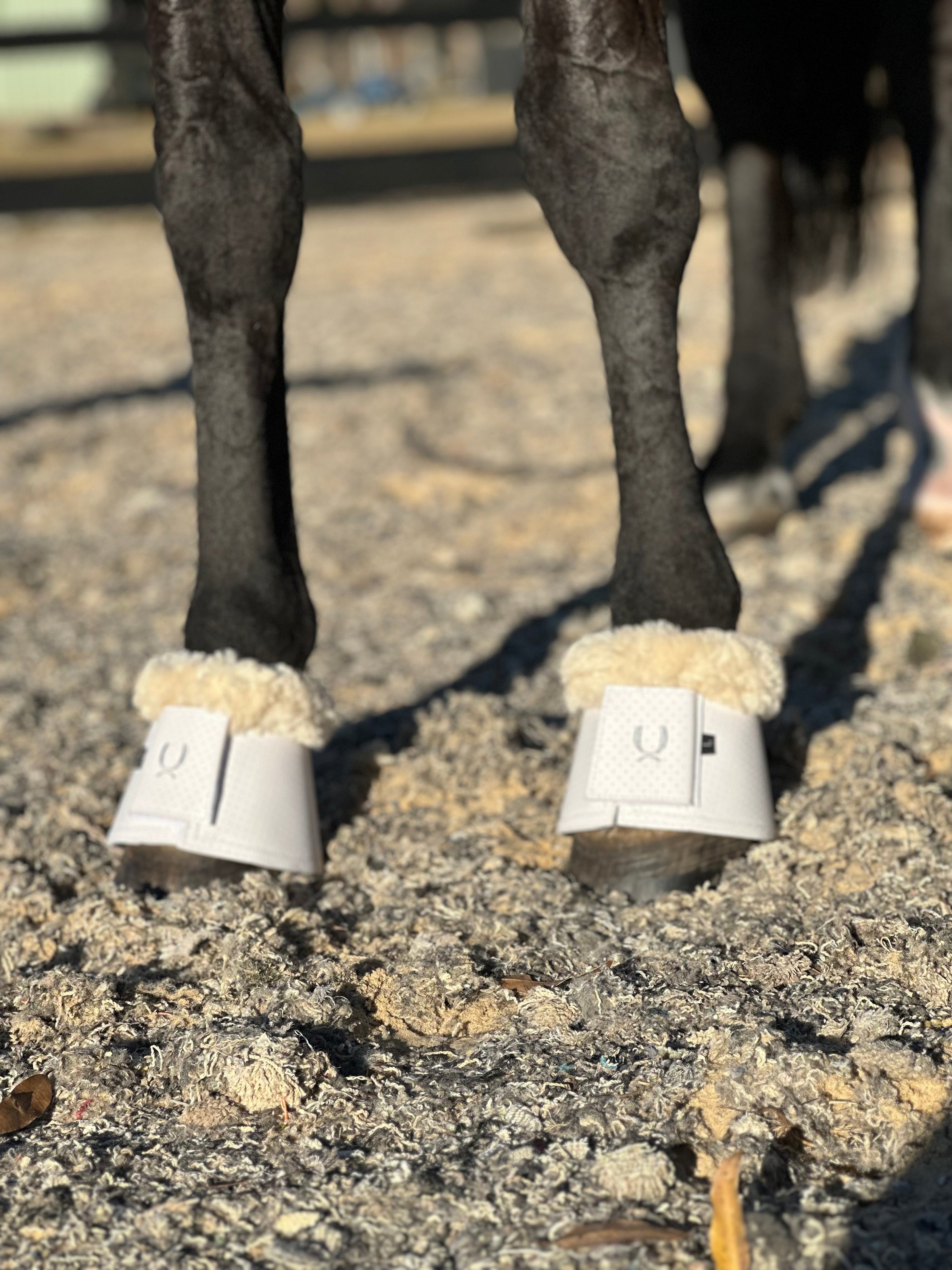
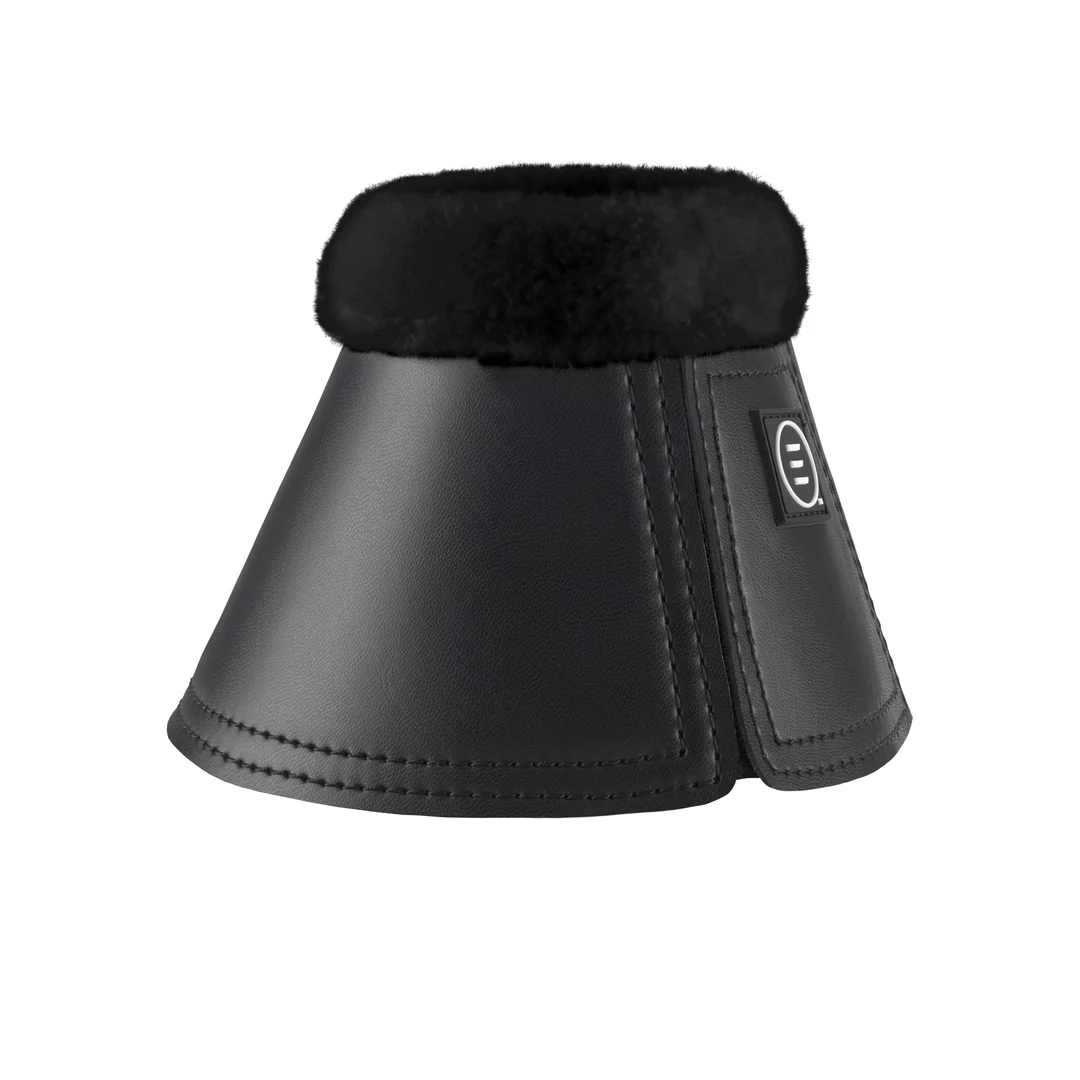
Quick Answer: Bell boots sit around the pastern and cover the heel bulb, preventing the hind hoof from striking the front foot’s coronary band during fast work or turn-out. Pull-on styles are more secure but harder to fit; Velcro styles are easier to adjust. No-turn bell boots feature an internal stay that prevents rotation. Essential for horses that overreach or pull shoes. Shop our range with fast Australian shipping.
Overreach Protection, No-Turn Design and Pull-On vs Velcro Options
Overreach injuries occur when a horse’s hind hoof strikes the back of the front foot’s heel bulb or coronary band. The result can range from a minor scrape to a deep cut that lays the horse off for weeks. Bell boots are the simplest and most effective prevention — a rubber or synthetic boot that covers the heel and deflects the hind hoof’s strike. For horses that pull front shoes, bell boots prevent the shoe being stepped on and torn off.
Australian riders need bell boots that withstand tough ground, heat, and constant wear. Lady Godiva Equestrian bell boots are built from durable rubber compounds that resist tearing and stretching. Toptac International offers lightweight designs with no-turn technology that prevents the boot from spinning around the pastern — a common issue with cheaper bell boots that fit loosely.
Quick Facts
Best ForOverreach protection, shoe pulling prevention, turn-out
Top BrandsLady Godiva Equestrian, Eloquence Equestrian, Equifit, Toptac, Belle Equestrian
Ships FromAustralia — fast local delivery
Bell Boot Styles Compared
Bell boot styles differ in security, ease of use, and fit. Here’s how they compare:
Feature
Pull-On Rubber
Velcro Closure
No-Turn Design
Security
Highest — no opening
Good — depends on Velcro
High — internal stay prevents spin
Ease of Fitting
Harder — must stretch over hoof
Easy — opens and wraps
Easy — Velcro with stay
Rotation Risk
Moderate if loose
Moderate if loose
Low — stay locks position
Best For
Turn-out, consistent use
Easy on-off, competition
Horses that spin boots
Durability
Very durable — no Velcro to wear
Velcro wears over time
Good with quality stay
Choosing Between Pull-On and Velcro Bell Boots
The choice between pull-on and Velcro bell boots depends on your horse’s needs and your preference for convenience versus security.
Pull-On Bell Boots
Pull-on bell boots have no opening — they’re stretched over the hoof when the boot is warm (soaking in hot water helps). They’re the most secure option because they can’t come undone. Belle Equestrian pull-on boots are made from flexible rubber that’s easy to stretch but holds its shape once on. They’re ideal for turn-out where a loose boot could be lost in the paddock.
Velcro Bell Boots
Velcro closure bell boots open and wrap around the pastern, making them easy to put on and remove. They’re convenient for competition where you need to boot up quickly. Equifit Velcro boots feature wide, heavy-duty Velcro that resists clogging with sand and mud. Replace Velcro when it loses grip — a loose bell boot is worse than none at all.
No-Turn Bell Boots
No-turn bell boots feature an internal stay or key that locks the boot in position, preventing it from rotating around the pastern. Rotation is a common problem — a spun bell boot can leave the heel exposed or rub the pastern raw. Toptac International no-turn boots are engineered for horses that consistently spin their boots during work or turn-out.
Sizing and Fit for Optimal Protection
Correctly fitted bell boots cover the heel bulb without interfering with ground contact or pastern movement.
How to Size Bell Boots
Bell boots come in sizes from small pony to extra large. Measure the circumference of your horse’s pastern at the widest point. The boot should cover the entire heel bulb and the back of the coronary band without dragging on the ground. A boot that’s too large will spin and rub; too small and it won’t protect the heel.
Signs of Poor Fit
If the boot spins around the pastern, it’s too large or lacks a no-turn stay. If the horse trips or the boot catches on the ground, it’s too large. If you can see the heel bulb when the boot is on, it’s too small. Check for rub marks on the pastern after the first few uses and adjust sizing accordingly.
When to Replace Bell Boots
Replace bell boots when rubber cracks or tears, Velcro loses its grip, or the boot has been chewed or trodden on severely. A damaged bell boot can chafe the pastern or fail to protect during a critical overreach strike. With regular use, quality bell boots last 6-12 months; turn-out boots may wear faster due to constant use.
Fitting Guide
To fit pull-on bell boots, warm the rubber by soaking in hot water for two minutes, then stretch the opening over the hoof while the boot is pliable. Once in place, the boot should sit just below the coronary band, covering the entire heel bulb. For Velcro styles, wrap the boot snugly around the pastern with the closure at the front or side, ensuring the stay (if present) sits correctly in the pastern groove.
Check the fit after five minutes of walking — the boot should not have spun, rubbed, or caused any gait change. Eloquence Equestrian bell boots are contoured to reduce rotation risk. For turn-out, use a slightly looser fit to allow for swelling; for competition, a snug fit prevents spin during fast work. Always remove bell boots when the horse is stabled to prevent pastern rubs.
Care and Replacement
Rinse bell boots after each use to remove sand and sweat. Check rubber for cracks or tears, especially at the heel strike zone. Velcro closures should be cleaned of debris and checked for grip strength — if the Velcro peels away easily, replace the boots. Store bell boots flat in a dry, ventilated area away from direct sunlight, which degrades rubber over time.
Inspect the heel bulb area of the boot regularly — this is where overreach strikes occur and where the boot takes the most punishment. Lady Godiva Equestrian bell boots are reinforced at the strike zone for extended wear. If you notice the rubber thinning or splitting, replace immediately — a failed bell boot during an overreach incident provides no protection at all.
Brands We Stock
We stock bell boots from brands chosen for durability and Australian conditions:
Lady Godiva Equestrian — Durable rubber bell boots reinforced at the strike zone for extended wear in Australian conditions.
Eloquence Equestrian — Contoured bell boots designed to reduce rotation and pastern rubs during work and turn-out.
Equifit — Velcro closure bell boots with heavy-duty fastening that resists sand and mud clogging.
Toptac International — No-turn bell boots with internal stay technology that locks the boot in position.
Belle Equestrian — Flexible pull-on rubber bell boots in standard sizes for everyday overreach protection.
Why Shop Bell Boots at iRide EQ?
Prevent Costly Injuries
Overreach cuts and pulled shoes are among the most common preventable leg injuries. A quality pair of bell boots is inexpensive insurance against weeks of lay-up.
No-Turn Technology
Our no-turn bell boots from Toptac International feature internal stays that prevent rotation — the most common fit problem with standard bell boots.
Australian Durability
Built to withstand hard Australian ground, summer heat, and constant turn-out wear without cracking or losing shape.
All Sizes Stocked
From small pony to extra large, we stock bell boots to fit every horse with the correct coverage for reliable overreach protection.
Frequently Asked Questions
Do I need bell boots if my horse doesn’t overreach?
If your horse never overreaches or pulls shoes, bell boots may not be essential. However, they’re recommended for turn-out, competition, and any horse prone to pulling front shoes. Bell boots are low-cost insurance against expensive overreach injuries.
How do I put on pull-on bell boots?
Soak the bell boots in hot water for two minutes to soften the rubber. Stretch the opening over the hoof while the boot is pliable. Once in place, the boot should cover the heel bulb and sit just below the coronary band. Pull-on boots are more secure than Velcro but harder to fit.
Why do my bell boots keep spinning?
Bell boots spin when they’re too large or lack a no-turn stay. Try a smaller size or switch to no-turn bell boots from Toptac International, which feature an internal stay that locks the boot in position. A spinning bell boot can rub the pastern raw and leave the heel unprotected.
Can bell boots be worn during turn-out?
Yes. Bell boots are commonly used for turn-out to prevent overreach injuries in the paddock. Use pull-on styles for turn-out as they can’t come undone. Remove bell boots when the horse is stabled to prevent pastern rubs from constant wear.
How long do bell boots last?
With regular use, quality bell boots last 6-12 months. Turn-out boots may wear faster due to constant use. Inspect rubber for cracks and Velcro for grip strength regularly. Replace immediately if the strike zone shows thinning or splitting.
What size bell boots do I need?
Measure the circumference of your horse’s pastern at the widest point. The boot should cover the entire heel bulb without dragging on the ground. Most brands offer sizes from small pony to extra large. When in doubt, choose the smaller size that still covers the heel — a snug fit prevents rotation.
Can I use bell boots for dressage competition?
Bell boots are generally not worn in dressage competition, though they’re fine for schooling. They’re more common in show jumping, eventing, and cross-country. Check current EA rules for your competition level regarding boot restrictions.