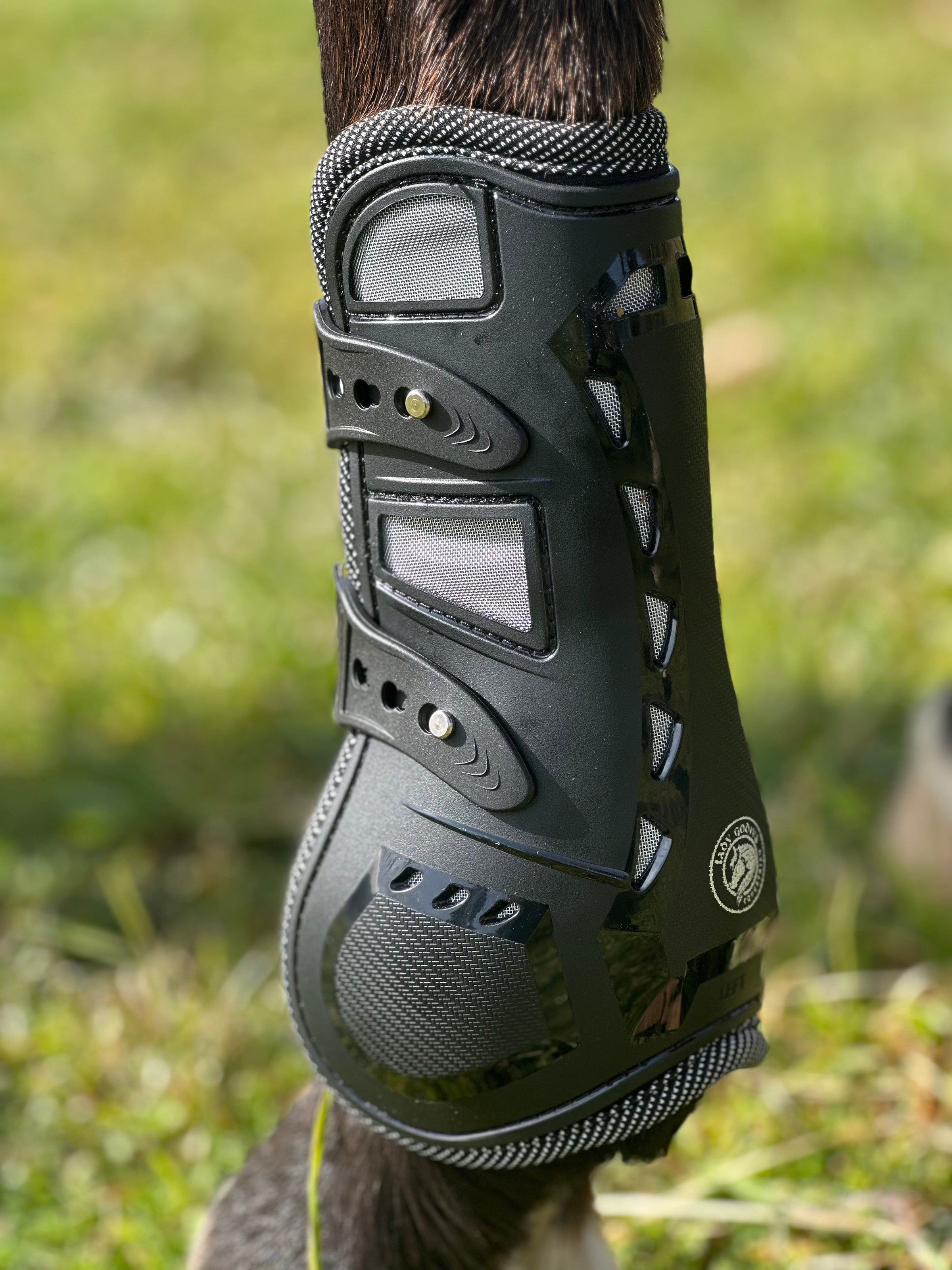
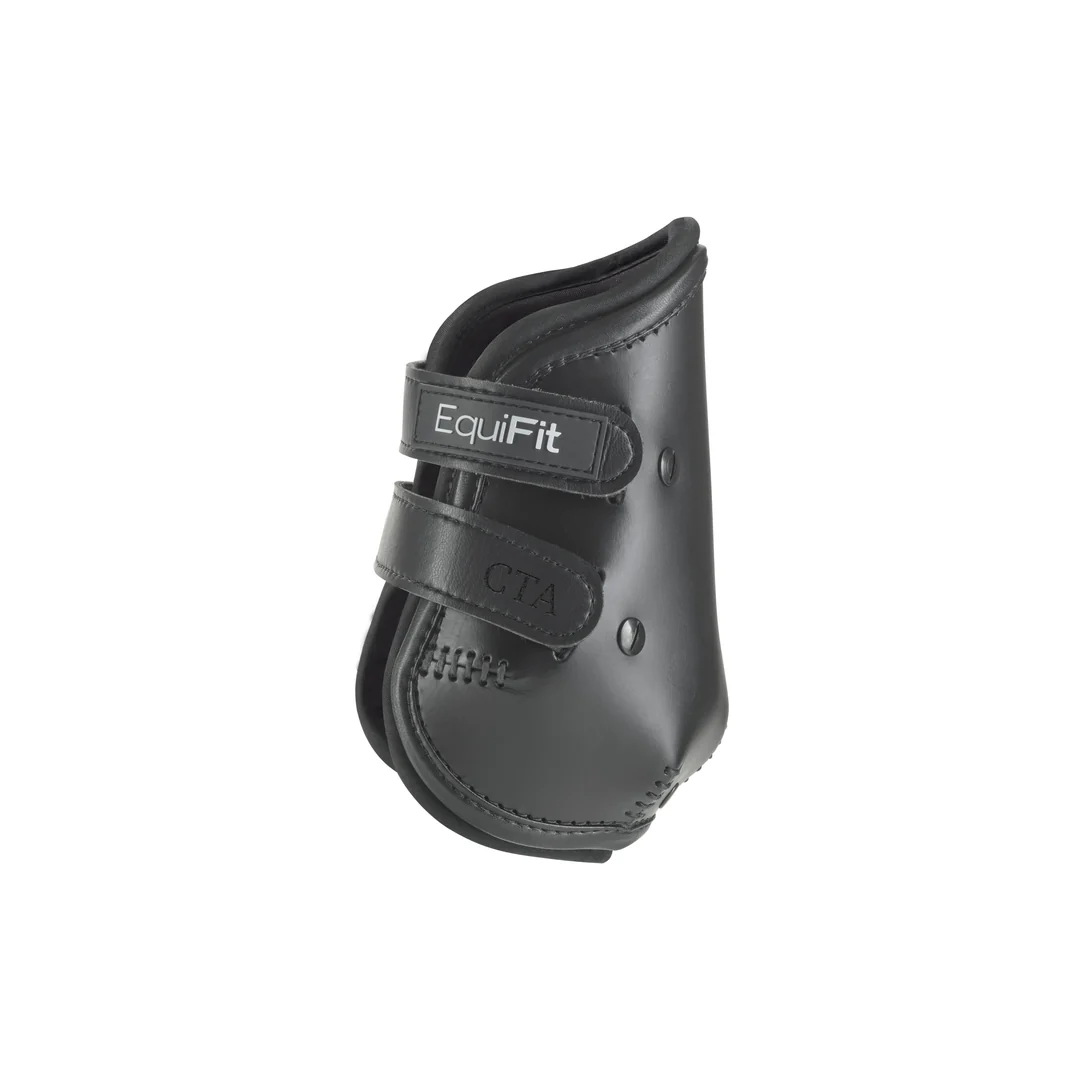
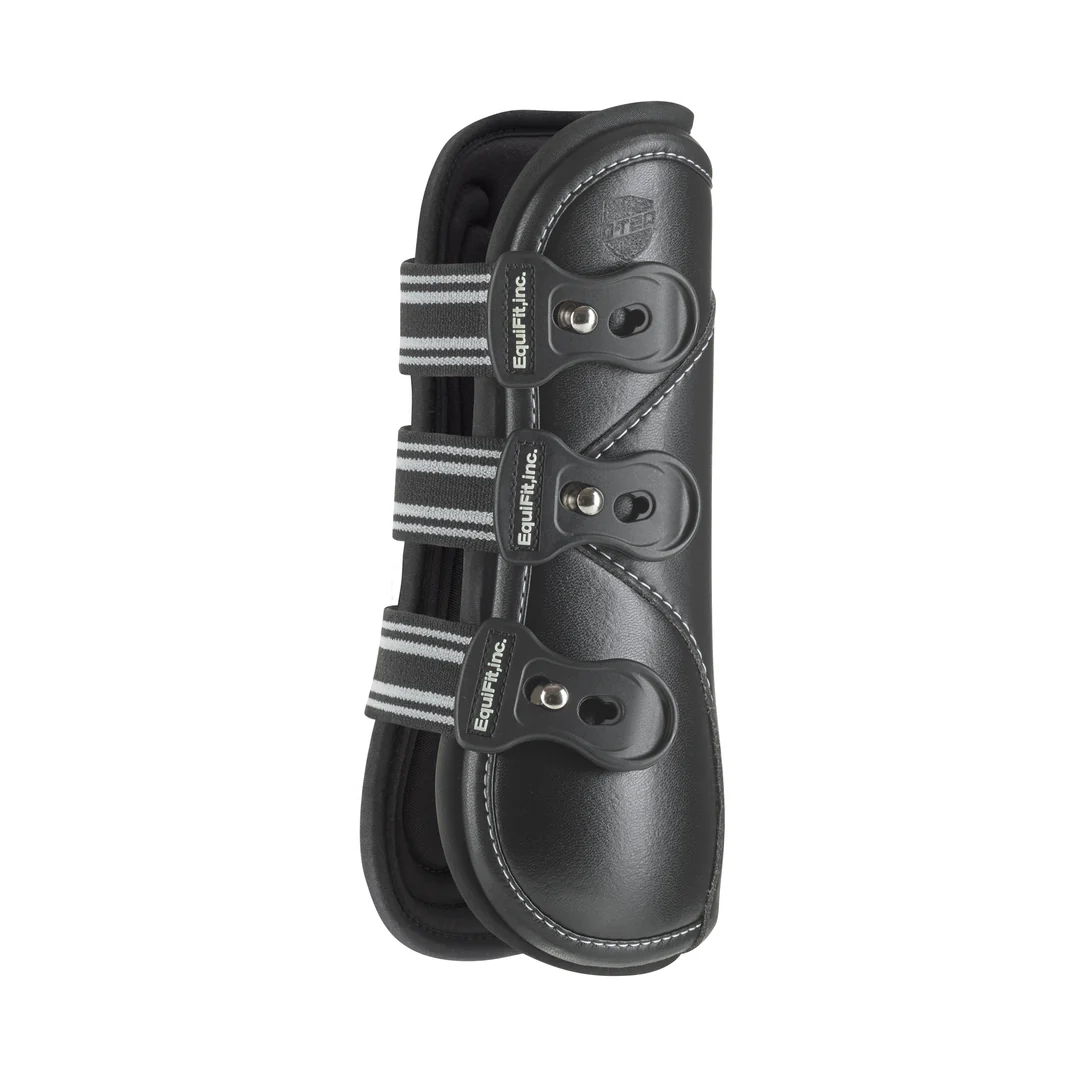
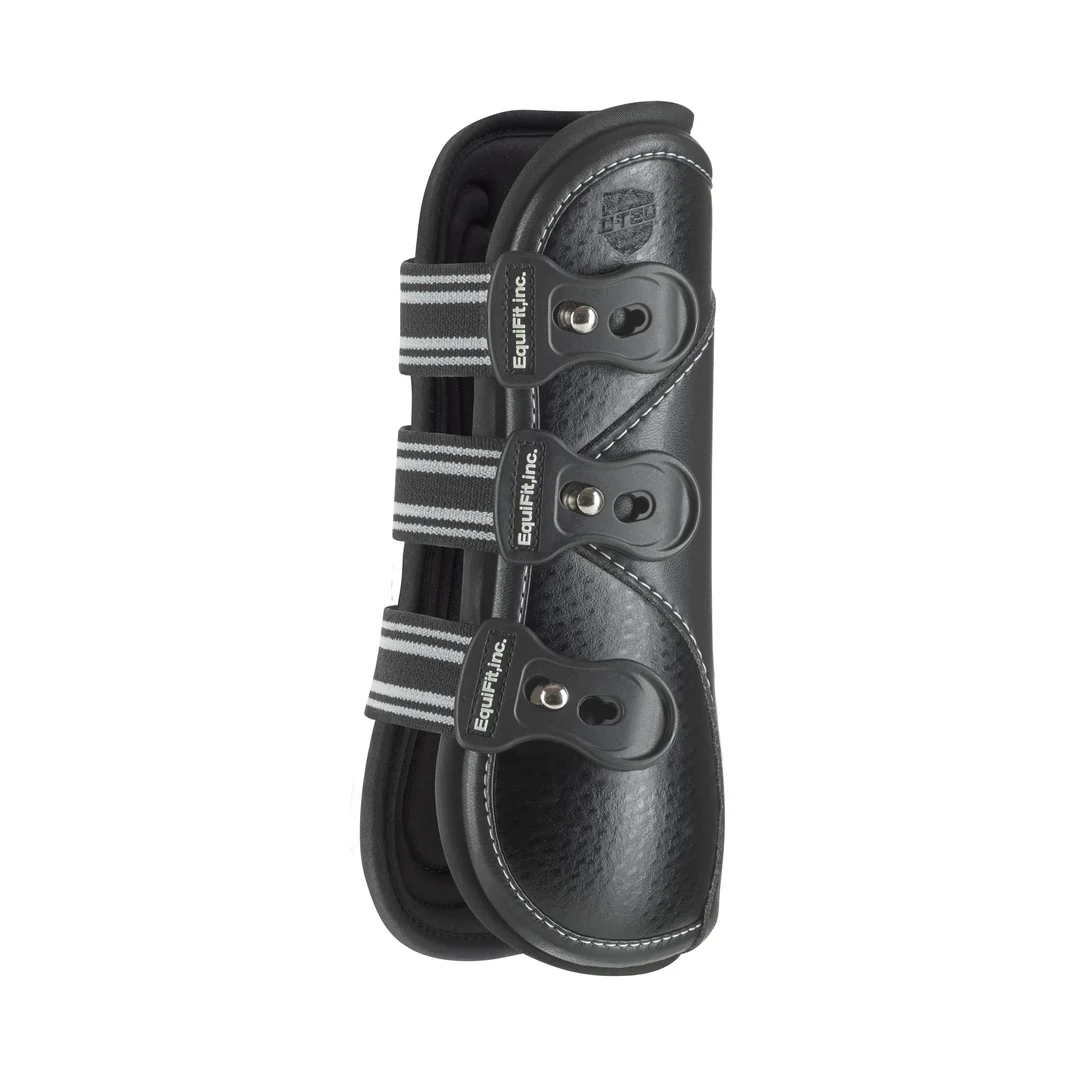
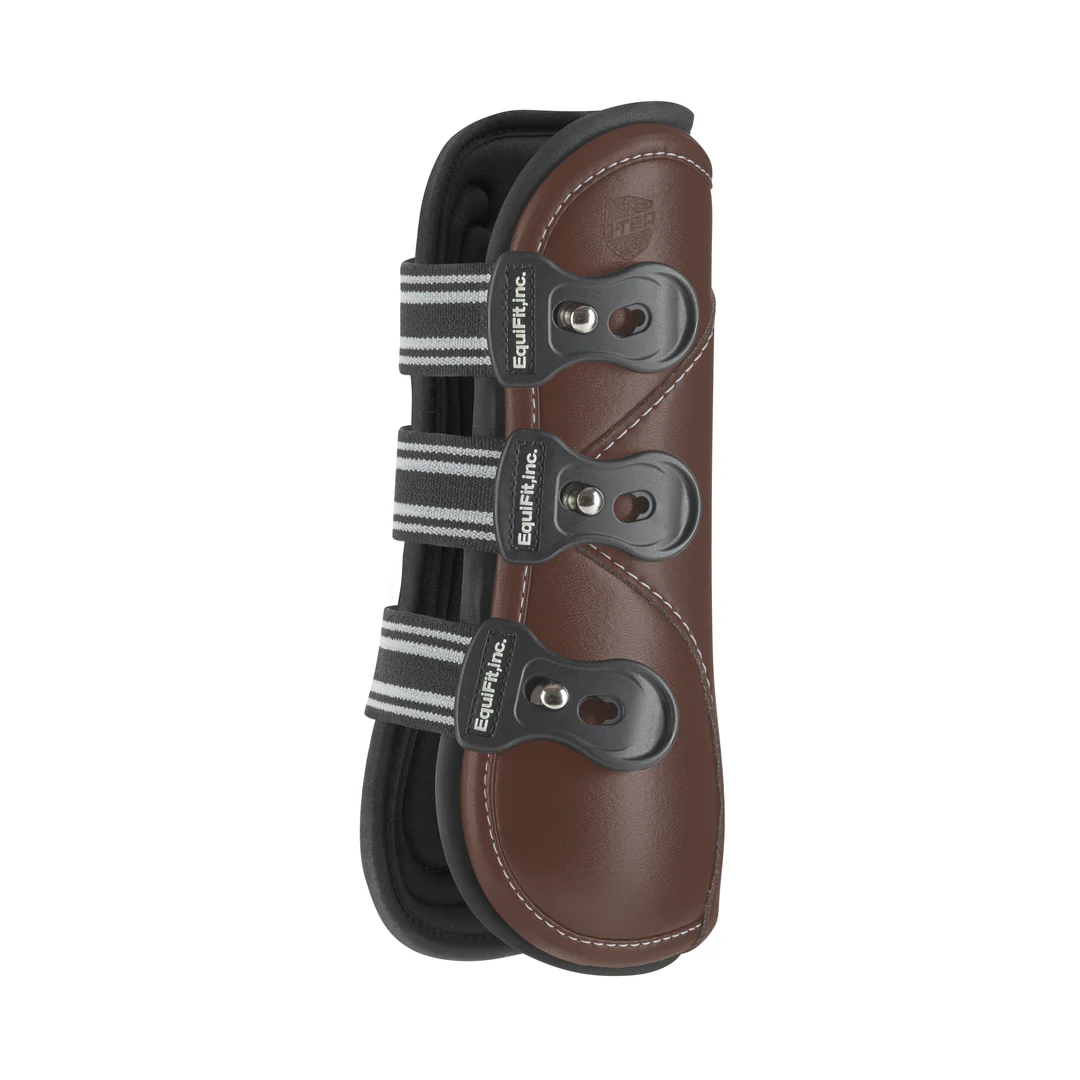
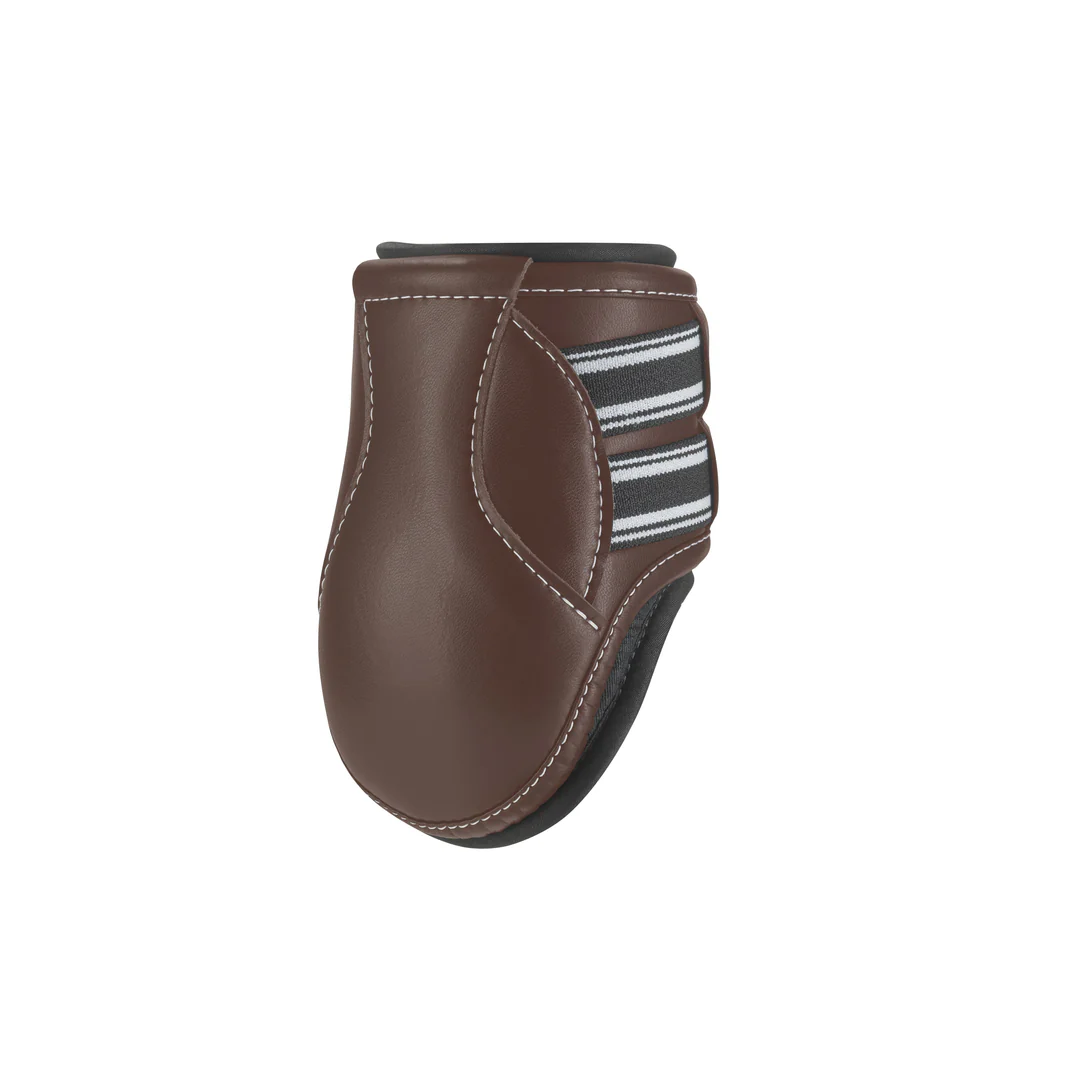
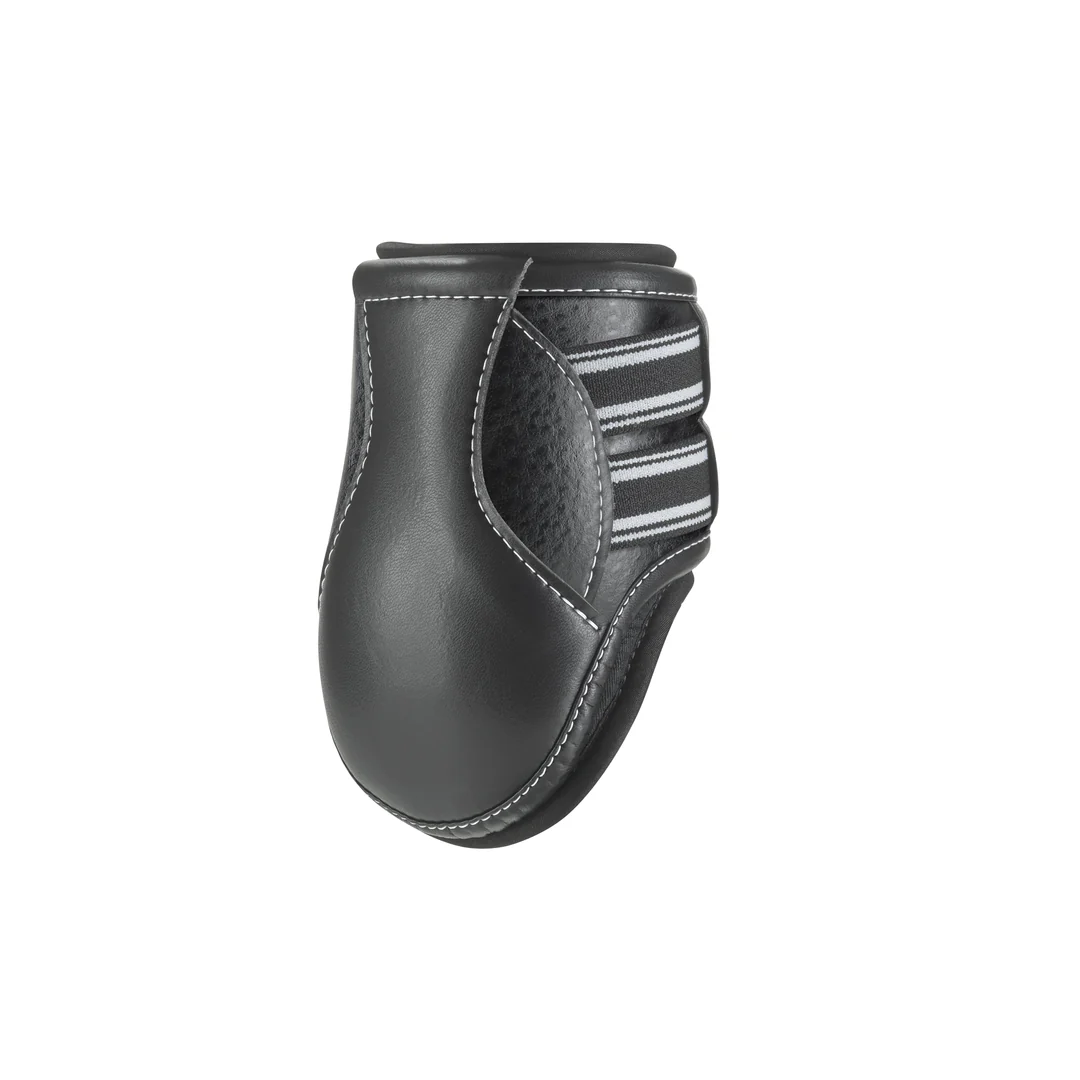
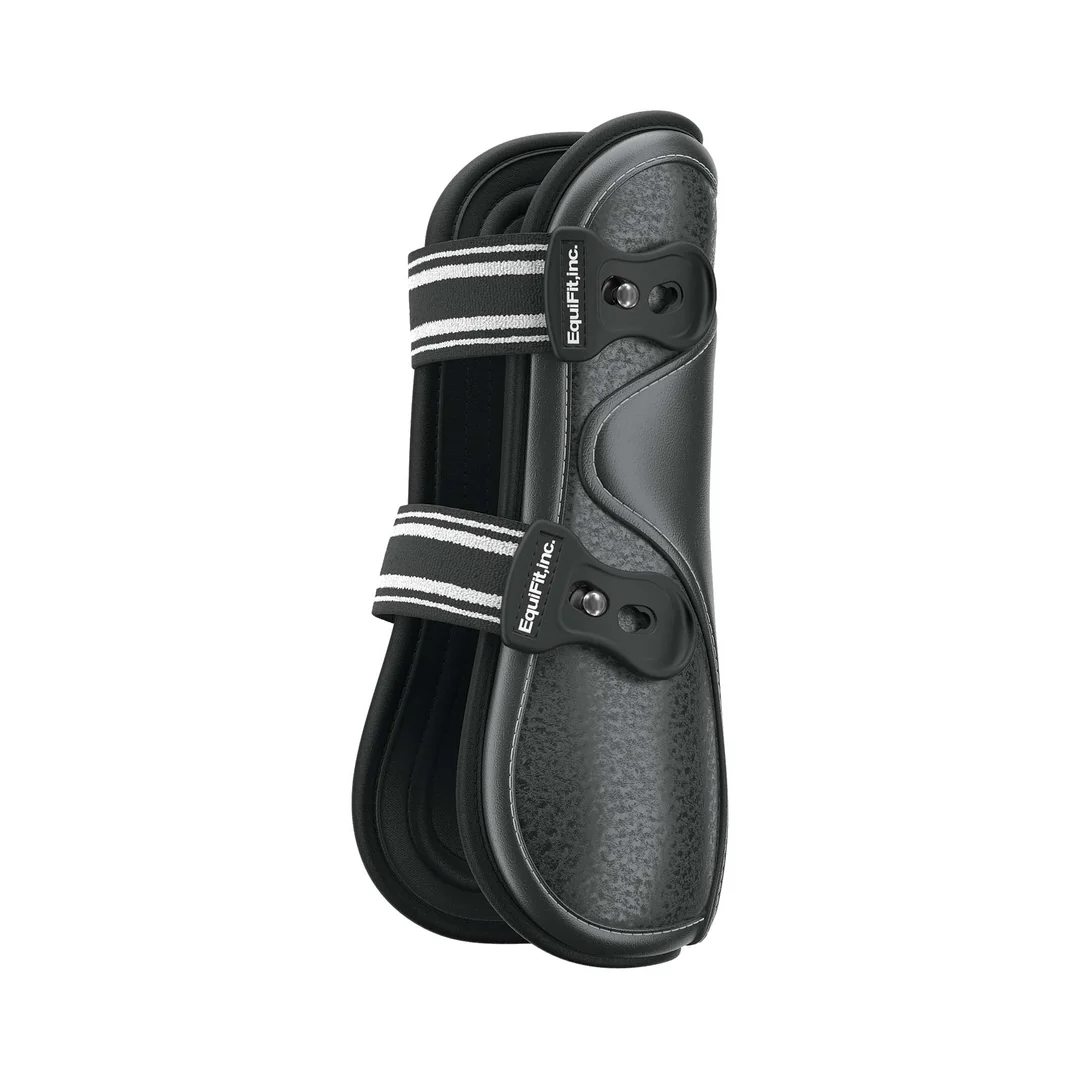
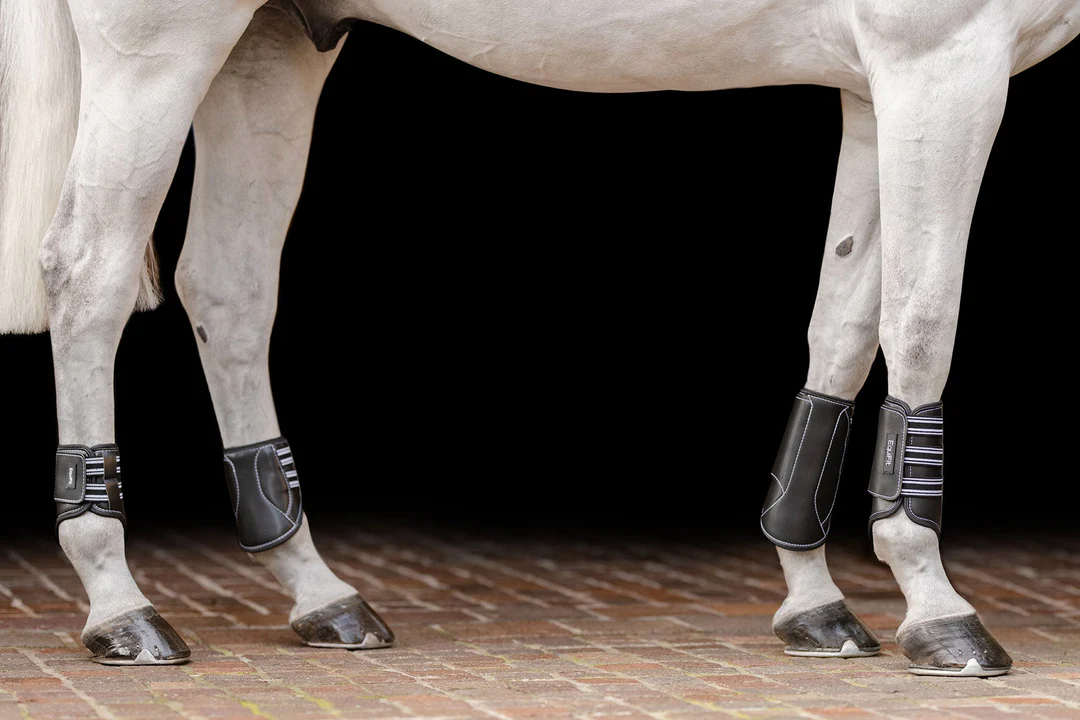
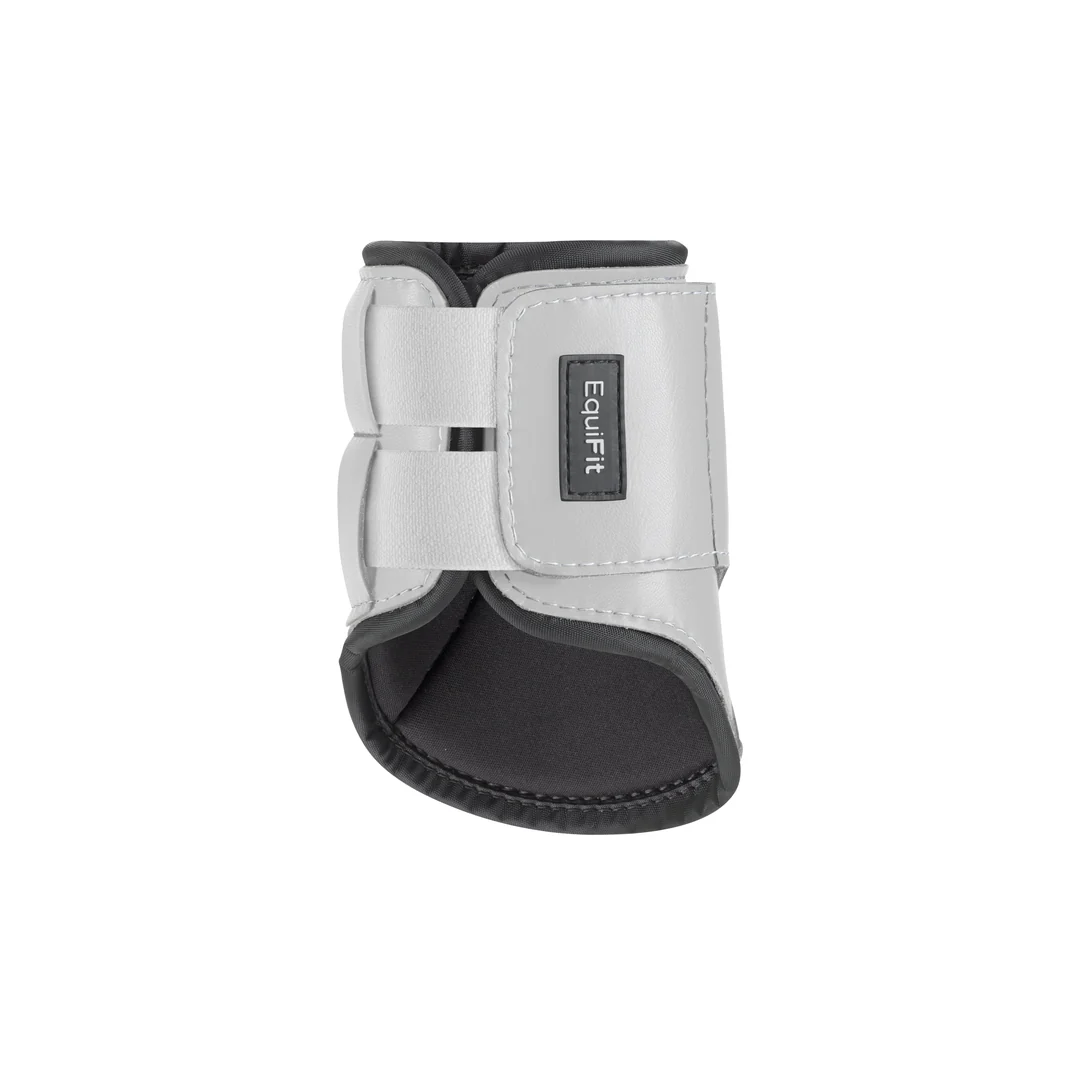
Shop jumping boots at iRide EQ. Our range includes open-front tendon boots, closed-front jumping boots, and hind fetlock boots from Equifit, Toptac International, and Lady Godiva Equestrian — engineered for show jumping impact protection and EA competition standards.
Quick Answer: Jumping boots protect your horse’s tendons and fetlocks from pole impact during show jumping. Open-front tendon boots allow the horse to feel a pole tap while absorbing the force of a hard strike. Hind boots protect the fetlock from brushing and strike injuries. Choose boots with TPU strike plates and breathable linings for Australian conditions. Shop our jumping boots with fast local shipping.
Tendon Protection, Pole Impact Absorption and Open-Front Design
Show jumping places enormous forces on a horse’s front legs. When a horse knocks a pole, the impact transfers directly to the tendon area behind the cannon bone — without protection, this can cause bruising, inflammation, or worse. Equifit tendon boots feature TPU strike plates that absorb and distribute impact forces, reducing the risk of tendon injury during competition. The open-front design allows the horse to feel a light pole tap, encouraging careful jumping technique.
Hind legs need different protection — they’re more prone to brushing strikes and fetlock impact than direct pole knocks. Hind jumping boots from Toptac International cover the fetlock joint with a reinforced strike pad. For Australian show jumpers competing in warm conditions, boot weight and breathability matter as much as protection. Heavy, hot boots cause fatigue that affects performance in the later stages of a course. Choose lightweight, well-ventilated boots that offer protection without sacrificing comfort.
Quick Facts
Best ForShow jumping, eventing, cross-country, show hunter
DisciplinesShow jumping, eventing, cross-country
Top BrandsEquifit, Toptac International, Lady Godiva Equestrian
Ships FromAustralia — fast local delivery
Jumping Boot Styles Compared
Different jumping boot styles serve different protection needs. Here’s how they compare:
Feature
Open-Front Tendon
Closed-Front
Hind Fetlock
Protection Area
Back of tendon & cannon
Full cannon coverage
Fetlock & pastern area
Pole Sensation
Horse feels light taps
Full protection, no feel
N/A — hind leg
Best For
Show jumping, careful technique
Young horses, heavy knockers
Hind leg protection
Typical Use
Front legs
Front legs (alternative)
Hind legs
Weight
Light — minimal coverage
Medium — full coverage
Light — fetlock focus
Understanding Open-Front vs Closed-Front Design
The choice between open-front and closed-front jumping boots affects both protection level and the horse’s jumping technique.
Open-Front Tendon Boots
Open-front boots leave the front of the cannon bone exposed, protecting only the tendon area at the back. This design allows the horse to feel a pole tap against the front of the leg, encouraging a more careful jumping technique. Equifit open-front boots are the competition standard for experienced show jumpers who want protection without sacrificing technique feedback.
Closed-Front Jumping Boots
Closed-front boots wrap around the entire cannon bone, providing 360-degree protection. They’re ideal for young horses that are still learning to jump carefully and may knock poles hard. Lady Godiva Equestrian closed-front boots offer full coverage with breathable construction for Australian conditions. The downside is that the horse doesn’t feel pole contact, which some trainers believe encourages sloppy jumping.
Hind Fetlock Boots
Hind boots focus on the fetlock area, protecting against brushing strikes and lateral impact during landing and turning. Toptac International hind boots feature reinforced strike pads that absorb the impact of a hind leg brushing against the opposite limb. Most show jumping combinations wear hind fetlock boots alongside front tendon boots.
Impact Technology and Materials
The materials used in jumping boots determine how well they absorb pole impact and manage heat.
TPU Strike Plates
Thermoplastic urethane (TPU) strike plates are the gold standard for impact absorption in jumping boots. TPU is lightweight, durable, and absorbs shock without transferring force to the tendon. Equifit boots use multi-layer TPU construction that distributes impact across a wider area. TPU also resists the abrasion that wears out softer materials over a season of jumping.
Lining Systems
The lining between the shell and the horse’s leg affects both comfort and heat management. Neoprene linings provide cushioning but trap heat; look for perforated or moisture-wicking alternatives. EVA foam linings offer good impact absorption with better heat dissipation. For Australian summer competition, ventilation is critical — choose boots with airflow channels or breathable mesh panels.
Weight and Performance
Boot weight affects performance, especially in the later stages of a jumping course when fatigue sets in. Lightweight TPU boots from Toptac International minimise weight while maintaining impact protection. Avoid heavy boots that cause the horse to alter its jumping technique or tire prematurely.
Fitting Jumping Boots
Jumping boots must fit snugly to stay in place during the dynamic forces of take-off, flight, and landing. Measure the circumference of your horse’s cannon bone at the widest point. The boot should cover the tendon area completely without interfering with the knee joint above or the fetlock below. Straps should be tight enough to prevent slipping but not so tight as to restrict circulation or press on the tendon.
After fitting, lunge your horse at trot and canter to ensure the boots stay in place during movement. Check for rubs or pressure marks after the first session. Lady Godiva Equestrian boots feature contoured designs that reduce pressure points. Remove boots immediately after competition to allow tendons to cool — heat build-up during jumping is significant and prompt cooling protects tendon health.
Care and Maintenance
Clean jumping boots after every competition or schooling session. Sweat and sand trapped against the skin cause irritation and can lead to bacterial infections. Wash TPU and neoprene boots with warm water and mild soap, then air dry away from direct heat. Inspect strike plates for cracks or dents after each jumping session — a damaged strike plate compromises impact protection.
Check straps and closures for wear. Replace any boot with a cracked shell, worn strike plate, or stretched straps. Quality jumping boots from Equifit should last two to three seasons of regular competition use. Store boots flat in a dry, ventilated tack room away from direct sunlight.
Brands We Stock
We stock jumping boots from brands chosen for competition performance and Australian conditions:
Equifit — Premium open-front tendon boots with multi-layer TPU strike plates for competition-grade impact absorption.
Toptac International — Lightweight TPU jumping boots with reinforced strike pads for show jumping and cross-country.
Lady Godiva Equestrian — Closed-front jumping boots with breathable construction and contoured fit for Australian conditions.
Why Shop Jumping Boots at iRide EQ?
Competition-Grade Protection
Our jumping boots feature TPU strike plates that absorb pole impact forces, reducing the risk of tendon bruising and injury during show jumping.
Open-Front Technique
Open-front tendon boots allow the horse to feel pole contact, encouraging careful jumping technique while still protecting against hard strikes.
Australian Heat Management
Breathable linings and ventilation panels manage heat build-up during Australian summer competition — critical for tendon health.
EA Competition Ready
All jumping boots meet EA competition standards and are suitable for show jumping, eventing, and cross-country at all levels.
Frequently Asked Questions
Do I need jumping boots or can I use brushing boots?
Brushing boots protect against lateral strikes but don’t absorb pole impact. For show jumping, dedicated jumping boots with TPU strike plates are recommended — they’re engineered to absorb the force of a horse knocking a pole. Brushing boots can be used on hind legs but won’t provide the same level of protection.
What’s the difference between open-front and closed-front boots?
Open-front boots leave the front of the cannon exposed so the horse feels pole taps, encouraging careful technique. Closed-front boots wrap the entire leg for full protection. Open-front is the competition standard for experienced jumpers; closed-front suits young horses or heavy knockers.
Can I use jumping boots for cross-country?
Yes. Many jumping boots are suitable for cross-country, but check that they meet EA eventing rules for your level. Cross-country may require boots with higher impact absorption and additional coverage. Some boots are specifically rated for cross-country use.
How do I clean jumping boots?
Rinse after every session to remove sweat and sand. Wash TPU and neoprene boots with warm water and mild soap, then air dry. Inspect strike plates for cracks after each jumping session. Store flat in a dry, ventilated area away from sunlight.
Do jumping boots restrict the horse’s movement?
Quality jumping boots are lightweight and contoured to flex with the leg during take-off, flight, and landing. Equifit boots are designed to minimise restriction. If you notice any gait change, check fit and sizing — poorly fitted boots can affect jumping technique.
How tight should jumping boots be?
Jumping boots should be snug enough to stay in place during the dynamic forces of jumping but not so tight as to restrict circulation. You should be able to slide a finger between the boot and the leg. Straps should be even on both sides. Remove immediately after competition to allow tendons to cool.
How long do jumping boots last?
Quality jumping boots from Equifit or Toptac International should last two to three seasons of regular competition. Inspect strike plates for cracks after each session and replace immediately if the shell or strike plate is damaged.