Horse Health & First Aid
Kits, bandages, thermometers and allwormer pastes: the shelf-stable core of the feed room first aid cupboard, all in stock and linked straight to the product page.


Silver-based washes, talcs and balms from Equifit, poultice dressings and healing ointment for the cuts Australian paddocks always seem to produce.


Gut, calm, hoof, electrolyte and vitamin supplements from Equidae/Sixteen Cypress, Crooked Lane and VALUE PLUS. The full range lives on the horse supplements collection.


Sun, coat and skin care built for the Australian sun: UV-blocking powder sunscreen, aloe for burns and rubs, and DermaBlend for dull, itchy coats from the inside out.


Cold therapy boots, compression gel boots and sox for legs that work hard. More recovery gear on the equine therapy essentials collection.


Every paddock eventually collects the same story: the wire cut nobody saw happen, the filled leg on a Sunday morning, the dull coat that will not improve no matter how much brushing it gets. This is the transactional centre of everything horse health at iRide EQ: complete first aid kits and vet supplies, silver-based wound care, gut and hoof supplements, sun protection and cold therapy boots, shipped fast around Australia from real stock, not a catalogue of things we might order in.
Quick Answer: Shop horse health and first aid supplies in Australia: complete horse first aid kits from $90, bandages, poultice dressings, silver-based wound care, gut and hoof supplements, electrolytes, sun protection and cold therapy boots for legs. The horse first aid kit list below covers what to keep on the shelf and how much each piece costs in AUD, and everything shown is in stock now.

The moment that decides most outcomes: a calm, early look at the leg before anyone guesses.
What Goes in a Horse First Aid Kit? The Working List
Google will offer you a hundred first aid kit checklists, and most of them quietly copy the human camping version. Horses are not campers. A useful horse first aid kit for Australian conditions covers three real jobs: stop a wound and hold it until the vet comes, spot a temperature or filled leg early, and keep a small digestive or dehydration wobble from becoming a float trip to the clinic. Build the kit around those jobs and you will not waste shelf space on items that expire before you ever open them.
Here is the working list we sell every week, priced as stocked. The complete kit at $90 already covers most rows; buy that first, then top up the things your property specifically runs out of (on our place it is cohesive bandage, always).
| Kit item | The job it does | Our product | Price (AUD) |
|---|---|---|---|
| Complete kit | Everything below in one box | Value Plus First Aid Kit | $90 |
| Digital thermometer | 38.5 is normal; the number tells you whether to call the vet tonight or tomorrow | Safehorse of Sweden Thermometer | $54.95 |
| Bandage scissors | Blunt tip cuts wraps off a swollen leg without nipping skin | Stainless Bandage Scissors 19cm | $5.95 |
| Wound dressing | Sterile cover for cuts and grazes under the bandage | Curabine Veterinary Dressing | $24.95 |
| Cotton wool and gauze | Padding layer under any leg wrap, every single time | Cotton Wool Roll and gauze roll | $18.5 and $15.7 |
| Cohesive bandage | Sticks to itself, not the leg; the outer layer of a stable wrap | Valuwrap Cohesive | $4.95 |
| Adhesive bandage | Holds dressings on hard-to-wrap spots like knees and hocks | Valuplast Adhesive Bandage | $9.4 |
| Antiseptic wash and spray | Fighting infection in cuts when the flies are at their worst | AgSilver CleanWash and CleanSpray | $88.82 and $54.28 |
| Poultice dressing | Drawing heat and infection out of a hoof or filled leg | Equitex Poultice Dressing | $15.75 |
| Electrolyte paste | Sweat replacement after hard work on a hot day | HydroPaste Electrolytes | $28 |
Two honest notes from the field. First, check expiry dates on washes and dressings every spring; an out-of-date bottle is worse than a missing one because you think you are covered. Second, keep the kit where the float gear lives, not buried behind the tack room door, because the one time you need it at 9pm is the one time you are carrying a head torch and a lead rope and nothing else. Our full walkthrough of box contents, dos and do nots lives in the first aid kit essentials guide.
Wound Care and Bandaging: What Actually Works
Australian horse wounds follow a pattern. Wire, fencing tin, a kick in the paddock, and then flies. The first hour matters more than the product you end up buying, but the right shelf of products turns a panicky afternoon into a routine one. The aim is always the same: clean it, cover it, keep infection out, and decide fast whether this is a bandage job or a stitches job. If you are ever unsure whether a cut needs a vet, ring one; proud flesh and infection cost far more than the call-out.
The silver-based approach is our most reliable range for this job. Equifit's AgSilver line pairs cleaning with silver-infused aftercare: CleanWash Daily Strength ($88.82) for everyday washing, CleanTalc Daily ($60.15) to dry and protect in humid weather, and CleanBalm for the healing stage once new skin starts forming. For deeper knocks and heat in a leg, the Equitex medicated poultice dressing ($15.75) draws fluid and infection the traditional way, and Wound Plus ointment ($47.5) is the natural-option balm we reach for on girth galls and saddle rubs.
Bandaging deserves its own sentence or three, because this is where riders hurt horses with good intentions. Never put cohesive bandage directly on skin, never wrap tight enough to stop a digital pulse, and always work a padding layer underneath: cotton wool or a quilted leg wrap, then Valuwrap cohesive ($4.95) with even tension top to bottom, overlapping half a width each turn. If the leg above the bandage fills after a night, it is too tight or too low, and the correct poultice-and-support move is a job for your vet's instructions, not a guess from a Facebook thread.

Daily grooming is the cheapest diagnostic tool you own: hands on the skin find the lumps and rubs before anything else does.
Gut, Calm and Hoof: Choosing Horse Supplements That Earn Their Feed Bin
The supplement shelf is where most owners overspend first, so here is the filter we use: does the horse have a job-based need (hard work in heat, travel, competition), a visible problem (dull coat, loose manure, poor hoof wall), or an ulcer-and-scopes level issue that needs a vet? Only the first two belong on a shopping page. The horse supplements collection carries the range; this hub keeps the best sellers on rotation in the rail above.
Match the supplement to the job rather than the label:
- Gut and digestion. GutOnic ($109.5) is the everyday probiotic and ulcer-support blend riders here keep on the float, and psyllium ($50.35) is the standard answer for sand concretion risk on coastal and sandy paddocks.
- Calm and behaviour. Pastes such as ZenPaste ($28) and blends like ZenBlend take the edge off travel and clinic days. An honest word: herbal calmers are for nerves, not for danger. A genuinely explosive horse needs a professional, not a syringe.
- Hoof and coat from the inside. Biotin ($76.5) remains the evidence-backed basic for weak horn, and DermaBlend ($109.5) with omega oils does the same job for skin and coat shine that grooming products can only fake from the outside.
- Electrolytes. Non-negotiable in an Australian summer. A horse in full work sweats out salts faster than any hay bag replaces them, so pastes and liquids like HydroPaste ($28) belong in the feed room from October to March, not just on competition day.
- Vitamins and minerals. If the diet is good pasture plus a balanced hard feed, most horses need less than the supplements industry would like. A broad-spectrum base like NutriBlend ($109.5) covers gaps for horses on restricted diets, poor pasture or heavy work.
For the full ranked shortlist by category and price, our Top 10 horse supplements for 2026-2027 guide goes product by product, including which ones are genuinely worth the shelf space and which are filler. Feed any new supplement for six weeks before judging it, and change one thing at a time, or you will never know what worked.
Skin, Coat and Sun Protection Built for the Australian Sun
The Australian sun is not a footnote in a skin care section, it is half the job. Pink-nosed horses and pale-coated greys burn through winter in the northern states and badly from September everywhere else. Powders seem gimmicky until you use one on a horse that hates creams: Soothing Calm sunscreen powder ($12.5) brushes onto white noses, blocks the UV that causes the peel, and survives a feed bucket far better than any cream we have tried. For the burns and rubs that already happened, aloe vera spray ($26.5) cools raw patches under the saddle area and behind the elbows where sweat sits all summer.
Coat quality that lasts past a wash is built from the inside: DermaBlend and omega oils above, then finished by the grooming routine on the grooming brushes collection. Feed the coat, then polish it. Riders who do one and skip the other are always the ones asking why the shine at the show does not last the trailer ride home.
Cold Therapy and Recovery Gear for Working Legs
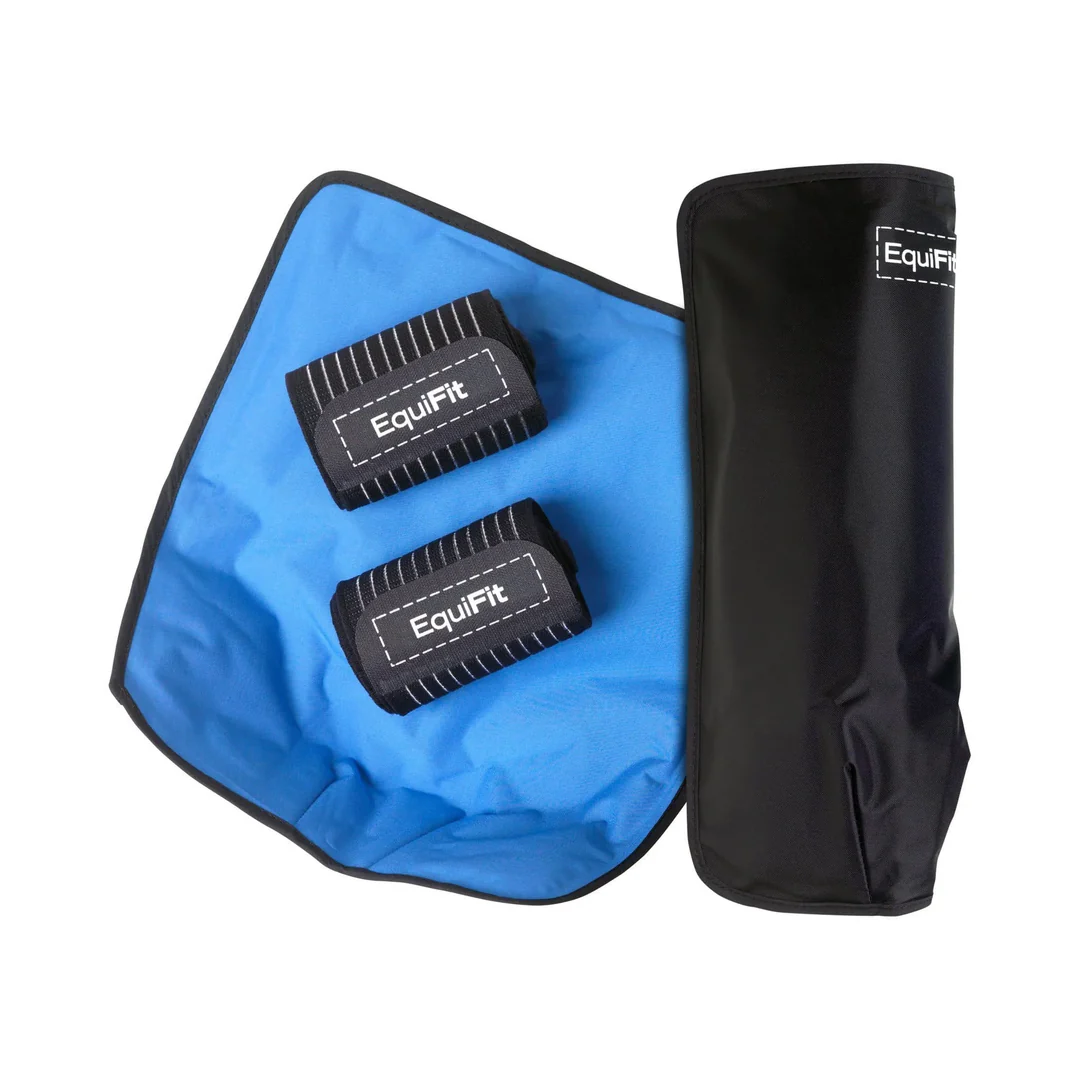
Two decades ago icing a horse's legs meant a bucket, a hose and twenty minutes you did not have. The current generation of boots does the whole job unattended: Equifit's gel compression tendon boots ($384.03) pair cold with compression, the TendonPak wrap ($405.64) heats or chills square gel packs against the leg, and the Majyk Equipe ice boots ($399.95) are the go-to on high-volume competition yards. After hard cross-country schooling, a long float trip or a hot-weekend show schedule, twenty minutes of cold therapy per leg is the routine that keeps next weekend on the calendar.
For overnight support, standing wraps ($264.69) and the Silver Sox and Gel Sox range do transport and stabling duty: they hold a poultice in place, reduce stocking-up in horses that stand in, and protect travel legs from boot rubs. The rule of thumb worth keeping: heat and swelling that do not improve with one round of cold therapy and support earn a vet call the same day. Cold boots manage work, they do not diagnose anything.
Worming and Digestive Health: Products and the Schedule Behind Them
Allwormer pastes such as Equinox ($16.75) and Expel ($20) sit in this collection because worm burden is a health issue before it is a feeding issue. What matters more than the brand is the calendar and the faecal egg count behind it: resistance is real in Australian paddocks, so drench on evidence, rotate actives by season, and dose to an accurate weight rather than a hopeful eyeball. Our seasonal worming schedule for Australia explains the timing month by month, and the paste you need at each point in it is on the first panel of this page.
For the digestive side that pastes do not cover, the gut supports above carry the load between drenches. A worming program and a probiotic routine are complements, not substitutes.
Frequently Asked Questions
What should be in a horse first aid kit for Australian riders?
The working list: a digital thermometer, bandage scissors, sterile wound dressings, cotton wool and gauze, cohesive and adhesive bandages, antiseptic wash and spray, a poultice dressing, an electrolyte paste, and your vet's number taped inside the lid. The Value Plus First Aid Kit covers the core in one box from $90, and the table above prices each piece as we stock it.
How do I build my own horse first aid kit?
Start with the complete kit for structure, then duplicate the fast movers: cohesive bandage, wound dressings and cotton wool run out first. Add a thermometer if your kit does not include one, keep everything in one sealed box near the float, and diary a spring expiry check on washes, sprays and dressings.
Can I use human first aid supplies on my horse?
Items like sterile gauze, cotton wool and saline transfer across fine. Human plasters and paper tape do nothing on a horse's leg, and human antiseptic creams are formulated for skin that does not live under a bandage in 35-degree heat. Bandaging technique is the bigger gap: horse legs need padding and even pressure, which is why the cohesive bandage and cotton wool combination above is the standard.
What does a poultice do for a horse's leg or hoof?
A poultice draws fluid, heat and infection toward the surface of a wound or bruised sole, which relieves pressure and speeds drainage. Wet poultices draw; dry ones protect once the worst is over. The Equitex medicated dressing above is the pre-made version of the classic wet poultice, and Pack-n-Stick hoof tape seals it onto the hoof through a night in the stable.
Which supplements does my horse actually need?
If the diet is balanced pasture and hard feed: electrolytes over summer, biotin if hoof quality is a problem, and a calmer only for specific stressful days. Restricted diets, poor pasture and heavy work are the cases that justify a broad vitamin and mineral base. Follow a visible problem, not a marketing list, and give each change six weeks.
Do calming supplements actually work on horses?
Honestly: pastes and blends such as ZenPaste take the edge off nerves in travel and new environments, and most riders who use them for show day report a real but modest difference. They are not sedatives and will not make a dangerous horse safe. Behavioural training and feed management do the heavy lifting; the paste is the last ten percent.
When should I use cold therapy on my horse's legs?
After gallop sets, cross-country, a hard jump school, a long float trip or any visible heat in a leg. Twenty minutes per leg, then support, repeated two or three times in the first 24 hours is the typical routine. Swelling that does not respond within a day is a vet conversation, not another round of ice.
How do I protect my grey or pink-nosed horse from sunburn?
UV-blocking sunscreen powder on the muzzle (reapplied after feeding), a shade or fly-mask option in the middle of the day, and aloe spray on existing burns. Greys with pink skin around the eyes and muzzle need this all year in the northern states, and from September to April everywhere else.
Stock the Feed Room First Aid Cupboard
Shop the full range of horse health and first aid supplies, the horse supplements collection and equine therapy essentials, backed by fast Australian delivery and real stock levels on every product page.
Shop Horse Health & First Aid