Australian summer hits horses from two directions. The flies arrive in swarms through December and January, and the UV index spends half the week in the extreme range. If your horse spends the season with his ears pinned and his tail going like a windscreen wiper, or he's a grey with a pink muzzle that starts peeling every January, this list is for you. Everything in it is geared to what actually works in our conditions — our heat, our fly pressure, our brutal sun — and the gear we stock lives in the horse health range.
What I've found in fifteen-odd years of keeping horses through NSW summers is that fly and sun protection works as a system, not a single purchase. Physical barriers do the heavy lifting: a fitted fly mask, a fly veil for sensitive ears, a light sheet for horses that get bitten up. Zinc-based sunscreen looks after the pink bits. And the boring property work — manure pickup, wet spots, trough hygiene — quietly halves the fly population before you've spent a cent.
The ten essentials below cover all three layers. Products we stock are listed with checked AUD prices as of 12 November 2026, each shown with its real photo — no catalogue guesswork. Where we don't currently stock a category, like fly sheets and repellent sprays, I'll say so plainly and give you the practical guidance anyway.
1. Fly Masks for Horses with UV Protection
A fly mask with UV protection is the single most useful piece of summer kit you can buy. The fine mesh keeps flies off the eyes and face, and a UPF 50+ rating cuts the UV reaching the paper-thin skin around the eyes. For horses with pale skin around the eyes, and for any horse managing recurring eye trouble, vets recommend UV-blocking masks as part of long-term management — equine recurrent uveitis, the condition most of us grew up calling moon blindness, is aggravated by bright light, and university guidance on ERU lists reducing light exposure among the standard management tools. To be clear about what a mask is not: it doesn't treat eye disease. A weepy, squinting or cloudy eye is a vet visit, full stop.
The mask I'd point most people at is the Essential® FlyMask from EquiFit — UPF 50+ fabric, moisture-wicking antimicrobial lycra, fine mesh around the eyes and ears, and a four-size range from Pony through Warmblood so you can get the fit snug without pressure points. It's $69.82 AUD at the time of writing, which makes it one of the cheaper pieces of protection on this list for the amount of relief it buys. Hand-wash it regularly — a grimy mask rubbing on an eye causes more trouble than no mask at all. EquiFit is a US brand founded in Massachusetts in 2000, now part of the Horseware Ireland family, and the full EquiFit range runs deeper than just masks.

The EquiFit Essential® FlyMask as stocked at iRide EQ — $69.82 AUD, UPF 50+.
2. A Sound-Dampening Fly Veil
Some horses aren't just fly-sore; they're noise-sensitive too, and those horses do best with a veil that handles both. The Soundless Fly Veil from Jump'In pairs a classic crochet front with a thinner, ultra-stretch soundproof ear fabric — it dampens noise and keeps insects out of the ears in the one piece of gear. $129.06 AUD, checked today.
One competition caveat, because I've watched riders get caught out at the secretary's box: ear bonnets are permitted under many rules, including sound-dampening versions, but they must not cover the eyes and must not attach to the noseband, and ear plugs are a separate question again. Check the current EA rules and the event schedule before you ride in one, not after. Jump'In is a French brand that builds specifically for jumping and competition — the sort of specialist that puts real development into the small gear.
3. A Classic Crochet Fly Veil
If noise isn't the issue, a standard crochet fly veil does the job for slightly less. The Jump'In Fly Veil ($126.85 AUD) is French-made with a crochet forehead, ultra-stretch ears and a badge between the eyes, in a one-size-fits-most cut. The Carat Fly Veil ($129.06 AUD) is the classic entry of the same range — its super-stretch ears fit a wide range of ear shapes without sizing guesswork, which matters more than you'd think when your horse has comically short or comically long ears.
One honest limitation: a veil is mainly a ridden or supervised item. Left on in the paddock they can shift and rub, so for full-day turnout a mask is the better barrier. The ridden side of this — fitting a veil under a bridle, which styles suit which horses — is covered in depth in our fly veils guide, and the two pieces of gear work together more often than people expect.
 Jump'In
Soundless Fly Veil
$129.06 AUD
View Product Jump'In
 Fly Veil
$126.85 AUD
View Product Jump'In
Carat Fly Veil
$129.06 AUD
View ProductThe rider's take: The horses I've seen struggle most through an Australian summer are greys with pink muzzles and anything with white around the eyes. The one that sticks in my memory used to start every February with a cracked, weeping muzzle no matter what cream went on it. What changed his season wasn't a bigger tube of cream — it was a properly fitted mask plus zinc powder applied before turnout, so the sun never got a start on the skin. Barriers first, creams second. In practice, that order is the whole trick.
4. Sunscreen for Horses Nose and Pink Muzzles
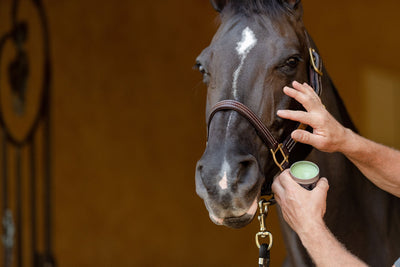
Pink-skinned and white-marked horses sunburn the same way we do, and the muzzle is the classic spot — hairless, thin-skinned and stuck out in the sun all day. Zinc oxide is the standard physical sunblock vets recommend for equine skin, and a powder formulation is easier to live with than a greasy cream on a horse who objects to having his nose handled.
The one we keep in the horse health range is SOOTHING & CALM Horse Sunscreen Powder from Equidae / Sixteen Cypress — Australian-owned, 100% natural, a zinc-based mineral powder built for pink and sun-reactive skin, muzzles and white markings. It's water-resistant, non-greasy, and it brushes on rather than smearing. From $34.50 AUD for the 100g jar, with a kit including the brush and a 300g refill if there are several pale horses on the property. Two honest notes: the listing doesn't carry an SPF number, and I won't invent one — treat it as a mineral barrier. And apply it the way sunscreen actually works — 15 to 30 minutes before turnout, then reapply roughly every two hours through the middle of the day. Patch test any new product on a small patch of skin first.

5. Aloe Vera Spray for Sun-Stressed Skin
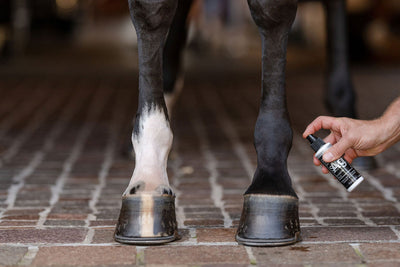
Some damage still gets through the best routine — a missed afternoon, a mask pulled off on a rail, a horse that rubs his muzzle raw on the trough. That's where a soothing after-sun spray earns its spot in the feed room. The SOOTHING & CALM Aloe Vera Spray ($26.50 AUD) is a non-oily organic aloe spray for dry, itchy or sun-stressed skin, and it's just as useful on mane and tail, where flies chew and sun bake at the same time.
It soothes; it doesn't prevent. Keep it in the float box for show days, and for the evenings you bring in a pink-nosed horse who's had a big day. For general condition through the season, the coat health range covers skin and coat support more broadly.
6. Are Fly Sheets Good for Horses?
Yes — for the right horse, and the right horse is usually the one being eaten alive. A fly sheet is a lightweight mesh rug that keeps biting insects off the body while letting airflow through, and for horses with sweet itch it's close to non-negotiable. Sweet itch — insect bite hypersensitivity, an allergic reaction to the saliva of Culicoides midges — is managed with rugs, repellents and manure control, and the rug is the anchor of that triad because it puts a physical barrier between the midge and the skin.
Mesh breathes far better than people expect, but use sense on the hot days: on a 40-degree afternoon, watch how your horse is coping under any rug, and remember shade and water beat everything else. An honest stock note: we don't currently carry fly sheets, so I won't pretend to sell you one — if you're weighing one up, our best summer horse rugs guide walks through weights, fits and when a sheet earns its place.
7. How to Keep Flies from Horses in the Paddock
The cheapest fly control happens before you buy anything. Flies breed in manure, soggy feed, wet hay and stagnant water, so the paddock routine is the fly routine. Pick up manure at least twice a week through the worst months — daily near the stable if you can manage it. Scrub troughs and dump the last few centimetres of stale water, because that scummy rim is a breeding site. Drain or fill the boggy patch by the gateway. When I'm slack about this for a fortnight over Christmas, I pay for it through January in tail-swishing and stomping.
8. Stable Shade and Airflow
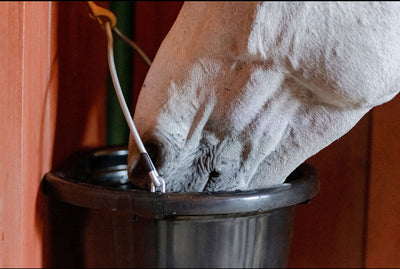
Flies are worst at dawn and dusk, and standing your horse in a shaded, breezy spot during those windows buys real relief. That might be an airy stable opened up to the prevailing breeze, or simply the shady side of the paddock with water nearby. Airflow matters more than walls: a stuffy, closed-in stable traps the flies in with the horse and turns a refuge into a fly trap. If your horse is stabled through the day, feed from the floor or a low bin rather than a high hay net — it keeps him in a grazing posture and settled through the hottest hours. We go into the full shade, airflow and water picture in our hot weather stable management guide.

Feeding low in a cool, breezy stable keeps a horse settled and out of the worst of the summer fly windows.
9. A Fly Repellent Routine That Doesn't Rely on One Bottle
Repellent sprays are the most-bought and least-relied-upon piece of fly protection. They help — no argument — but they sweat off, wash off and need reapplying, and too many riders treat one bottle in October as the whole plan for the season. In practice, a spray is the third layer: over a mask or veil, over property management, never instead of them. Apply before the dawn and dusk windows when flies are at their worst, and reapply after work or a hosing. Natural formulations are popular and plenty of riders swear by them, but the evidence is thinner than the word of mouth, so patch test and judge your own horse's response.
Another stock note, said plainly: we don't currently have a repellent spray on the shelf, so this entry stays general. The routine is the product.
10. Daily Checks and When to Call the Vet
Whatever combination you land on, check under the mask or veil every single day. Rubs on the cheekbones, grass seeds caught in the mesh, a gunky eye that's been brewing since yesterday — a mask hides problems as effectively as it prevents them, and daily inspection is the price of using one.
Learn the difference between sunburn and photosensitisation while you're at it. Sunburn shows on pink skin: the muzzle, an unpigmented patch under a white blaze. Photosensitisation can look similar — peeling, crusting, raw damage — but it extends onto white-marked areas, appears out of proportion to the sun exposure, and doesn't respond to sunscreen, because it's a reaction to light-reactive compounds, sometimes linked to liver function or plants the horse has eaten. If the damage looks like that, or a damaged eye is involved, skip the cream aisle and call the vet.

A vet examination with the owner present — the right first move for skin or eye damage that doesn't look like plain sunburn.
The Fly and Sun Kit at a Glance
| Protection type | What it does | Best for | Price (AUD, checked 12-Nov-2026) |
|---|---|---|---|
| UV fly mask | Mesh fly barrier plus UPF 50+ around the eyes and face | All fly-plagued horses; essential for pale faces and eye conditions | $69.82 — EquiFit Essential® FlyMask |
| Sound-dampening fly veil | Blocks insects from the ears and dampens noise | Noise-sensitive horses, competition work | $129.06 — Soundless Fly Veil |
| Crochet fly veil | Keeps flies off the ears while ridden | Everyday ridden work, sensitive ears | $126.85–$129.06 — Jump'In / Carat Fly Veils |
| Zinc sunscreen powder | Physical sunblock for pink skin and white markings | Greys, pink muzzles, sun-reactive skin | from $34.50 — SOOTHING & CALM powder |
| Aloe vera spray | Soothes dry, itchy, sun-stressed skin | After-sun care, mane and tail | $26.50 — SOOTHING & CALM spray |
| Fly sheet | Mesh body barrier against biting insects | Sweet itch, bite-sensitive horses | Not currently stocked at iRide EQ |
| Repellent spray | Short-lived chemical barrier | Third layer over masks and veils | Not currently stocked at iRide EQ |
Equifit
Essential® FlyMask
$69.82 AUD
View Product Equidae/Sixteen Cyrpress
SOOTHING & CALM Horse Sunscreen Powder
from $34.50 AUD
View Product Equidae/Sixteen Cyrpress
SOOTHING & CALM Aloe Vera Spray for Horses
$26.50 AUD
View ProductDo Horses Need Fly Masks?
Not every horse, and not every hour. Dark-skinned horses in fly-light paddocks can go without, and plenty do fine. But if flies bother your horse's eyes, if the skin around them is pale, or if your vet is managing an eye condition through summer, a mask earns its keep within days. The difference in a horse that's spent all December eye-rubbing and head-shaking is hard to unsee.
Fit is everything: snug enough that a fly can't get in behind the mesh, without pressure points on the cheekbones or behind the ears, and the horse must be able to blink freely underneath. Masks are mainly a daytime paddock item. Overnight a horse doesn't need the fly protection much — flies rest — and a mask in the dark can catch on rails and hay racks, so unless your vet has asked for continuous coverage for an eye condition, take it off at night and let the face breathe. Either way, lift it and look underneath daily.
Frequently Asked Questions
Why do horses wear fly masks?
Masks keep flies, dust and debris off the eyes and face, and UV-rated versions also cut the sunlight reaching pale skin around the eyes. For horses bothered by flies, horses with pale faces, and horses managing ongoing eye conditions, they're one of the simplest pieces of relief you can buy.
Do horses need fly masks at night?
Generally no. Flies are far less active overnight, and a mask can catch on rails or hay racks in the dark. The exception is a horse under veterinary care for an eye condition where continuous coverage has been recommended — in that case follow your vet's instructions and inspect the eyes daily.
Can you use human sunscreen on horses?
Yes, when it's chosen carefully. Vets and equine publications note human sunscreen can be used on horses' vulnerable patches if it's zinc oxide based and unlikely to irritate. Patch test first, keep it well away from the eyes, and stop if the skin reacts. A zinc-based product formulated for horses removes most of the guesswork.
What sunscreen is safe for horses?
Zinc oxide based products are the standard recommendation for equine sunburn — the physical barrier sits on the skin rather than being absorbed into it. Apply to pink muzzles and white markings before turnout and reapply every couple of hours through the middle of the day. If skin is already cracked, weeping, or getting worse despite protection, have your vet look at it before you keep layering product.
What's the best fly repellent for horses in Australia?
The honest answer is the one that's part of a system. Repellent sprays help but sweat off and need reapplying, so the best protection layers a spray over physical barriers — mask, veil or sheet — and good property management. The routine matters more than the brand.
Can a horse wear a fly sheet in the rain?
Yes. Fly sheets are mesh, so rain passes straight through and they dry quickly — they're not waterproof, and they're not meant to be. The bigger caution is heat rather than wet: in very humid, still weather, check how your horse is coping under any rug, and put shade and water first.
How much are fly sheets for horses?
Mesh fly sheets generally run from roughly $80 to $200 AUD depending on the mesh, coverage and fastenings, with sweet-itch-specific designs at the top of that range. We don't currently stock fly sheets — our summer horse rugs guide covers what to weigh up when buying one.
How do I get rid of flies from horses around the stable?
Hit the breeding sites. Pick up manure frequently, keep feed bins dry and clean, scrub troughs and dump stale water, and drain or fill boggy patches. Then give your horse relief windows in a breezy, shaded spot during dawn and dusk when flies are at their worst. Traps and sprays exist, but manure and water hygiene is where most of the improvement actually comes from.
Get Your Horse Summer-Ready
Fly masks, fly veils, zinc sunscreen and after-sun care are all in the horse health range, with the EquiFit, Jump'In and Equidae / Sixteen Cypress ranges a click away. All prices checked 12 November 2026.
Shop Fly and Sun Protection