Quick answer: How to keep horses cool in hot weather comes down to three things working together: shade the horse can actually reach, airflow through the stable and paddock, and 20 to 55 litres of clean water a day. A horse normally drinks that much every 24 hours, and intake climbs further in hot, humid Australian conditions. For deciding whether to ride, the Bureau of Meteorology's WBGT heat stress rating is a far better guide than air temperature alone. On high-risk days, shorten the work, hose and scrape afterwards, and know the heat stress signs that mean you stop and call the vet.
There is a particular kind of Australian summer afternoon where the air sits still and heavy, the flies are slow, and every horse in the district is standing under whatever bit of shade it can find. Heat management in summer is really stable accessories and paddock design doing quiet, unglamorous work: shade that holds through the middle of the day, air that moves through the stable rather than banking in it, and water that stays clean, cool and available. When one of those three fails, the other two have to pick up the slack, and that is when horses get into trouble.
What I have found over fifteen-plus years of keeping horses through summers that swing from dry 40-degree days to sticky 34-degree ones is that the failures are usually small and cumulative. A trough that heats up by 2pm. A stable that traps the day's warm air under a low colourbond roof. A paddock where the only decent tree is in the neighbour's block. This guide walks through each of the three pillars, with the warning signs and the routine that holds it all together, plus the horse health gear that earns its place in a hot-weather kit.

Day-to-day stable care, done in the cooler hours, is the backbone of hot weather management.
Do Horses Need Shade?
Yes, and the research backs what most owners already suspect. A peer-reviewed study of small groups of domestic horses in a hot, sunny environment found that horses actively seek out and use shade when it is available, spending a large share of daylight hours under it on hot days. A horse will not simply tough out the sun because it is a horse. Left with no option, it stands in the open, sweats harder, and burns through water and electrolytes it did not need to lose.
There is also a legal side to this, and it is worth stating plainly. In New South Wales, the Prevention of Cruelty to Animals Act makes it an offence not to provide animals with food, drink or shelter, and the other states and territories carry equivalent welfare duties. Welfare legislation expects shelter from the elements, and heatwaves count as weather. The practical reading for horse owners: if your paddock has no usable shade through the hottest part of the day, providing some is not a nicety, it is part of your duty of care. Check your own state's code of practice for the exact wording where you keep horses.
The other reason shade matters more than people assume: shade does not just protect the horse from radiant heat, it protects the water too. A trough standing in full sun can be unpleasant to drink from by early afternoon, and a horse that drinks less in the hottest week of the year is a horse queuing up for trouble.
How to Provide Shade for Horses
Good shade for a paddock is shade that several horses can use at once without forcing a pecking-order fight, stays put through the middle of the day, and does not introduce a new hazard. That usually means either established trees, a built structure, or both.
Shade Trees for Horses in Australia
Trees are the best shade there is: they move air as well as blocking sun, and they cost nothing once established. The catch is choosing them, and this is where I refuse to name a universal "safe list". Toxic ornamentals documented in Australian horse paddocks include oleander, white cedar, green cestrum, foxglove and arum lily, with privet and yew the classic garden escapees that kill livestock. Instead of trusting a blog list, including this one, get your state DPI or agriculture department's pasture plant guide and pick from what grows well locally. Fast growing shade trees for horses in Australia is one of the most searched questions in this space for good reason: nobody wants to wait fifteen years for relief.
Two practical rules that save grief. First, fence new trees off until they are properly established, because bark stripping kills more paddock trees than drought. Second, remember that wilted leaves after storms and branch drop can concentrate toxins, so do a paddock walk after big weather and remove fallen prunings from anything questionable. And if you have mature shade already, protect it. A single big tree is worth more than any structure you can build.
DIY Horse Shade Structure
Where trees are not an option, a shade sail or shade cloth structure is the weekend-project answer. The essentials: mount it high enough that a rearing or striking horse cannot reach the edge, use properly engineered anchoring rather than star pickets and hope, and give the lowest edge a generous lean so hot air rising off the cloth has somewhere to go. A flat sail in still air becomes a heat trap for whatever stands under its centre. Plan for more than one shaded point if you run a herd, because one small patch of shade with six horses is how the bottom of the pecking order ends up standing in the sun anyway. If you are building something permanent or large, check with your council first, because structures over a certain size can need approval.
The rider's take: I learned this the hard way the summer I had my gelding on a nearly bare agistment block, one scraggly tree right on the fence line and nothing else. He was sweating at the gate by 11am while the paddock next door lolloped under two big gums. One December weekend I rigged a shade sail off the boundary posts, and the change in his afternoons was immediate. What I have found since is that horses will use good shade the moment you give them the option, so the job is not convincing the horse. It is building the option.
How to Keep Horses Cool in Hot Weather
Once shade is sorted, the remaining levers are air and water. They are linked in a way that surprises people: a horse's main cooling mechanism is evaporation from sweat and breathing, so as water evaporates it cools the horse, which means airflow is not a comfort feature, it is part of the thermoregulation system.
Stable Ventilation That Actually Works
Hot air rises, so a stable cools best with low fresh-air inlets and high warm-air outlets: a half-door or open front low down, roof vents or an open gap along the ridge up top. If the only opening is a top door, the warm air banks under the roof with nowhere to go. Avoid pointing a blast of moving air straight at the horse; you want the stable exchanging air with the outside, not a fan drilling one spot in the bedding. Where fans are used, cable them out of reach and keep cords well away from curious mouths. Muck out daily, because a closed-up summer stable with a dirty floor holds ammonia and dust in exactly the still air you are trying to shift, and thick dust does not help a horse's airways on a 40-degree day.
Water: The Part That Fails Quietly
Equestrian Australia's guidance on water requirements puts normal intake at 20 to 55 litres per horse per day, rising in hot and humid weather. A horse without water can start showing colic signs within roughly 48 hours, which is why water is the first thing I check on a hot-weather walkaround and the last thing I leave to chance. A few habits that hold up:
- Multiple water points. In a herd, the boss horse will park itself at the only trough, so give at least two spaced-out options.
- Check troughs daily. Clean out the green film, top up, and feel the temperature with the back of your hand in the afternoon. Scummy or bath-warm water cuts intake.
- Hydration checks that need no gear. Moist pink gums and a neck skin pinch that springs straight back are your daily all-clear. Sticky gums or a slow tent means act, and read our piece on colic signs and the first hour for where that path leads.
- Remember the diet shift. Fresh pasture is 60 to 80 per cent moisture, while hay and hard feed are dry, so a stabled horse must drink measurably more to compensate.
- Lactating mares drink the most. Plan for 1.8 to 2.5 times maintenance water if you have a mare feeding a foal through summer.
One more wrinkle worth knowing: heavy sweat loss blunts the thirst response, so a hard-working horse in the heat can be dehydrating without feeling thirsty. That is the case for electrolyte replacement during real work, which we cover properly in our electrolytes and hydration guide. A dosing-syringe paste like Equidae's HYDROpaste electrolyte paste lives in my float kit for exactly those days, and you will find it in our supplements range alongside the daily-conditioning options.
Hosing, Scraping and the Two Cooling Methods
The Pony Club Australia hot weather policy endorses both methods owners argue about. "Wet and walk" means hosing the horse then walking it in the shade so moving air finishes the evaporation. "Hose and scrape" means hosing then scraping the excess water off, because a thick layer of water left standing on the coat can act as insulation rather than coolant. Neither is wrong; what is wrong is hosing a horse and then leaving it tied in full sun, wet, stationary, in still air. If the horse is genuinely heat-affected, the policy supports iced water applied by bucket and sponge, and the horse should be allowed to drink as much ambient-temperature water as it wants. A heat-stressed horse should be cool and comfortable before it is loaded, and only into a well-ventilated float. For horses that sweat hard and dry out under summer coats, a soothing aloe vera spray is a gentle option for sweat-itchy skin after humid days, and for legs worked hard in the heat, cold-therapy boots like the Toptac-carried Majyk Equipe Cool Gel Ice Boots or Equifit's EASYICE are the stable-kit staples I would not be without.
Should You Ride Horses in Hot Weather?
You can, and most of us do all summer, but the timing and the workload matter more than the temperature on its own. Pony Club Australia's hot weather policy is the clearest framework available to Australian riders: risk should be judged on Wet Bulb Globe Temperature, which the Bureau of Meteorology publishes daily for locations in each state, not on air temperature alone. On high-WBGT days, strenuous exercise over roughly six minutes is considered high risk, and events get shortened or cancelled on that basis.
Ride in the coolest workable window, usually early morning. Shorten the warm-up, break work into shorter efforts, and cool down thoroughly rather than hopping off. Some horses carry extra risk and need a more conservative approach: those travelling in poorly ventilated floats, "dry coated" horses that barely sweat (anhidrosis, more common in the humid north), excitable types that burn energy standing still, and any horse that is unfit, overweight or not yet acclimatised to the heat. Acclimatisation is real and takes weeks of gradual work, so a horse that has stood in a paddock through a mild spring deserves patience before you ask it for a solid training session in the first heatwave.
What Temperature Is Too Hot for Horses?
The honest answer is that there is no single number, because humidity and wind matter as much as the temperature. Danger builds with the combination: high temperature, high humidity and low wind is the profile where evaporative cooling fails, because sweat cannot evaporate into air that is already saturated. That is exactly what WBGT measures, and it is why the Pony Club framework uses it.
You will see a US rule of thumb quoted in plenty of places: add the temperature in Fahrenheit to the humidity percentage, and 130 to 150 means caution, 150 to 180 means reduce workload, above 180 means do not ride. Treat it as a US rule of thumb only. Translated, its "150" caution point sits around 35 degrees Celsius with roughly 55 per cent humidity, which will feel familiar to anyone who has ridden through a Sydney or Brisbane summer. It is a serviceable field check, but WBGT is the standard used by equestrian organisations here, and the Bureau publishes it daily.
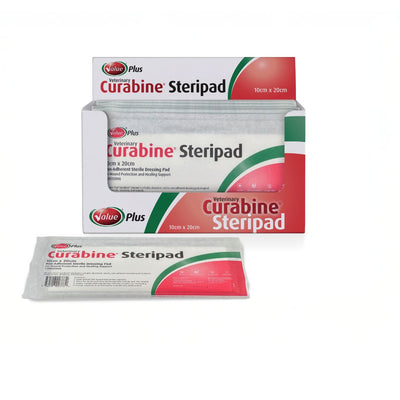
What matters more than any number is knowing the horse in front of you. The heat stress signs that mean stop and call the vet: a temperature still elevated thirty minutes after exercise, rapid shallow breathing with flared nostrils, skin pinches that tent and mucous membranes or urine colour moving the wrong way, agitation and distress, and sweating that is either excessive or conspicuously absent. A decent thermometer is the one piece of diagnostic kit every stable should own through summer; I use the Safehorse of Sweden digital horse thermometer because it is fast and the flexible tip does the job without a fight. Keep it in a kit you can grab without thinking, like the Value Plus first aid kit alongside the grooming gear that does double duty in the daily hydration check.
| Time of day | What you do | Why it matters in the heat |
|---|---|---|
| Early morning | Ride or work if you are going to; scrape, check feet, refill and scrub troughs | Coolest window for exercise, and overnight-cooled troughs get refreshed before the peak |
| Middle of the day | Leave the horse in usable shade or the open stable, with air moving; spot-check water temperature | Peak radiant heat and the worst window for any work; shade and airflow carry the load |
| Late afternoon | Hydration check (gums, skin pinch), fly control, hosing if the horse came in hot | Catches dehydration and heat load from the day while there is still light to act |
| After dark | Final water top-up, quick visual on every horse, fans or vents set for the night | Overnight recovery is when a heat-loaded horse actually cools down properly |
Everything in that table is off-the-shelf, which is the point. The gear that supports a summer routine does not need to be exotic. If you are setting up or upgrading, the pieces below are the ones that get used daily in my own stable through the hot months.
 Equidae/Sixteen Cyrpress
HYDROpaste Electrolyte Paste for horses
from $28.00 AUD
View Product Toptac International Ltd
Safehorse of Sweden Horse Thermometer
from $54.95 AUD
View Product Equifit
EASYICE
from $105.57 AUD
View Product VALUE PLUS
Value Plus First Aid Kit
from $90.00 AUD
View Product Toptac International Ltd
Majyk Equipe Cool Gel Ice Boots Gold
from $329.95 AUD
View Product Equidae/Sixteen Cyrpress
SOOTHING & CALM Aloe Vera Spray for Horses
from $26.50 AUD
View Product
The daily groom doubles as a hands-on heat check: gums, skin pinch and attitude tell you more than any gadget.

Frequently Asked Questions
Can you ride horses in hot weather?
Yes, if you pick the coolest window, usually early morning, shorten the warm-up and the session, and cool the horse down properly afterwards. Judge the day on the Bureau of Meteorology's WBGT rating rather than air temperature, and be more conservative with unfit, overweight, unacclimatised or "dry coated" horses.
How hot is too hot to work horses?
There is no single safe number, because humidity and wind change everything. Pony Club Australia judges risk on WBGT, and on high-WBGT days strenuous exercise beyond about six minutes is rated high risk. A common US rule of thumb (temperature in Fahrenheit plus humidity) puts its caution zone around 35 degrees Celsius with roughly 55 per cent humidity, but treat WBGT as the local standard.
Should you hose down a horse in hot weather?
Yes, and the Pony Club hot weather policy endorses both common methods: "wet and walk" (hose, then walk in shade so moving air finishes the cooling) and "hose and scrape" (scrape the excess off so the water layer does not insulate). Let the horse drink as much ambient-temperature water as it wants, and never leave a wet horse standing in full sun in still air.
How does heat affect horses?
A horse cools itself mainly by evaporating sweat and moisture from the airways, so heat plus high humidity plus low wind is the dangerous combination. Working in that weather drains water and electrolytes, blunts the thirst response, and in humid climates can contribute to anhidrosis, where sweating reduces or stops. Any heat-stress signs, such as an elevated temperature half an hour after exercise, rapid shallow breathing or distress, mean stop and call your vet.
How do I keep my horse's water cool in summer?
Put troughs in shaded positions, provide at least two water points so herd dynamics do not block access, scrub and refill daily, and check the temperature with the back of your hand in the afternoon. Some owners drop frozen bottles into troughs on extreme days. Fresh pasture is 60 to 80 per cent moisture, so stabled horses on dry hay need you to be more vigilant, not less.
Do horses need shade?
Research shows horses actively seek out and use shade when it is available on hot, sunny days, and welfare legislation in Australia expects animals to be given shelter from the elements. If your paddock has no shade through the middle of the day, provide it with trees or a built structure, and give a herd more than one shaded spot so the bottom of the pecking order is not pushed into the sun.
Get Your Stable Summer-Ready
Shade, airflow and water are cheap to fix in autumn and miserable to fix in a heatwave. Browse our stable accessories for troughs, cooling and yard gear, our horse health range for first aid and monitoring, and our supplements for electrolyte support through the hot months.
Shop Summer Stable Gear