Quick answer: A fly veil for horses is a snug crochet or fabric hood that slips over the ears to keep flies, dust and biting insects out through the hot months — for most of Australia that means roughly October through April. Soundproof ear bonnets add padded or foam-lined ears that take the edge off sudden noise at shows, though they muffle sound rather than blocking it. Under the current EA National Dressage Rules, ear hoods are permitted as long as they fit correctly, don't cover the eyes and aren't attached to the noseband, and officials can ask to inspect them after your test. Fit matters more than anything else: a bonnet that pinches will cause more head-shaking than the flies ever did.
By late October most of Australia is well into fly season, and no part of the horse cops it worse than the ears. Flies cluster around the ears, eyes and muzzle because the skin is thin there, which is why an otherwise quiet horse spends half its ride shaking its head instead of listening to your leg. A well-fitted fly veil or ear bonnet puts a soft barrier over the ears while still letting them swivel and do their job — on a bad fly day that's the difference between a training session and a wrestling match. Constant head-tossing isn't just irritating for you either; rubbed ear tips and hair loss are a genuine horse health issue by February if you ignore them.
The category has grown well beyond plain crochet. There are padded styles, crystal show bonnets, and soundproof ear bonnets built for horses that fall apart mentally when the PA crackles to life. This guide covers why horses wear them, the ears-in-or-out debate, what soundproof styles can and can't do, the current EA rules for competition, and how to keep one hygienic through a long Australian summer. Every price below is in AUD and pulled from bonnets we actually stock.

Ear bonnets keep flies off the ears while still letting them move and swivel freely.
Why Do Horses Wear Ear Bonnets?
The short answer is comfort, and in Australia the fly pressure behind that discomfort runs for most of the warm season. Fly activity peaks from around October through April, and while the plain bush fly is a nuisance, the ones that really hurt are the biting March flies, which tend to be at their worst late summer into autumn. A horse can swish its tail at its flanks and stamp at its legs, but it can't do much about its own ears beyond shaking its head mid-stride. Watch a horse on a bad fly day and you'll see the pattern: a couple of strides of work, then a head flick, then a rub against the bridle, then a lost transition.
Dust and trail debris are the second reason. On dry summer tracks and at dusty ag shows, fine particles settle into the ears and drive the same head-shaking cycle. Plenty of riders also like how a bonnet's base cushions the bridle's cheekpieces against the face — a small thing, but one that can matter on sensitive horses in long work sessions.
What I've found over fifteen-odd years of keeping horses is that the bonnet rarely fixes a fly problem on its own, because flies aren't only at the ears. It's one layer: the veil handles the ears, and sound rugging, shade and a good fly regime handle the rest. But it's the layer that makes the biggest visible difference to a horse's comfort under saddle, because it protects the one spot the horse cannot reach.
Bonnet Ears In or Out?
Every bonnet has fabric ears, and the question is what goes inside them. Most designs are made for the ears to sit fully enclosed — the ear folds forward gently and slides into the bonnet's ear, which is what keeps flies off the whole ear and, on soundproof styles, what allows the padding to do its job. If the ears poke out through openings or sit outside the fabric, you've got either the wrong size or a horse that won't tolerate having its ears covered, and it's worth knowing which of those two it is.
Because some horses genuinely won't accept their ears enclosed. Usually that's a handling history rather than an opinion about bonnets — horses that have had their ears grabbed for clipping or bridling learn fast that things coming at their head are bad news. In those cases I'd rather spend ten minutes teaching the horse to lower its head and accept the bonnet than fight about it every Saturday. The acclimatisation is simple: let the horse sniff the bonnet, rub its neck with it, then fold the ears gently — never poke or twist — and slide the bonnet on for a minute at a time. Most horses accept it within two or three short sessions.
The rider's take: In my 15 years keeping horses I've had exactly one who truly wouldn't tolerate his ears covered — an old stockhorse who, I suspect, was twitched for clipping as a youngster. Every other horse I've bonneted has accepted it after one or two quiet introductions where I let them sniff it first and folded the ears gently rather than forcing them through. The reality is that if you're wrestling the bonnet on every time, the horse is telling you something, and it's worth fixing that instead of blaming the gear.

Here's how the main styles on the market stack up for an Australian summer:
| Style | Best for | Price range (AUD) |
|---|---|---|
| Plain crochet fly veil | Everyday summer riding, maximum airflow | from $60 |
| Crochet with padded ears | Fly protection plus mild sound-softening | $99–$145 |
| Soundproof / acoustic bonnet | Noise-sensitive horses at shows | $119–$214 |
| Crystal show bonnet | Turnout, matched with your saddle pad | from $99 |
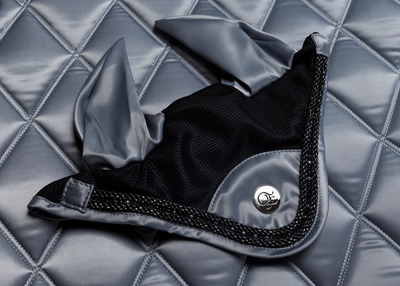
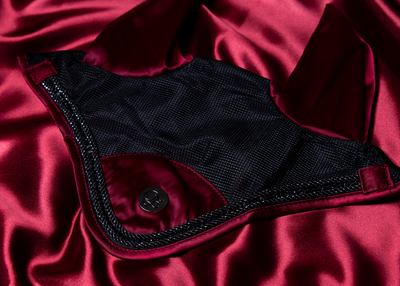
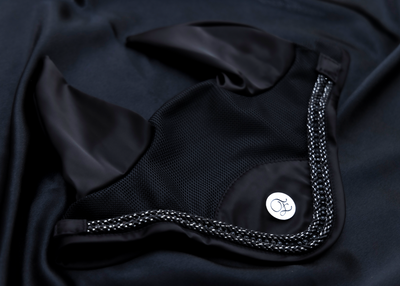
Eloquence Equestrian, an Australian-owned family business established in 2020, covers the premium end of that table. Their soundproof styles pair padded ears with genuine crystal detailing, so you get the noise-softening function and the show-ring finish in the same bonnet. Their crystal fly veils run the same shapes without the acoustic lining, for days when it's flies and not noise that are the problem.
 Eloquence Equestrian
'The King' Black Jewel Soundproof Ear Bonnet
from $119 AUD
View Product Eloquence Equestrian
'The Prince' Navy Crystal Soundproof Bonnet
from $119 AUD
View Product Eloquence Equestrian
'The Empress' Ruby Red Crystal Ear Bonnet
from $99 AUD
View Product Eloquence Equestrian
'The Majesty' Deep Olive Crystal Ear Bonnet
from $99 AUD
View ProductHorse Ear Bonnet Noise Cancelling: What Soundproof Bonnets Actually Do
First, the honest version of the marketing claim: soundproof ear bonnets muffle noise, they don't cancel it. Horses hear a wider and higher range of frequencies than we do, so a horse at a busy showground is taking in far more than you are. Dr David Marlin, an independent equine researcher who has actually tested acoustic bonnets, has found they reduce the level of sound reaching the ear — soften the sting of it, in other words — not switch it off. Any brand promising total silence is selling you a story.
That softening still counts for something. UK research on ear coverings found reduced behavioural and physiological reactivity to sudden noise — horses startled less, both in what they did and in what their stress hormones did. Research in this area is still developing, so I won't quote you precise numbers, but the direction of the findings matches what most riders report: a horse that used to scoot at the speaker announcement settles a fraction sooner.
The catch that almost never gets mentioned: ear hoods work by lowering what the horse hears, and a horse wearing one also loses some of its natural ear movement and signalling. Recent welfare discussion has flagged exactly this — a bonnet is a management tool, not a substitute for teaching a horse to cope with the world. If your horse is genuinely noise-phobic, the bonnet helps you through the day, but the long-term fix is patient desensitisation with recorded noise at home. Use the tool and do the training.
On the product side, the Equifit SilentFit is the best-known acoustic bonnet we carry. It's built with foam-lined ears designed to inhibit sound, multi-dimensional air-mesh over the base, and an antimicrobial spandex ear lining — American design from the Massachusetts label behind the original T-Boot. The Sixteen Cypress Black & Cognac bonnet takes a quieter approach: 100% cotton crochet with padded, sound-softening ears, from a US label founded by a fashion and textile designer. And if budget is the deciding factor, the Lady Godiva Equestrian Midnight Black bonnet does the everyday job for $60 — crochet base with stretch, antimicrobial, quick-dry ears.
 Equifit
SilentFit Ear Bonnet (No EF Logo)
from $214.20 AUD
View Product Equidae/Sixteen Cyrpress
Sixteen Cypress Black & Cognac Ear Bonnet
from $145 AUD
View Product Lady Godiva Equestrian
Midnight Black Bonnet
from $60 AUD
View Product
Pre-ride preparation is the moment to check that all headgear sits correctly before you walk the ring.
Matching Ear Bonnet and Saddle Pad: Summer Show Turnout
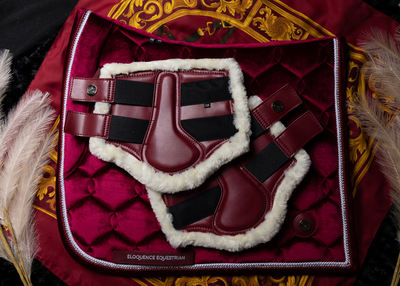
Summer shows are where a bonnet earns its keep twice over — flies in the warm-up and a polished look in the ring. The easiest way to nail turnout is to buy a bonnet and saddle pad as a set from the same brand, because dye lots and trim details match properly. Eloquence's crystal bonnets are designed to pair with their pads, and a dressage saddle pad with a matching veil reads as deliberate rather than decorated. If you prefer a quieter look, a plain black or navy veil against a white pad is classic and always safe. A subtle browband can finish the picture, but keep it restrained — crystal browband plus crystal bonnet plus crystal pad tips from elegant into costume.
Now the rules, because this is where good turnout can get you eliminated if you're careless. Under the EA National Dressage Rules in effect from 1 January 2026, ear hoods are permitted provided they are the correct size for the horse, they must not cover the horse's eyes, and they must not be attached to the noseband. Sound-reduction material is explicitly allowed in dressage. Be aware that officials can ask you to remove the bonnet after the test to check there's no added insulation and no ear plugs — ear plugs and inserts are not permitted in EA dressage. At FEI-sanctioned events, FEI rules prevail, and they can differ, so check the schedule. For jumping, attitudes are generally more relaxed, but I'd still check the current rulebook and the event schedule rather than assuming. And if you ever see a bonnet marketed as "EA approved", shop elsewhere — no such endorsement exists.
How Do You Keep a Fly Veil Clean Through an Australian Summer?
A bonnet spends its working life pressed against warm, sweaty skin in fly weather, so it collects sweat, fly spray residue and stable dust fast. What I've found is that a dirty bonnet causes more trouble than no bonnet: the crust of grime inside the ears rubs, the stitching stiffens, and suddenly the horse that loved its veil starts tossing its head again. Wash crochet gently by hand in cool water with a mild soap — never the machine, which turns crystal bonnets into a sad tangle — and air-dry them flat in the shade. In the thick of summer I'd wash a bonnet you use daily about once a week, and I'd keep two on rotation so there's always a clean one dry.
Do a quick skin check whenever you groom. A soft brush over the head with your everyday grooming brushes doubles as your inspection lap: look for rubs or scurf at the base of the ears where the bonnet's edge sits, and if you find rubs, that's a fit problem or a cleanliness problem, not a reason to abandon bonnets. The antimicrobial ear fabrics on the Lady Godiva and SilentFit styles help between washes, but nothing beats a weekly scrub for the bonnet and a daily look at the skin underneath.

A quick brush over the head doubles as a chance to check for rubs where the bonnet sits.
Frequently Asked Questions
How do you put on a horse ear bonnet?
Slip the bonnet on first, then the bridle over the top, so the cheekpieces sit on the bonnet's crochet base. Fold each ear forward gently and slide it into the bonnet's ear — don't poke or twist — then check the veil sits below the ears without covering the eyes. If the horse is new to bonnets, let it sniff the veil and start with a minute at a time.
How do you tie a horse ear bonnet?
Most modern bonnets don't need tying — they anchor under the bridle's cheekpieces and stay put. Traditional crochet fly veils with cords tie loosely under the cheekbone or around the throat, but never tight enough to leave a mark or restrict the jaw. If you can slide two fingers under the cord, you're in the right zone.
What is a horse ear bonnet for?
Three jobs: keeping flies and dust off the ears through the warm months, softening sudden noise where the bonnet has padded or sound-reducing ears, and finishing show turnout when matched with your saddle pad. Most everyday riders use one purely for the first reason.
Does a horse ear bonnet keep flies off?
It keeps flies off the ears themselves — the one spot a horse can't reach to shoo them away. It does nothing for the body, face or legs, so on bad fly days pair it with fly spray, a fly mask in the paddock and shade. Think of the bonnet as one layer of a fly plan, not the whole plan.
What size ear bonnet does my horse need?
Most brands run Pony, Cob, Full and XL. Match the size to your bridle size as a starting point, then eyeball the fit: the ears should fill the bonnet's ears without stretching the fabric, the base should sit flat under the cheekpieces, and nothing should press on the eyes. Too small pinches; too big lets flies in and shifts under the bridle.
Are soundproof ear bonnets allowed in EA competition?
Yes. The EA National Dressage Rules effective 1 January 2026 permit ear hoods, including those made of sound-reduction material, provided they're the correct size, don't cover the eyes and aren't attached to the noseband. Stewards can ask you to remove the hood after the test to check for added insulation or ear plugs, which are not permitted in EA dressage. At FEI events, FEI rules apply, and for jumping check the current rulebook and event schedule.
Do soundproof ear bonnets block out all noise?
No, and treat any marketing that claims it with suspicion. Acoustic bonnets muffle and soften sound — they reduce what reaches the ear, which takes the sting out of sudden noise. The horse still hears the world around it, which is part of the point: you want a horse that's less startled, not one that can't hear you.
Shop Fly Veils & Ear Bonnets
Plain crochet veils from $60, padded and soundproof styles from Eloquence Equestrian, Equifit, Sixteen Cypress and more — all in live stock with fast Australian delivery.
Shop Ear Bonnets