Quick answer: Colic is a sign of abdominal pain, not a disease in itself. If your horse is pawing, watching its flanks, repeatedly lying down and getting up, off its feed or rolling, remove all food and phone your vet straight away. What you do in the first hour, and how early the vet gets involved, is one of the most critical factors in how the episode ends.
The rider's take: In my 15 years keeping horses, the colic that sticks with me wasn't the dramatic one. It was the quiet gelding at a property I managed near Goulburn who was just "off" at breakfast — head low, barely touched his feed, one glance back at his belly that I nearly talked myself out of. By 10am he was pawing and the vet was on the road. It resolved, but the reality is I wasted two hours because "quiet" didn't register as colic in my head. It does now.
Most Australian horse owners will face a colic scare at some point. Colic simply means abdominal pain, and it's one of the major reasons for emergency equine vet call-outs in this country. It can be a mild gas episode that passes on its own, or a twisted gut that needs surgery within hours. The hard part is that early on, both can look uncomfortably similar.
The good news is that colic gives you clues, and most of them are visible from the gate. Knowing the horse health and first aid basics, learning what's normal for your own horse, and having a plan for the first hour puts you ahead of the game when it matters. This guide covers the signs to watch for, how to read severity, what to do while the vet is on the way, and how the way you feed and manage your horses day to day lowers the risk.
One note before we start: this is a recognition and triage guide. Colic is never a diagnosis you make yourself, and nothing here replaces your vet's hands on your horse.

Your vet's physical exam is still the only reliable way to tell a mild colic from one that needs surgery. Photo: veterinary assessment of a horse with the owner present.
Early Signs of Colic in Horses
The classic picture of colic is a horse rolling in its paddock. The early picture is far less dramatic, and far easier to miss. In practice, the horses that worry me most are the quiet ones.
The commonly recognised signs of abdominal pain in horses include:
- Flank-watching: turning the head back toward the belly or flanks, often repeatedly
- Pawing at the ground, sometimes intermittent, sometimes constant
- Kicking or biting at the abdomen
- Stretching out as if to urinate without passing anything
- Repeatedly lying down and getting up, sometimes rolling
- Rolling violently, or lying flat out on the side or back
- Dog-sitting — sitting upright on the haunches, which often signals a strangulated or displaced gut
- Loss of appetite — the first sign many owners actually notice
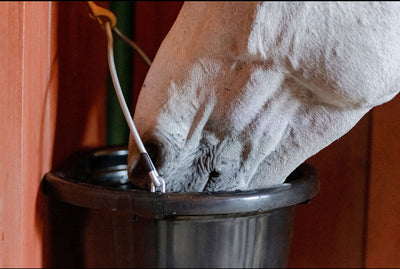
- Head in the water trough or splashing without drinking
- Changed droppings: colour, consistency or frequency, including passing none at all
- Changed or absent gut sounds on the flanks
- Bloating or distension of the belly, sweating, rapid breathing, an elevated heart rate
- Gum colour changes, a distant or lethargic demeanour, cool legs or muzzle
Subtler early changes include a horse that's simply quieter than normal, leaves hay behind, wanders a little restlessly or keeps glancing at its sides. Signs vary a lot between individual horses and with how much pain they're in, which is exactly why knowing your horse's normal behaviour while it's healthy is worth more than any checklist.
Reading severity: the checks vets actually use
Vets commonly use a handful of indicators to separate "monitor this" from "get in the truck now". You can learn every one of them at home.
Heart rate. A normal resting heart rate for an adult horse sits roughly between 24 and 44 beats per minute. A rate above about 60 combined with other colic signs is generally considered urgent, and above about 80 is treated as grave. Take your horse's pulse while it's healthy a few times so you have a personal baseline, because individual normals vary.
Gums. Lift the lip and look. Healthy gums are pink and moist, and refill with colour in one to two seconds after you press them. Gum colour that's pale white, brick red, jaundiced, bluish, purplish or muddy all point to serious trouble, and a capillary refill time slower than about two seconds is a concern worth acting on.
Gut sounds. Place your ear (or a stethoscope) high and low on each flank. A healthy gut gurgles and rumbles. A completely silent gut alongside other colic signs is one of the more serious findings you can make at home.
If the picture includes violent rolling, sweating, blowing breathing, a heart rate pushing past 80, or gums that have lost their pink colour, you are not managing this at home. Call the vet.
Types of Colic in Horses
You can't diagnose the type from the paddock, and you shouldn't try. But knowing what's possible changes how seriously you take what you're seeing, so here's the plain-language map.
Gas or spasmodic colic is common and often mild. Pain comes in waves as the gut cramps, so the horse looks uncomfortable, then normal, then uncomfortable again. Many of these episodes settle, but your vet still wants to hear about it.
Impaction colic happens when dried ingesta blocks part of the gut, typically where it narrows. The usual risk factors are poor dental wear (so feed arrives poorly ground), coarse or indigestible feed, inadequate water intake, and sudden reductions in movement, such as box rest after an injury.
Sand accumulation deserves special mention for Australian horse owners. Horses grazing short pasture or fed hay directly on sandy ground in parts of Western Australia, Queensland and coastal NSW can swallow enough sand to weigh down the gut. Where sand is a local issue, vets commonly recommend psyllium husk as a preventive, but this is a supplement you add to a plan with your vet, not something you dose on your own.
Grain overload follows feed-room break-ins or accidental over-feeding. Excessive fermentation in the gut can set off a cascade that goes well beyond simple pain.
Displacement and torsion are the surgical emergencies. A section of gut moves into the wrong position or twists on itself, and the horse's pain is usually severe and unrelenting. These are the colics where hours genuinely matter.
Some cases resolve without medical intervention, a significant percentage need prompt veterinary care, and a small percentage need emergency surgery. You cannot tell which one you're looking at from over the fence. That's the vet's job.
Causes of Colic in Horses
What I've found over the years is that colic rarely arrives out of nowhere. It usually rides in on a change the gut didn't get a say in. Common triggers include:
- Abrupt feed changes, including new hay batches, batch-to-batch differences and new pasture
- Weather changes, especially cold snaps where horses drink less, and hot stretches where they sweat out more water than they replace
- Transport and competition stress, plus the disrupted feeding that comes with them
- Feed-room break-ins, the classic gate left open overnight
- Poor dental condition, which leaves feed poorly chewed and harder to move through
- Parasite burdens, including damage from heavy worm loads
One phenomenon worth naming because owners ask about it: some horses do colic shortly after worming. The reality is that a large burden of encysted small redworm larvae can emerge in the gut after a dewormer dose, and that emergence itself can cause inflammation and pain. It's not a reason to avoid worming, and it's not a reason to panic after every drench. It's a reason to worm according to a plan built on worm egg counts, which is how the modern approach works anyway.
What to Do in the First Hour
When you think you're looking at colic, the first hour follows a plan. The plan I use, and the one the Australian Veterinary Association publishes for owners, runs like this:
- Remove all food. Not reduced. Removed, until your vet says otherwise.
- Phone the vet immediately. Time is one of the most critical factors in how colic resolves. If you're unsure whether it warrants a call-out, the call costs you nothing but embarrassment.
- Be ready to report: the behaviours you've seen, whether gut sounds are present, what the droppings look like (colour, consistency, frequency), recent changes in feeding, management, exercise or worming, any past colic episodes, and for mares, breeding or pregnancy status.
- Keep the horse calm and comfortable. A quiet, safe space beats a stressful walk to the float.
- Let it lie down if it's resting quietly and not at risk of injury. The old idea that a colicking horse must never lie down isn't supported.
- If it's rolling violently, slow-walking in a clear, open area can keep it safe and on its feet. Your safety comes first: a thrashing horse is genuinely dangerous to be around.
- Give no drugs unless your vet specifically directs you to. Pain relief can camouflage the problem and interfere with the vet's assessment of severity, which is exactly what you don't want in the window where diagnosis matters.
- Follow your vet's advice exactly and wait for them. Don't trailer to a clinic without calling first.
While you wait, the first-hour checks are the ones worth doing: gum colour and refill, heart rate, gut sounds and the state of the droppings. They take two minutes and they're the exact things your vet will ask about.

A thermometer you can actually use on a horse belongs in every feed room's first aid kit, and it's a cheap piece of insurance for every kind of emergency, colic included. Normal adult horse temperature sits around 37.5–38.5°C; anything well above that range alongside colic signs is another detail worth having ready for the phone call.

How to Treat Colic in Horses at Home
Here's the honest answer to the question everyone searches: you don't treat colic at home. There is no home treatment that fixes it. What you can do is first aid, and the difference matters.
First aid means removing food, calling the vet, keeping your horse calm and safe, and gathering the information your vet needs. It means slow-walking only when the horse is thrashing and needs protecting from itself. It means stopping the walk the moment the horse is calm, or if it's becoming exhausted. A colicking horse that's been walked for hours is now a colicking horse with no energy reserves.
What first aid never means:
- Nothing by mouth. No water buckets held up, and definitely no home drenches. If oil or fluids are needed, your vet passes a stomach tube, which is exactly why drenching at home is dangerous: aspiration is a real risk and it delays proper treatment.
- No pain medication of any kind without your vet's direction, for the reasons above.
- No "wait and see." Colic is the one condition where this approach genuinely costs horses their lives. A mild episode that would have resolved and a torsion can look similar at hour one.
- No loading up and driving to the clinic without the vet knowing. Call first, every time.
The mistake I see most from owners isn't the dramatic stuff. It's waiting an extra hour to see if the horse settles. If you're reading this section with a horse in the paddock showing signs right now, the next hour belongs to your vet, not to this article.
How to Prevent Colic in Horses
Prevention is where you actually have control, and it's unglamorous: routine, water, teeth, worms and sense. None of it guarantees anything, but together it lowers the risk, which is all any management can do.
- Forage-first, consistent feeding. Same base diet, same times, roughage doing most of the work.
- Change anything gradually, over 7 to 14 days, including new hay and new pasture.
- Water, always. Clean, accessible, and more of it in cold snaps: adding warm water to the trough is an old trick that genuinely works, because horses drink far less from icy water, and lowered intake is a straight path to impaction. On hot days, hydration support and electrolytes and supplements keep intake up. Our guide to electrolytes and hydration for horses in an Australian summer covers that side in detail.
- Dental checks at least annually. Poorly ground feed is a classic impaction risk factor.
- Targeted parasite control built on worm egg counts rather than blanket dosing. Our seasonal worming calendar for Australian horses explains how to build that plan.
- Psyllium on sandy country, as part of a vet-directed plan if you're on sand.
- Lock the feed room. Every single time.
- Regular daily turnout and a predictable routine. Movement keeps the gut moving.
Gut-support supplements have their place too, as part of a vet-directed management plan for horses whose digestion needs the help. The honest framing: they support gut function day to day. They do not prevent or treat colic, and any product that claims to should be treated with suspicion.
 VALUE PLUS
Equinox Horse Wormer Paste - Orange Tube
from $16.75 AUD
View Product VALUE PLUS
Expel Yellow Tube Wormer Paste for Horses
from $20.00 AUD
View Product CAN Animal Care
Fixine for Equine | Digestive Probiotics
from $78.05 AUD
View Product
Consistent, forage-first feeding with gradual changes is the backbone of colic prevention. Photo: daily feeding in the stable.
A well-stocked horse health and first aid kit, a plan for the phone call, and a routine you can defend. That's the whole prevention story, and in fifteen years of keeping horses I've never seen it fail as badly as doing nothing does.
Frequently Asked Questions
What are the early signs of colic in horses?
The earliest signs are usually subtle: a horse that's quieter than normal, leaves food behind, passes fewer or changed droppings, or keeps glancing or nipping at its flanks. Pawing, stretching as if to urinate, repeatedly lying down and getting up, and rolling are the more definite signs. Any of them justifies a call to your vet.
What are the signs of gas colic in horses?
Gas or spasmodic colic typically shows as pain that comes in waves: the horse paws or watches its flank for a stretch, then seems comfortable, then repeats. Bloating of the belly may be visible, and gut sounds are often noisy rather than silent. These episodes are often mild, but your vet still needs to hear about it.
Is colic in horses contagious?
No. Colic itself is abdominal pain, not a transmissible disease. That said, a small number of underlying infectious causes, such as salmonella-type gut infections, can affect more than one horse on a property. If several horses colic at once, tell your vet that detail, because it changes the investigation.
Can horses recover from colic?
Yes, many cases resolve, a significant share need prompt veterinary care, and a small percentage need emergency surgery. The outcome depends heavily on what's causing the pain and how early treatment starts, which is why early vet involvement matters so much.
How long does horse colic last?
It depends entirely on the cause. A mild gas episode might pass within a couple of hours. An impaction can rumble for days. A displacement or torsion can go from first sign to critical within hours. There's no safe waiting period, which is the point of every phone call your vet asks you to make.
Why do horses die from colic?
Almost never from the pain itself. Horses die when the blood supply to the gut is cut off by a twist or displacement, when the gut ruptures, or when toxins from a compromised gut enter the bloodstream and send the horse into shock. That cascade is time-critical, and it's why hours count in the severe cases.
What to do if you think your horse has colic?
Remove all food, phone your vet immediately, keep the horse calm and safe, allow it to lie down if it's resting, and give nothing by mouth or in the way of medication unless your vet directs you to. Have your observations ready: behaviour, droppings, gut sounds, and any recent changes in feed, management or worming.
Be ready before you need to be
Colic rewards the prepared. Build out your horse health and first aid kit, keep a thermometer you trust in the feed room, and set up your stable and stable equipment so water is never the thing your horse has to go looking for. If you're on sandy ground or managing a gut-sensitive horse, our supplements range includes vet-plan options worth discussing with your own vet.
Shop Horse Health & First Aid