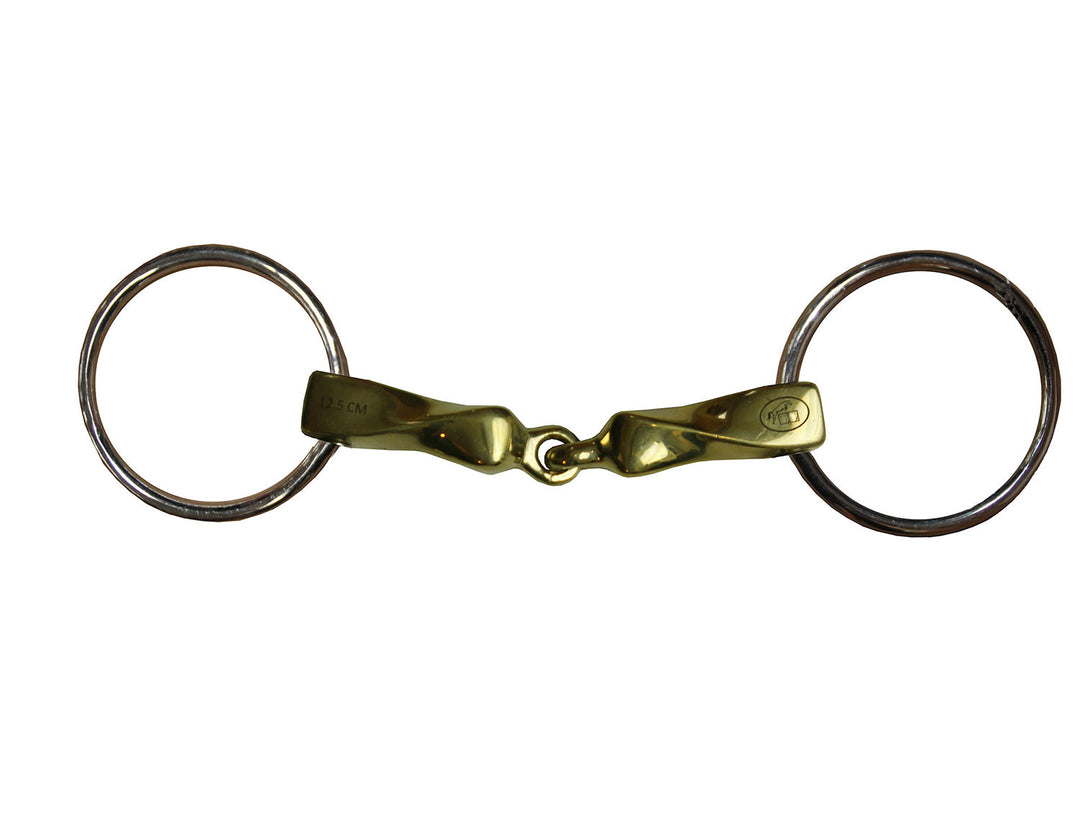
Snaffle Bits
Shop snaffle bits in Australia at iRide EQ. Loose ring, eggbutt, D-ring, full cheek, and Baucher snaffles — in stainless steel, sweet iron, and copper-inlaid mouthpieces from Jump'In and Toptac International.
A snaffle bit is any bit where the mouthpiece acts with direct pressure — no leverage, no curb chain, no shank. The reins attach to rings that connect straight to the mouthpiece, so what you feel in your hands is exactly what your horse feels in the mouth. That direct, simple connection is why snaffles are the starting point for young horses, the go-to for flatwork, and the legal requirement for most EA (Equestrian Australia) dressage levels.
But "snaffle" covers a wide range. A thick, smooth loose ring feels completely different from a thin single-jointed eggbutt, and both feel different from a Baucher with a French mouth. The right choice depends on your horse's mouth conformation, your discipline, and what you're trying to achieve — a quiet contact, a softer response, or a fix for a specific issue like leaning or evading.
Loose Ring Snaffles
The loose ring is the most neutral snaffle. The ring slides freely through the mouthpiece, which means the bit moves more in the mouth and the horse can't lean against a fixed joint. That mobility encourages a softer contact — but it also means the bit can pinch if it sits too close to the lips. Most riders use bit guards or choose a slightly wider mouthpiece.
Jump'In makes loose ring snaffles in stainless steel, sweet iron, and rubber-covered options. The sweet iron mouthpieces develop a pleasant taste with use, which encourages salivation and acceptance — particularly useful for horses that go dry in the mouth.
Eggbutt and D-Ring Snaffles
Eggbutt and D-ring snaffles have fixed cheeks — the ring is fused to the mouthpiece, so the bit sits more stable in the mouth. Less movement means less pinching, and the cheekpieces provide a mild guiding effect. D-rings give a touch more steering than eggbutts because the straight side of the D presses against the horse's cheek.
These are the most popular everyday snaffles for good reason. They're quiet, stable, and easy on the mouth. If you're not sure what to start with, an eggbutt with a single-jointed mouthpiece is a safe default.
Full Cheek and Baucher Snaffles
Full cheek snaffles have long upper and lower arms that prevent the bit from sliding through the mouth and give added steering. They're popular with young horses and in show jumping, where directional control matters. Always use bit keepers with a full cheek — they stabilise the cheekpieces and stop the arms from flipping.
The Baucher (or hanging cheek) snaffle has a small fixed cheek that creates slight poll pressure. It's a dressage favourite for horses that go better with a stiller bit. Jump'In makes Bauchers with French mouths, single joints, and rubber-covered options.
Choosing the Right Snaffle
- Starting out or young horse: thick, smooth, single-jointed eggbutt. Mild and forgiving.
- Dressage flatwork: loose ring or Baucher with a French (double-jointed) mouthpiece for a softer feel.
- Show jumping: full cheek or D-ring for steering. Sweet iron mouthpiece for acceptance.
- Horse that leans: loose ring with a thinner mouthpiece — the mobility discourages leaning.
Need a complete bridle setup? Browse our bridles and reins. For a full guide to horse leg protection across disciplines, see our horse boots buyer's guide, or shop the full horse boots and protection range.
Shop Snaffle Bits Online
Filter by mouthpiece type, ring style, and material below. Every bit ships from our Australian warehouse with fast delivery.