Quick answer: A saddle that slips forward needs an honest fit check before extra equipment. Girth-groove position, billet alignment, saddle balance, horse conformation and movement can all play a part. A correctly fitted breastplate may help stabilise some saddles, but it cannot turn an unsuitable saddle into a suitable one. Persistent movement, pressure marks, soreness or a change in behaviour calls for a qualified saddle fitter, with veterinary input if pain or lameness is suspected.
A saddle creeping towards the horse's shoulders is more than an irritating tack-room problem. It can change the rider's balance, interfere with shoulder movement and create pressure in places that were comfortable when the saddle was first fitted. The answer is rarely as simple as pulling the horse girth tighter.
Australian horses also change shape through the year. A spring pasture flush, a spell of reduced work, weight loss, muscle development or a new saddle cloth can alter the fit you thought was settled. Before reaching for a breastplate, look at the whole setup: saddles, saddle pads, girth, billets and the horse underneath them.

Good saddle management starts before the first mounting block step.
Why does a saddle slip forward?
Start with the horse, not the accessory aisle. Some backs are naturally flatter or have less prominent withers, so a saddle has less shape to sit into. A forward-sloping back, a pronounced girth groove or a broad ribcage can also encourage the saddle to travel as the horse walks, trots or jumps. None of those features automatically means the saddle is wrong, but they do affect the fit conversation.
The girth can add to the problem. If it naturally settles several centimetres in front of the saddle's ideal position, it can pull the saddle forward with every stride. Billets that do not line up with the girth groove may create a similar diagonal force. A rider's position, a saddle that rocks or bridges, and a pad that is too thick or poorly shaped can all muddy the picture.
- Check the movement: watch the saddle at walk, trot and the horse's usual work. A saddle that looks still in the stable may move under load.
- Look at the contact: uneven sweat, dry patches, rubs or hair pushed the wrong way deserve attention, but they are not a diagnosis on their own.
- Notice the horse: tail swishing, girthiness, reluctance to go forward, shortened steps or a new change in way of going may indicate discomfort.
Do not try to solve a fit issue by stacking pads or cranking the girth tight. That can create more pressure and still leave the saddle moving. A professional assessment with the horse standing and ridden is the sensible next step if the pattern keeps returning.
What should you check before buying a breastplate?
A breastplate is a stabilisation aid. It connects the saddle to the horse's chest and can limit unwanted movement in some combinations of horse, saddle and work. It is not a substitute for a correctly fitting saddle, and it is not automatically needed because a saddle has shifted once after a wet-weather ride.
Fit matters more than how impressive the leather looks. The breastplate should sit without restricting the shoulders, neck or breathing. Straps should lie flat, remain clear of the elbows and avoid rubbing. The attachment points need to suit the saddle and should not pull the front of the saddle down when the horse moves. Recheck everything after mounting; a breastplate can look fine from the ground and still become restrictive in motion.
The rider's take: I once spent too long blaming a new saddle pad for a saddle that kept walking forward during arena work. The real clue was the girth groove on a broad, low-withered horse; once a fitter assessed the saddle ridden, the answer was a change in fit rather than another layer underneath. That mistake made me much less enthusiastic about “quick fixes”.
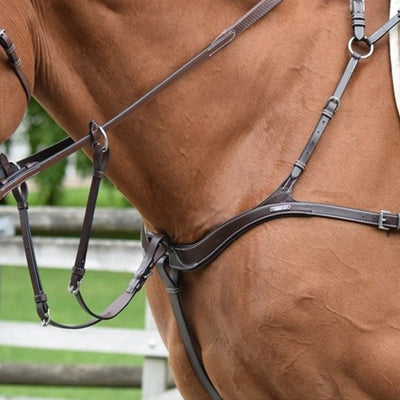
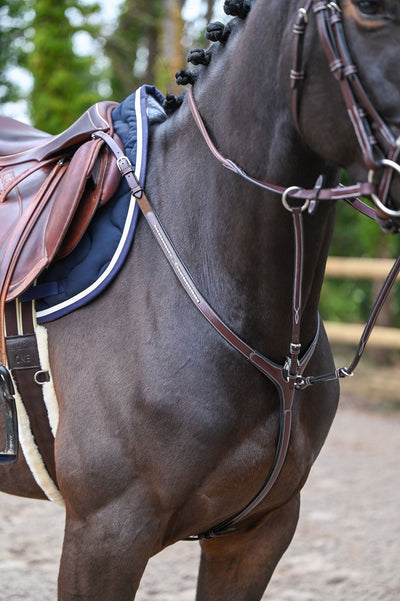
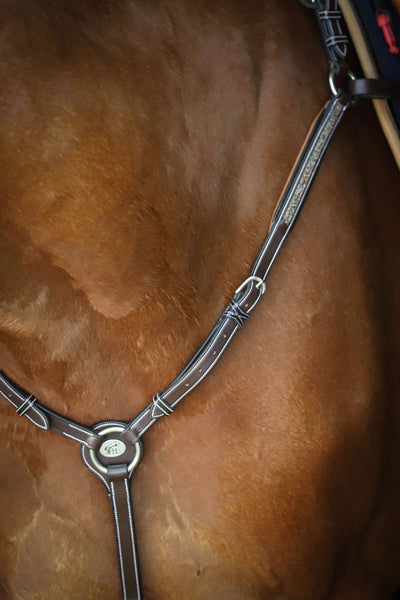
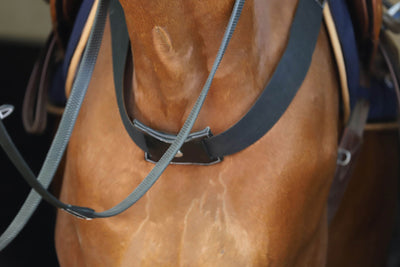
There are several sensible designs in the live iRide EQ range. The Jump'In 2 in 1 Breastplate and Martingale combines those functions, while the Elastic Breast Collar is a different style of chest connection. The ROM breastplate is listed under Lady Godiva Equestrian. These are catalogue examples, not a prescription: choose by the horse, saddle, discipline and the fit advice you have received.

As stocked at iRide EQ.

As stocked at iRide EQ.

As stocked at iRide EQ.
How should the girth and billets be positioned?
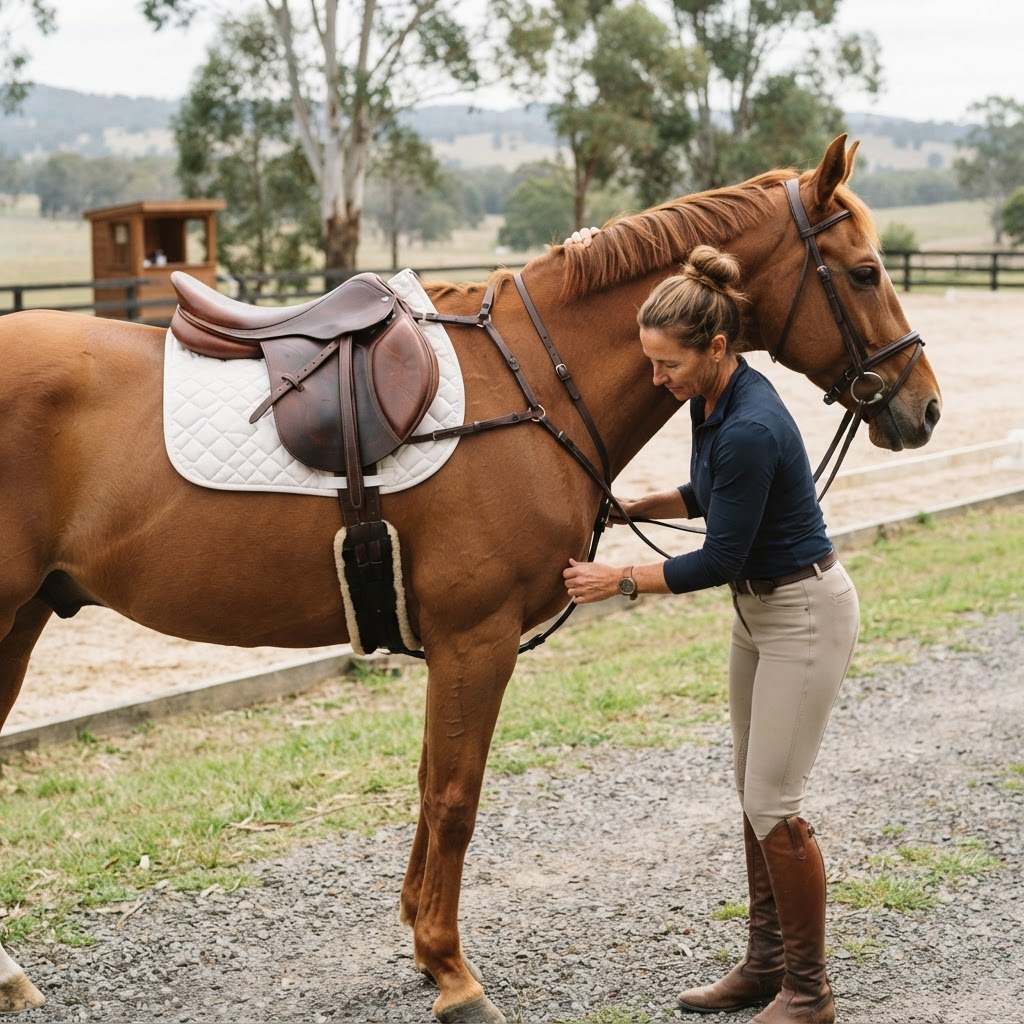
The aim is to let the girth sit in the horse's natural girth groove while the saddle remains balanced behind the shoulder. Move the saddle back to its working position, then place the girth where the horse's anatomy invites it to sit. It should not be dragged forward simply because that is where the first billet seems to land.
Check both sides. If the billet alignment pulls the girth forward, a different billet arrangement or girth shape may be worth discussing with a fitter. That does not mean a contoured or anatomical girth is a guaranteed solution. It needs to suit the horse and saddle, and the horse should be inspected for rubs after each ride, especially in hot Australian weather.
A few quiet checks before riding can reveal a lot about saddle placement.
Tighten progressively rather than hauling the girth to its final setting in one go. Walk the horse, mount, and recheck because the ribcage can change shape once the horse is moving. There is no universal finger-count rule that suits every anatomy, girth and saddle. The correct setting is secure without restricting breathing, rubbing the skin or causing distress.
Which breastplate style suits jumping and everyday work?
For jumping, riders often want the saddle to remain stable during take-off and landing, particularly on horses with a shape that makes forward movement more likely. A running martingale attachment may be relevant for a particular training setup, but it adds another piece of equipment that must be fitted and used correctly. A breastplate without a martingale may be the more appropriate choice when the only concern is saddle stability.
In everyday flatwork, less can be more. If the saddle is stable and the horse is comfortable, adding a breastplate just because it looks tidy is unnecessary. If you use one, inspect the chest and shoulder area after the ride and watch for changes in stride, tension or attitude. Leather should be clean and supple, elastic sections should be checked for damage, and buckles must be secure before work.
The collection includes the Monday Breastplate - Week Collection, the Tuesday breastplate - Week Collection, the Wednesday Breastplate - Week Collection, and several martingale-only options. Product names and availability can change, so check the individual listing before ordering. For competition, confirm the current rules for the specific EA discipline and event rather than assuming one piece of tack is universally required or approved.

As stocked at iRide EQ.

As stocked at iRide EQ.

As stocked at iRide EQ.
What is the safest way to troubleshoot saddle movement?
Keep a short record for a week or two: horse workload, surface, weather, girth used, saddle pad, where the saddle finishes and how the horse feels. Photos before and after work can help a fitter see a pattern that is hard to spot from the saddle. Take the saddle, girth and breastplate you actually use; testing a different setup in isolation can hide the issue.
| What you notice | What to investigate | Practical next step |
|---|---|---|
| Saddle moves forward at walk and trot | Fit, back shape, girth groove and billet alignment | Arrange a ridden saddle-fit assessment |
| Movement starts after a pad change | Pad thickness, shape and clearance | Return to the known setup and compare carefully |
| Horse becomes tense or short-strided | Pressure, soreness or another health issue | Stop and seek qualified professional advice |
| Saddle is stable but rider wants security | Rider balance and training, not just tack | Discuss position with a coach; avoid unnecessary tightening |
A half pad can change the way a saddle sits, but it is not a universal answer to forward slip. The same applies to non-slip materials and extra-tight girthing. If the horse has heat, swelling, repeated rubs, pain on grooming or a clear change in performance, remove the equipment and get help rather than riding through it.
Frequently Asked Questions
Can a breastplate stop every saddle from slipping forward?
No. It may help stabilise some horse-and-saddle combinations, but it cannot correct poor fit, incorrect saddle placement or a girth that does not suit the horse.
Should I tighten the girth more if the saddle moves?
Not as a default response. Over-tightening can cause discomfort and restrict the horse. Check fit, placement and girth alignment, then have the setup assessed if the problem persists.
Does a breastplate mean the saddle is the wrong size?
Not necessarily. Some conformations benefit from extra stabilisation, but repeated movement still deserves a proper fit check with the horse standing and ridden.
Can I use a running martingale with a breastplate?
Only when it is appropriate for the horse and training purpose and fitted correctly. More straps mean more points to check for restriction, rubbing and secure attachment.
How do I know if saddle movement is hurting my horse?
Watch for soreness, pressure marks, rubs, girthiness, shortened steps, reluctance to work or a change in behaviour. These signs warrant stopping and seeking qualified advice.
Is there one correct number of fingers for girth tightness?
No universal number suits every horse and equipment combination. The girth should be secure without restricting breathing, rubbing or causing distress, and should be checked again after mounting.
Do EA rules require a breastplate?
Do not assume so. Check the current rules for the relevant EA discipline and event. A breastplate should be selected for fit and function, not because of an unsupported blanket rule.
Start with the right stabilisation gear
Browse the breastplates and martingales collection, then compare it with our girths and saddles. Check the individual product listing and seek fit advice where saddle movement keeps returning.
Shop Breastplates & Martingales