Join the iRide EQ list. Be first to know when sold-out favourites come back, when new Horse Pilot and Freejump gear lands, and get our riding guides in your inbox.
Horse Saddles
Filter
Explore our comprehensive guide to equestrian saddles at iRide EQ. Master the principles of English saddle fitting, tree width selection, and panel construction for dressage, show jumping, and general purpose riding across Australia. Saddles coming soon to iRide EQ—in the meantime, shop our full range of matching tack and accessories.
Quick Answer: Shop horse saddles in Australia — dressage, jumping and all-purpose saddles from leading saddle makers, with fitting guidance for your horse's build. A correctly fitted saddle provides complete spinal clearance, even pressure distribution across the back, and unrestricted shoulder movement. Pair your saddle with high-grade stirrups and leathers, an anatomical girth, and a protective saddle pad.
Comprehensive Guide to Equestrian Saddles in Australia
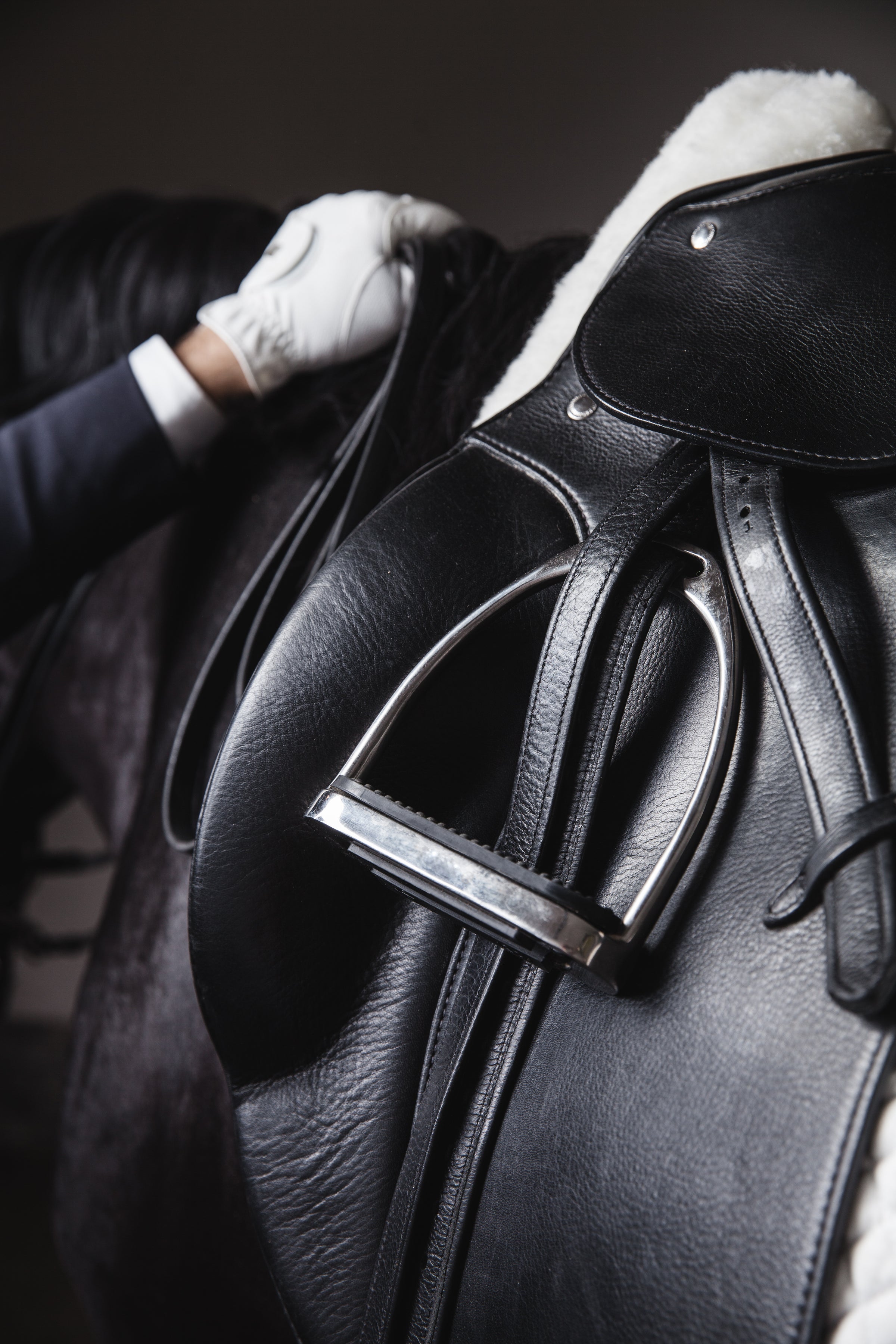
The saddle is the fundamental bridge between horse and rider. A well-designed English saddle places the rider's center of gravity directly over the horse's center of motion, allowing subtle weight aids while eliminating painful pressure points over the thoracic spine. Whether training warmbloods for Grand Prix dressage, schooling off-track Thoroughbreds for show jumping, or hacking across Australian bush trails, understanding saddle engineering is critical for equine longevity and rider safety.
Australian riding environments present unique challenges for saddlery. Intense heat, humidity, and dry dust test leather flexibility and panel cushioning. Wool-flocked panels allow custom reflocking to accommodate seasonal weight changes in pasture-kept horses, while synthetic foam panels maintain a consistent close-contact feel. Selecting the right tree width and gullet plate ensures your horse maintains full freedom through the trapezius and shoulder muscles.
Quick Facts
Best ForRider balance, spinal clearance, weight distribution, performance
DisciplinesDressage, show jumping, eventing, general riding, trail riding
Top BrandsExpert Fitting Guide (Saddles Coming Soon)
Ships FromAustralia — local expert support
English Saddle Types & Specifications Compared
Different equestrian disciplines demand specialized saddle geometry to support rider posture and limb biomechanics. Comparing dressage, jump, and general purpose saddles reveals how seat depth, flap pitch, and knee roll placement directly impact your riding position. Quality saddlery manufacturers—including traditional European brands like Kentaur—focus on tree flex and panel ergonomics to protect the horse's back.
Saddle Category
Seat Profile
Flap Geometry
Girth Billet System
Primary Discipline
Rider Position
Dressage Saddle
Deep to Extra Deep
Straight & Vertical Cut
Long Billets (Short Girth)
Dressage & Classical Flatwork
Upright, long stirrup leg position
Show Jumping Saddle
Flat to Medium Depth
Forward Angle Cut
Short Billets (Long Girth)
Show Jumping & Hunt Seat
Two-point, short stirrup length
Eventing Cross-Country
Medium-Flat Monoflap
Extreme Forward Pitch
Long or Short Billets
Cross Country & Speed Jumping
Forward balance over big obstacles
General Purpose (GP)
Medium Depth
Moderate Forward Angle
Short Billets (Long Girth)
Pleasure, Hacking & Multi-discipline
Versatile intermediate leg position
Showing & Hunter Saddle
Traditional Flat Seat
Straight Minimalist Flap
Short Billets (Long Girth)
Show Ring & Turnout Classes
Traditional close-contact seat
To preserve your saddle's leather and maintain tree integrity, explore our range of protective saddle accessories including fleece saddle covers, bridle bags, and leather balsam.
Saddle Fitting Principles & Tree Architecture
Wither & Gullet Clearance
A properly fitted saddle must maintain 2 to 3 fingers of vertical clearance over the wither when the rider is seated in the saddle. The gullet channel must be wide enough (typically 3 to 4 fingers) to clear the dorsal spinous processes completely, ensuring the saddle panels rest solely on the muscular rib cage.
Panel Angle & Weight Distribution
The angle of the saddle panels must mirror the slope of the horse's back muscles. Wool-flocked panels mold to the horse's back over time, offering customizable pressure relief. Foam panels provide a sleek close-contact feel and do not alter shape over time. Combining a contoured half pad with a quality saddle pad allows riders to fine-tune fit during seasonal conditioning changes.
Tree Width & Shoulder Freedom
The saddle tree points must lie parallel to the horse's scapula (shoulder blade). If the tree points are too narrow, they pinch the shoulders and restrict foreleg reach. If too wide, the saddle tips forward onto the wither. Interchangeable gullet systems allow riders to adjust tree width as their horse develops muscular topline.
Care & Maintenance of Leather Saddles
Extending the life of a leather saddle requires regular cleaning and conditioning, especially in hot or humid Australian regions. After every ride, wipe down leather surfaces with a slightly damp sponge to remove sweat salts and arena dirt. Apply a quality leather conditioner or cream monthly to nourish dry pores and preserve flexibility. Store your saddle on a sturdy, padded saddle rack in a cool, well-ventilated tack room away from direct sunlight.
Availability Notice
Saddles are coming soon to iRide EQ! We are building a curated range of high-grade English saddles chosen for Australian riders. In the meantime, shop our comprehensive collection of saddle pads, girths, stirrups, leathers, and saddle accessories to complete your tack room setup.
Why Shop Saddles & Tack at iRide EQ?
Expert Fitting Knowledge
Our guides provide comprehensive, evidence-based saddle fitting advice to help you protect your horse's back and optimize rider balance.
Complete Tack Ecosystem
Find everything you need to complement your saddle, from safety stirrups and non-stretch leathers to anatomical girths and luxury pads.
Australian Climate Resilience
We stock products and leather care treatments selected specifically to withstand extreme heat, sweat, and UV exposure in Australia.
Fast Local Dispatch
All accessories dispatched quickly from Australia with easy payment options like AfterPay and dedicated rider support.
Frequently Asked Questions
How do I measure English saddle seat size for the rider?
Measure from the front of the saddle's head nail diagonally back to the center of the cantle. A 17-inch seat is standard for average-height adult riders, while 16.5 inches suits smaller riders and 17.5 to 18 inches fits taller riders.
What is the difference between wool-flocked and foam saddle panels?
Wool-flocked panels are soft, shock-absorbing, and can be adjusted by a qualified saddle fitter to match back changes. Foam panels offer a lighter close-contact profile and retain their factory shape permanently.
How often should a saddle fit be checked by a professional?
Have your saddle fit checked by a qualified fitter at least once every 6 to 12 months, or sooner if your horse has undergone major training changes, injury lay-offs, or significant weight shifts.
What are the warning signs of a poorly fitted saddle?
Key signs include dry white hair spots on the wither, muscle atrophy behind the shoulder, soreness during grooming, behavioral resistance when girthing up, and the saddle slipping sideways or bouncing at trot.
Can a half pad fix a saddle that is too narrow?
No, adding a thick half pad under a saddle that is already too narrow will make it tighter, similar to wearing extra thick socks in tight shoes. Half pads work best under correctly wide or slightly wide saddles.
Why do dressage saddles use long girth billets?
Long billets allow the girth buckle to sit low on the horse's barrel, completely below the rider's leg. This eliminates bulk under the rider's thigh, allowing direct leg contact for fine dressage aids.
How should leather saddles be stored in humid Australian summer weather?
Store leather saddles in a dry, ventilated room out of direct sunlight. Using a breathable cotton saddle cover prevents mold growth in humid conditions, while regular conditioning prevents leather drying and cracking.