Quick answer: The best dressage saddle pads for Australian riders balance correct fit (straight-cut, longer than jumping pads), breathable materials suited to our climate, and white competition-legal colour. Top picks at iRide EQ range from $80 to $315 AUD — from everyday cotton to premium Merino wool correction pads.
Choosing the right dressage saddle pad matters more than most riders realise. The pad sits directly between saddle and horse — affecting fit, pressure distribution, sweat management, and ultimately your horse's comfort and movement. Get it wrong and you'll have a pad that slips, bunches, or creates pressure points that show up as resistance in the arena.
Australian conditions add another layer of consideration. Our warmer, more humid climate means breathability is critical — pads that trap heat or don't wick sweat effectively can cause discomfort during long training sessions. Add to that the EA white-pad rule for affiliated competition, and selecting the right dressage pad becomes a genuine decision worth making carefully.
In this guide, Sarah Mitchell breaks down everything you need to know — materials, sizing, washing, and the best pads available in Australia right now, all stocked and shipped by iRide EQ.

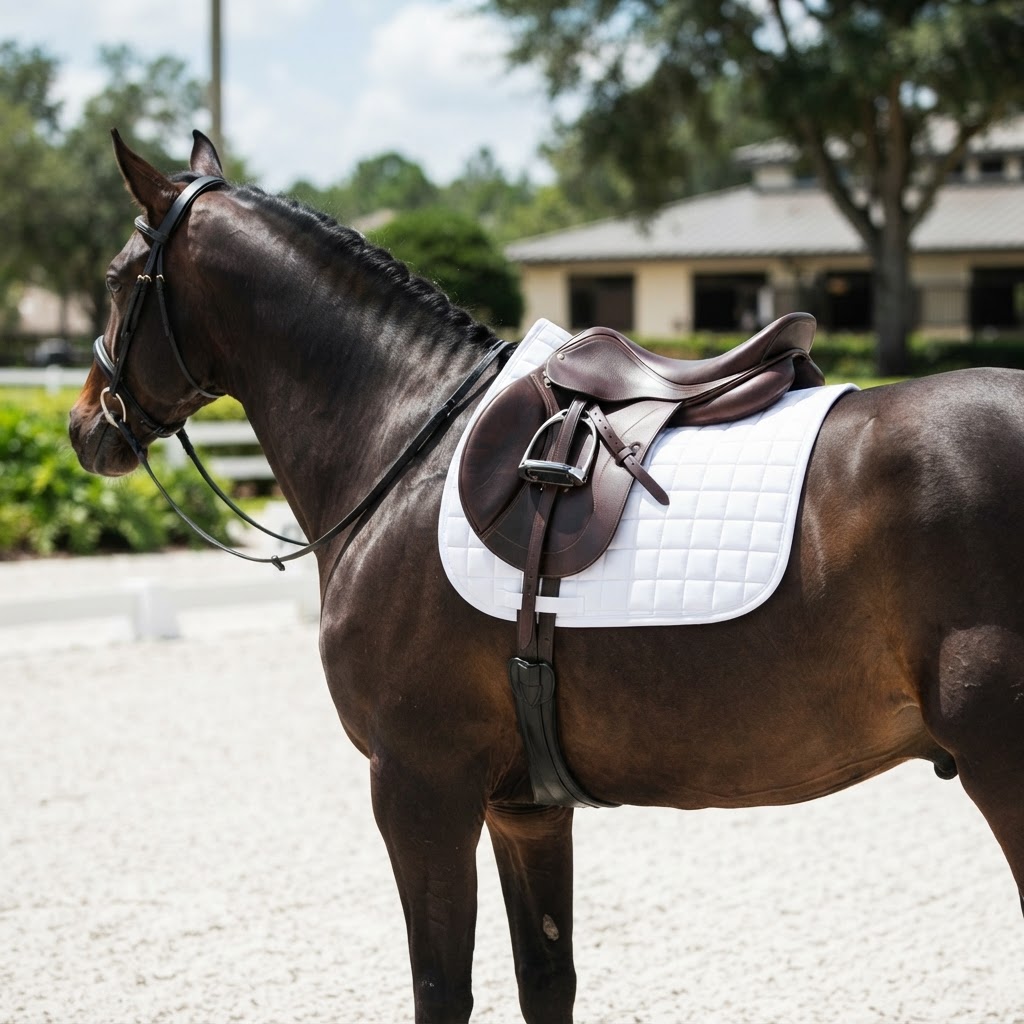
A well-fitted dressage saddle pad should lie flat, clear the spine, and extend 2–3 inches beyond the saddle at all points.
Dressage Pads vs Jumping Pads — What's the Difference?
This is the first thing to get right. Dressage saddle pads and jumping saddle pads are not interchangeable — they're cut differently for a reason.
- Dressage pads — longer, with a straight-cut back edge that follows the line of a dressage saddle's longer flap. The straight cut is the telltale identifier.
- Jumping pads — shorter with a curved/angled back edge, designed for the forward-cut flap of a jumping saddle.
- All-purpose pads — a middle ground, but not ideal for either discipline at competition level.
Using a jumping pad under a dressage saddle leaves the saddle flap exposed — immediately obvious in the dressage ring and potentially affecting how the saddle sits. Always match pad shape to saddle type.
Sizing — How to Measure Correctly
- The pad should be 2–3 inches longer than your saddle's length measurement
- The pad should be 2 inches wider than your saddle's skirts on each side
- When fitted, you should be able to pull the pad up into the gullet channel — it should not lie flat against the horse's spine
- Standard dressage pad sizes in Australia: Small (fits 16.5–17" saddles), Medium (17–17.5"), Large (17.5–18"+)
Materials — What to Choose for Australian Conditions
Material choice is where most riders make trade-offs between budget, climate, and performance. Here's the honest breakdown:
- Cotton — the most common and affordable. Breathable, machine washable, dries quickly. Best for everyday training. Not the best shock absorption but perfectly adequate for most dressage work.
- Merino Wool — naturally breathable, temperature-regulating, excellent sweat absorption. Actually performs better in heat than synthetic materials because it wicks moisture away from skin. Australian Merino wool pads (like those from Fleeceworks) are outstanding for warm-weather riding.
- Synthetic / Microfibre — quick-drying, easy care, often quilted for structure. Good everyday option but can trap heat in summer.
- Gel or Memory Foam — provides cushioning for horses with saddle fit issues, but can restrict airflow. Best used as a correction pad rather than primary pad.
- Open-cell foam — softer and more breathable than closed-cell. Better for horses sensitive to pressure points.
Pro tip: For Queensland, NT, and WA riders training through summer, Merino wool pads actually outperform synthetic in heat management. The natural fibre wicks sweat and releases moisture — synthetics can trap it. Worth the extra investment if you're riding 4+ days a week in hot conditions.
The Best Dressage Saddle Pads at iRide EQ — Reviewed
All prices are current AUD. All pads are in stock and ship Australia-wide from iRide EQ.
1. Majyk Equipe Dressage Correction Pad with Impact Shims — $314.95 AUD
The most technically advanced pad in the range. This is a Merino wool correction pad with removable impact shims — designed for horses where saddle fit is imperfect or where additional protection is needed. The black/black Merino wool finish also works for competition (check your EA rulebook — some classes allow black pads). → Shop $314.95 AUD

As stocked at iRide EQ.
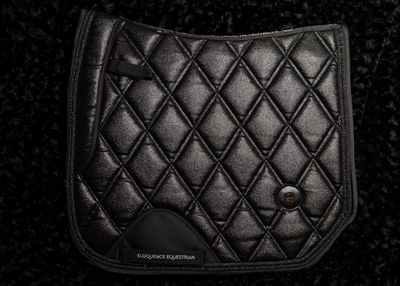
2. Eloquence Equestrian 'The King' Black Stardust Jewel — $195.00 AUD
For riders who want to stand out in the warmup arena. The King features crystal detailing that catches the light — it's a statement pad, not a subtle one. Eloquence Equestrian are known for their quality finishing. Primarily a training/social riding pad. → Shop $195.00 AUD

As stocked at iRide EQ.
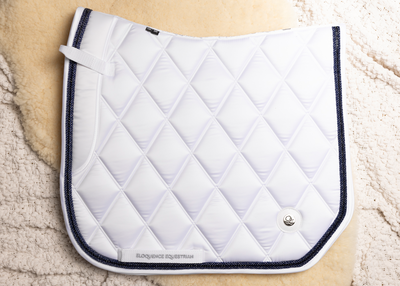
3. Eloquence Equestrian 'The Duchess' White — Navy Jewel — $185.00 AUD
White competition legal with navy jewel trim — this is the pad you wear when you want the turnout marks. Clean, tailored finish with crystal detailing on the binding. Works for both EA affiliated competition and clinics. → Shop $185.00 AUD

As stocked at iRide EQ.
4. JNK Collective Black Crystal Dressage Pad — $179.00 AUD
A sleek competition training pad with crystal detail. JNK Collective produces quality pads with attention to stitching and edge binding. Good choice for riders who do both dressage and flatwork. → Shop $179.00 AUD

As stocked at iRide EQ.
5. Lady Godiva Equestrian The Elegance — $130.00 AUD
Inspired by classic European design, The Elegance by Lady Godiva Equestrian hits a sweet spot between everyday usability and ring-ready presentation. Soft quilting, clean white finish, comfortable price point. → Shop $130.00 AUD

As stocked at iRide EQ.
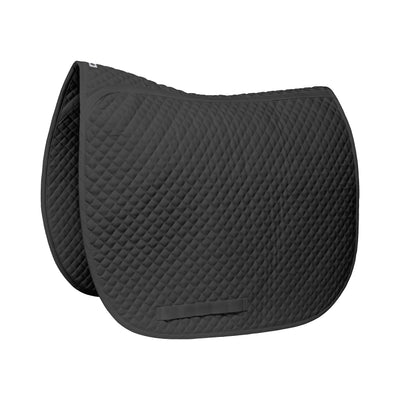
6. Equifit Essential Dressage Pad — $100.98 AUD
The workhorse of the range. Equifit's Essential Dressage Pad is designed for daily use — durable, correctly shaped, easy to wash. If you need a pad that takes six rides a week without complaint, this is it. → Shop $100.98 AUD

As stocked at iRide EQ.
7. Belle Equestrian White Dressage Pad — $80.00 AUD
Best value in the collection. Belle Equestrian's white dressage pad is EA competition legal, correctly shaped, and priced for riders who need multiple pads in rotation. At $80 AUD, it's the go-to for everyday training when you don't want to wear out your good pads. → Shop $80.00 AUD

As stocked at iRide EQ.

A correctly fitted pad should always be pulled up into the gullet — never flat against the spine — before tightening the girth.
EA Competition Rules — Saddle Pads
If you're competing in EA affiliated dressage, the pad rules are clear:
- Colour: White or off-white only for all EA affiliated dressage competition
- Trim: Trim in the rider's national colour is permitted (e.g., navy or green piping)
- No logos: Sponsor logos on saddle pads are not permitted unless the rider holds an EA commercial activity permit
- Shape: Must be appropriate for the discipline — straight-cut dressage pad required
- Size: Must not extend more than 10cm beyond the saddle flap at any point
Always check the current EA rulebook before competition — rules can change between seasons. The EA website publishes updated rules annually.
How to Wash and Care for Dressage Saddle Pads
A well-cared-for pad lasts years. Neglected pads go stiff, smell, and can actually cause skin irritation on the horse's back from detergent buildup.
- Washing temperature: 30°C maximum — hot water breaks down quilting foam and can cause shrinkage
- Machine wash: Yes, for most cotton and synthetic pads. Turn inside-out before washing to maximise foam longevity
- Merino/Wool pads: Cold gentle cycle or hand wash. Never tumble dry — Merino felts with heat
- Drying: Always hang to air dry. Never tumble dry any saddle pad — heat degrades foam and shrinks cotton
- Frequency: Every 2–5 rides for active horses. More often in summer when sweat accumulates quickly
- Brush first: Before washing, brush off dried sweat and hair — it clogs washing machines and gets baked into fibres
- White pad tip: Soak in napisan (oxygen bleach) cold water for 30 minutes before washing to maintain competition white
Shop Dressage Saddle Pads at iRide EQ →
Browse our full range of dressage saddle pads — from everyday training pads to competition-legal white and premium Merino correction pads. Fast Australia-wide delivery on all orders.
Frequently Asked Questions
What colour saddle pad do I need for EA dressage competition?
White or off-white is required for all EA affiliated dressage competition. Trim in your national colour (navy, green) is permitted. Logos are not allowed unless you hold an EA commercial activity permit. Always check the current season's EA rulebook for any updates.
What's the difference between a dressage saddle pad and a jumping saddle pad?
The cut. Dressage pads have a straight back edge to match the longer flap of a dressage saddle. Jumping pads have a shorter, curved back edge for jumping saddle flaps. Using the wrong pad for your saddle leaves the flap exposed and looks incorrect in the ring.
How often should I wash my dressage saddle pad?
Every 2–5 rides for most horses in regular work. In summer or after heavy sweat sessions, wash after every 1–2 rides. Always air dry — tumble drying damages foam and shrinks cotton. White pads benefit from a 30-minute cold Napisan soak before washing to maintain brightness.
Are gel saddle pads good for dressage horses?
Gel pads can offer cushioning but are generally better used as correction pads rather than everyday pads. They can restrict airflow and create pressure points if not fitted correctly. For horses with saddle fit issues, a Merino wool correction pad with shims (like the Majyk Equipe option) is usually a better solution.
How do I know if my dressage saddle pad fits correctly?
The pad should extend 2–3 inches beyond the saddle at the back and 2 inches beyond the saddle skirts on each side. When girthed up, you should be able to pull the pad up into the gullet — it should form a clear channel over the horse's spine. If it lies flat, it'll create spinal pressure under the saddle.
What's the best dressage saddle pad for hot Australian summers?
Counterintuitively, Merino wool performs better than most synthetics in heat. Wool wicks sweat away from the horse's back and releases moisture — synthetic materials can trap heat and sweat. For very hot conditions (Queensland, WA summers), look for open-weave cotton or Merino wool options.