Quick answer: The best horse riding helmet for Australian riders balances certified safety standards, precise fit, and ventilation for our climate. Equestrian Australia currently accepts helmets meeting AS/NZS 3838, ASTM F1163, PAS 015, VG1, EN1384:2023, or Snell E2001/E2016 — but new rules taking effect January 2027 will tighten these requirements. The Freejump Voronoi range leads the premium market with a 3-star Virginia Tech rating, while the Samshield 1.0 offers French design at a mid-range price point. This guide breaks down the standards, shows you how to measure your head correctly, and compares every helmet we stock so you can buy with confidence.
Every time you swing a leg over a horse, your helmet is the one piece of gear that stands between you and a catastrophic head injury. Australian riders are luckier than most — our safety standards are among the strictest in the world, and horse riding helmets sold here must meet rigorous certification before they reach your head. But knowing which standard applies, what the Virginia Tech ratings actually mean, and how to get the right fit? That's where most riders get lost.
At iRide EQ, we stock the Freejump Voronoi range and the Samshield 1.0 Helmet on consignment — both French-made, both EA-compliant, both very different price points. This guide walks through everything you need to know: the current Australian standards, what changes in January 2027, how to measure your head, and which helmet is the right call for your discipline and budget. No fluff, no padding — just the facts that help you choose.

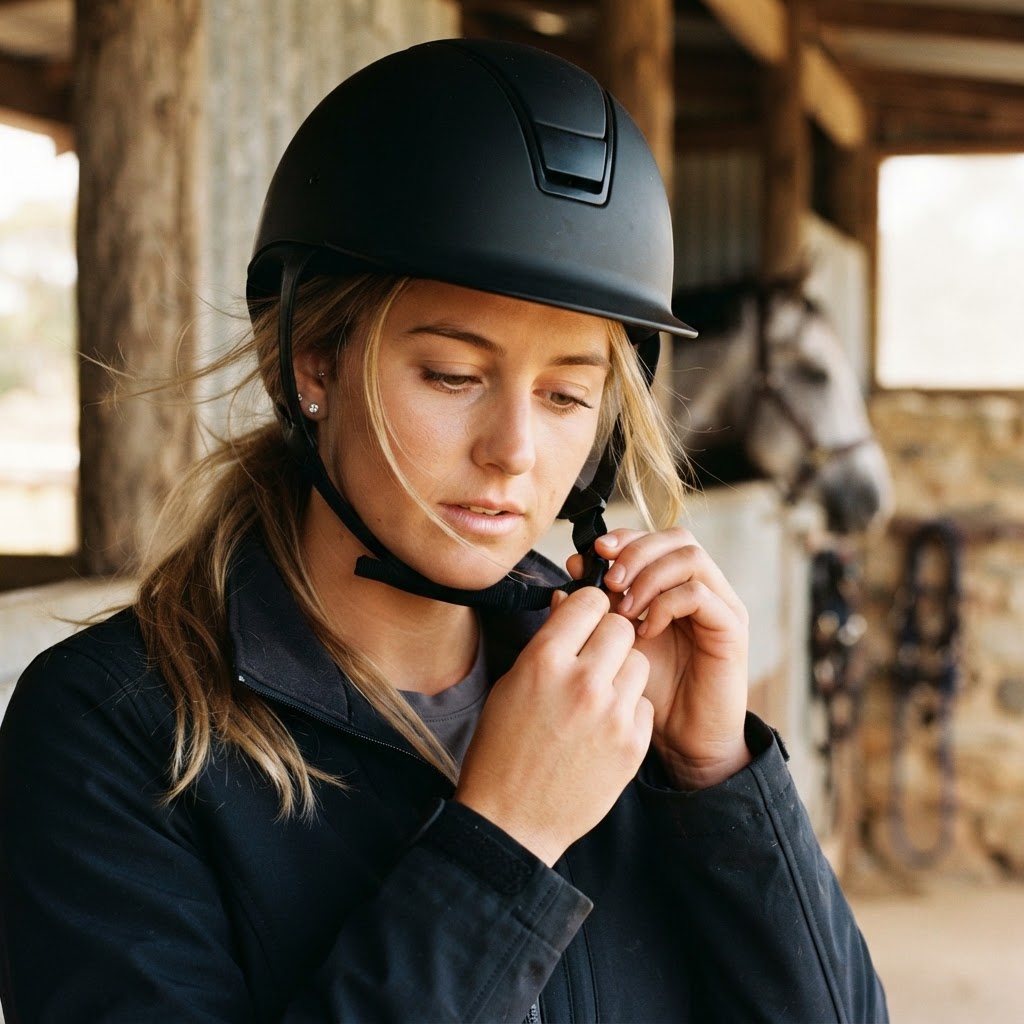
Safety starts before you mount up — an EA-approved helmet is non-negotiable at every ride.
What Are the Australian Standards for Horse Riding Helmets?
If you compete in an EA-affiliated event — whether it's a local Ag show or a national championship — your helmet must meet at least one of these approved standards:
- AS/NZS 3838 — the current Australian and New Zealand standard (1998, 2003, or later versions)
- ASTM F1163 — the American standard, widely used by international brands
- PAS 015 — the British standard, often seen on premium European helmets
- VG1 — a European interim standard (valid until 31 December 2026)
- EN1384:2023 — the updated European standard
- Snell E2001/E2016 — the most stringent voluntary standard
Here's the thing that catches a lot of riders out: from 1 January 2027, the VG1 standard alone will no longer be enough. It'll need an additional quality testing label like the BSI Kitemark to remain EA-compliant. So if you're buying a helmet right now and planning to compete beyond this year, check the certification labels carefully. A helmet that's legal today might not pass a gear check in 2027.
The FEI has also tightened its rules. From 1 January 2026, all riders competing in FEI-sanctioned events must wear helmets meeting at least one FEI-accepted safety standard. By 2028, the FEI is expected to require two certifications. If you're competing at that level, talk to your gear steward before you buy.
One more detail: EA requires helmet tagging at affiliated events. A steward checks your helmet's certification label and tags it as compliant. No tag, no ride. I've seen riders turned away at registration because their helmet was an older model with a worn-off certification sticker. Don't be that person.
How to Measure for a Horse Riding Helmet
Measuring your head for a riding helmet is simple, but getting it wrong is the most common mistake I see at every show. Here's how to do it properly:
- Step 1: Wrap a soft measuring tape around your head, about 2cm above your eyebrows and ears — the widest part of your skull.
- Step 2: Keep the tape level (not tilted). Read the measurement in centimetres.
- Step 3: Match your measurement to the brand's sizing chart. Every brand sizes differently — a Freejump medium is not the same as a Samshield medium.
- Step 4: When the helmet arrives, shake your head side to side. The helmet should move with you, not shift independently. If it wobbles, it's too big.
If you're between sizes, size up. A helmet that's too small gives you pressure headaches after an hour of riding. A helmet that's too big is worse — it can shift on impact and leave parts of your skull exposed. Trust me on this one.
The chin strap should sit snug under your jaw, not across your throat. You should be able to fit one finger between the strap and your chin. Any looser and the helmet can rotate forward in a fall, which defeats the entire purpose.
The rider's take: I once bought a helmet online without measuring — picked the same size I'd worn in a different brand. Turns out that brand ran a full size small. First show of the season, I had a splitting headache by the warm-up arena and had to borrow a friend's spare helmet for my round. Never again. Measure your head, check the brand's specific sizing chart, and if you're anywhere near a size boundary, go up.
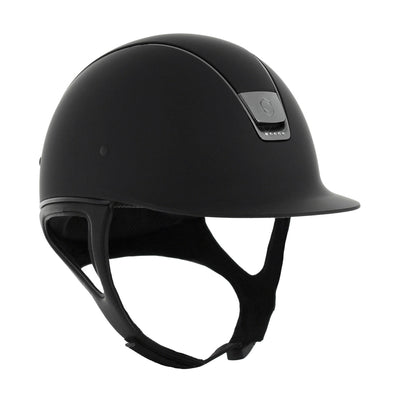
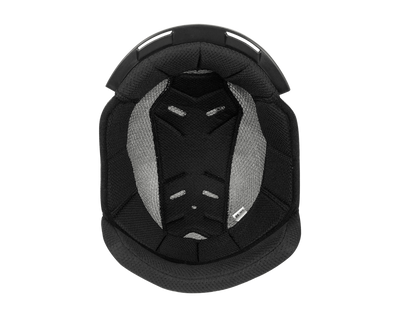
The Samshield 1.0 Helmet is one of the few models that works well for riders who struggle with standard sizing. It comes with an interchangeable lining system — you can swap the internal padding for a thinner or thicker set to fine-tune the fit. At $350 AUD for the base model (up to $520 for premium shell finishes), it's the most affordable premium helmet we carry.

The Samshield 1.0 Helmet — French design with an interchangeable lining system for custom fit. From $350 AUD.
What's the Best Horse Riding Helmet?
That depends entirely on your discipline, your budget, and how often you ride. But I'll give it to you straight based on what we stock and what I've seen riders actually choose.
The Freejump Voronoi range is the standout if budget isn't a constraint. Every Voronoi helmet is manufactured in France, certified to CE EN 1384-2023 and SEI ASTM F1163-23, and rated by the Virginia Tech Helmet Lab. The base Voronoï with temple protection sits at $1,025 AUD and includes integrated side protection that most helmets don't offer.

The Freejump Voronoi with temple protection — $1,025 AUD, Virginia Tech 3-star rated.
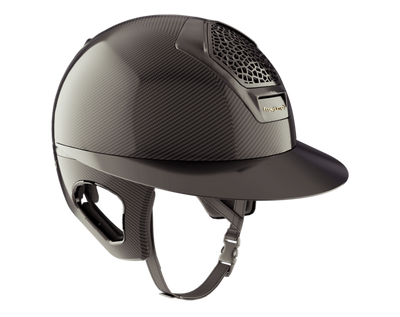
Step up to the Voronoï Carbon at $1,799 AUD and you get a carbon fibre shell that's lighter and more impact-resistant than the standard ABS version. The Carbon XC variant is specifically designed for cross-country, with the same carbon shell but a different vent configuration for better airflow during high-intensity phases.

The Freejump Voronoi Carbon — $1,799 AUD, carbon fibre shell for reduced weight and increased impact resistance.
For riders who want premium safety without the $1,800 price tag, the Voronoï ABS custom at $1,125 AUD uses the same temple protection system and Virginia Tech-rated design, just with an ABS shell instead of carbon. Honestly, for most amateur riders, this is the sweet spot. You get the safety features that matter without paying for materials you won't notice.
And then there's the Samshield 1.0. It's a different beast — French styling, a polycarbonate shell, and that interchangeable lining system I mentioned. It doesn't have the Virginia Tech rating or temple protection, but it meets EN1384 and ASTM F1163. For riders who mostly hack out, do flatwork, or compete at local shows, it's a solid choice at a price that doesn't make you wince.
| Helmet | Shell | Price (AUD) | Virginia Tech | Best For |
|---|---|---|---|---|
| Samshield 1.0 | Polycarbonate | $350–$520 | Not rated | Everyday riding, local shows |
| Voronoï (temple protection) | ABS | $1,025 | 3-star | Show jumping, dressage |
| Voronoï ABS custom | ABS | $1,125 | 3-star | All-round competition |
| Voronoï Carbon | Carbon fibre | $1,799 | 3-star | Premium show jumping |
| Voronoï Carbon XC | Carbon fibre | $1,799 | 3-star | Cross-country, eventing |
After the table: browse the full range of horse riding helmets at iRide EQ, including the complete Freejump Voronoi lineup.
How Much Does a Horse Riding Helmet Cost?
Helmet pricing falls into three rough tiers in Australia:
- Under $300: Entry-level helmets from brands like Charles Owen and One K. These meet safety standards but use basic materials and lack premium features like temple protection or custom fit systems. We've covered this range in detail in our competition wear guide.
- $300–$600: Mid-range helmets with better ventilation, interchangeable padding, and more style options. The Samshield 1.0 sits right here at $350–$520.
- $1,000–$1,900: Premium helmets with advanced shell materials, Virginia Tech ratings, and integrated temple protection. The entire Freejump Voronoi range occupies this tier.
Is a $1,800 helmet five times safer than a $350 one? No. The safety standards are the same — both must pass the same certification tests. What you're paying for at the premium end is weight reduction, ventilation, temple protection, and the Virginia Tech rating (which tests beyond the minimum standard). If you're riding five days a week and competing regularly, those features matter. If you're hacking out on weekends, the Samshield 1.0 will serve you well.
Don't forget about accessories. The Voronoi lining replacement is $99 AUD, ear foams are $50, and the carbon temple protection upgrade is $310. A helmet care routine with a spray cleaner like the FRESH & FRAGRANT Helmet Spray ($28 AUD) keeps the interior fresh — especially in an Australian summer when you're sweating through every ride.

In competition, every rider wears an EA-approved helmet — no exceptions, no shortcuts.
Which Helmets Are the Safest in Australia?
All helmets sold in Australia must meet a certified safety standard. But "meeting the standard" and "being the safest option available" are two different things. This is where the Virginia Tech Helmet Lab comes in.
The Virginia Tech Helmet Lab independently tests riding helmets beyond the minimum certification requirements. They rate helmets on a 5-star scale based on linear and rotational impact attenuation. A 3-star rating means the helmet provides "good" protection — better than the minimum certified standard but not the highest possible.
The entire Freejump Voronoi range holds a 3-star Virginia Tech rating. No other helmet we currently stock has been independently rated by Virginia Tech. That doesn't mean the Samshield 1.0 is unsafe — it meets EN1384 and ASTM F1163, which are rigorous standards. It just means the Voronoi has been tested to an additional, independent benchmark and passed at a high level.
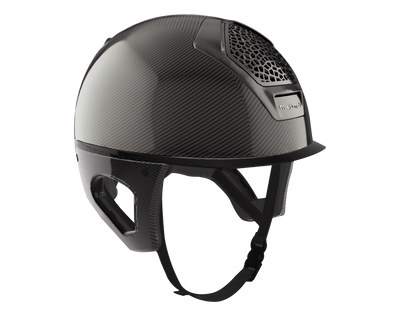
The Voronoi's temple protection is another safety feature worth highlighting. Most riding helmets protect the top, front, and back of the skull but leave the temples exposed. The Voronoi's integrated temple guards add coverage to this vulnerable area without restricting visibility. For cross-country riders, the Voronoï Carbon XC at $1,799 AUD is the pick — same carbon shell, same 3-star rating, but with vent positioning tuned for the higher heart rates and heat of eventing phases.

The Freejump Voronoi Carbon XC — designed for cross-country with tuned ventilation. $1,799 AUD.
Looking ahead, the landscape will shift again in 2027. The VG1 standard will need a BSI Kitemark, and the FEI is pushing toward dual-certification requirements. If you're buying a helmet now that you want to use for the next 5+ years, choosing one that meets multiple standards (like the Voronoi's EN1384:2023 + ASTM F1163-23 combination) gives you a buffer against future rule changes.
Frequently Asked Questions
Can I use a bicycle helmet for horse riding?
No. Bicycle helmets and horse riding helmets are tested for different impact types. Horse riding helmets must meet equestrian-specific standards like AS/NZS 3838 or ASTM F1163. Using a bike helmet for riding will fail an EA gear check and, more importantly, won't protect you properly in a horse-related fall.
How often should I replace my horse riding helmet?
Most manufacturers recommend replacing your helmet every 5 years from the date of manufacture, or immediately after any impact — even if there's no visible damage. The internal foam compresses on impact and won't protect you a second time. Check the date stamp inside your helmet and replace it if it's past 5 years.
Do Freejump Voronoi helmets meet Australian standards?
Yes. The Freejump Voronoi range is certified to CE EN 1384-2023 and SEI ASTM F1163-23, both of which are on the EA list of approved standards. They're legal for all EA-affiliated competitions in Australia.
What is the Virginia Tech helmet rating and why does it matter?
The Virginia Tech Helmet Lab independently tests equestrian helmets beyond the minimum certification standards, rating them 1 to 5 stars based on impact attenuation. A higher rating means better protection in real-world fall scenarios. The Freejump Voronoi range holds a 3-star (good) rating.
Can I wear the same helmet for pony club and EA competitions?
Yes, as long as the helmet meets an EA-approved standard. Pony Club Australia follows similar standards to EA. Check with your local Pony Club for any specific requirements, but a helmet certified to AS/NZS 3838 or ASTM F1163 will pass both.
What changes to helmet standards happen in January 2027?
From 1 January 2027, the VG1 standard alone will no longer be EA-compliant. It must carry an additional quality testing label like the BSI Kitemark. If you're buying a helmet now, choose one that meets multiple standards (like EN1384:2023 or ASTM F1163) to ensure it remains compliant beyond 2027.
Find Your Next Helmet at iRide EQ
Whether you're after the Virginia Tech-rated Freejump Voronoi Carbon or the value-packed Samshield 1.0, we've got the safest helmets in Australia ready to ship. Browse our full horse riding helmet range, or explore our horse riding clothing collection for everything you need for your next competition.
Shop Helmets