Quick answer: Most adult riders need 125-145cm stirrup leathers, with 105-115cm for kids and 160cm for tall riders. For spurs, the only EA-legal options are smooth, freely rotating rowels or dummy spurs. The best combination is quality leather leathers that won't stretch and horse-friendly spurs you actually know how to use.
The rider's take: In 15 years of fitting tack, I've seen more issues from cheap stirrup leathers than almost anything else. A set that stretches unevenly will drop your leg on one side, and you won't even notice until your instructor asks why you're sitting crooked. Same with spurs. I've watched riders strap on a pair of Prince of Wales because they looked sharp, then jab their horse every time they posted. The gear matters, but knowing how to use it matters more.
Stirrup leathers and spurs sit at opposite ends of the riding gear spectrum. One is pure function, the other is pure communication. Both get overlooked by riders who'd rather spend on a flashy new bridle or a fresh set of breeches. But if your leathers stretch and your spurs are the wrong shape, nothing else in your kit will perform the way it should.
This guide walks through the practical side of choosing both, with a focus on what actually matters for Australian riders competing under EA rules. We'll cover sizing, materials, how to fit leathers correctly, the types of spurs available from our spurs and straps range, and the welfare considerations every rider should understand before picking up a pair.
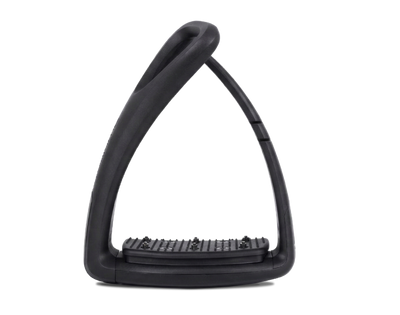
If you're also in the market for stirrups themselves, our stirrups collection covers the full Freejump range. But this article is about the leathers that connect you to those stirrups, and the spurs that connect your leg to your horse.

Stirrup leathers are the connection between rider and saddle. Getting the right length and material matters more than most riders think.
What Size Stirrup Leathers Do I Need?
This is the question I get asked more than any other, and the answer is simpler than most tack shops make it sound. Stirrup leather lengths correspond to your inseam and your discipline. Here's the breakdown that works for most Australian riders:
- 105cm: Children under 12, or petite junior riders
- 115cm: Older children and small adults
- 125cm: Most adult women, standard length
- 135cm: Taller women and shorter men
- 145cm: Most adult men, or women with long legs
- 160cm: Tall riders, or anyone with a 34"+ inseam
The mistake I see constantly is buying leathers that are too short and then running the buckle at the wrong height. A buckle sitting on your thigh is uncomfortable and creates a pressure point. A buckle sitting below the knee where it belongs is what you want.
What I've found in practice is that dressage riders often go up a size from what they think they need. Longer leathers give you a longer leg position, and if you're riding dressage under dressage saddle pads and a deep-seated saddle, the extra length lets you drop your leg properly. Jumping riders can usually stick with their natural size.
One more thing: leather stretches. Buy them slightly shorter than you think you need, because they'll lengthen by a hole or two within the first few months. Synthetic leathers like the Freejump 4x6 don't stretch, which is one reason competition riders prefer them.
How to Put Stirrup Leathers on an English Saddle
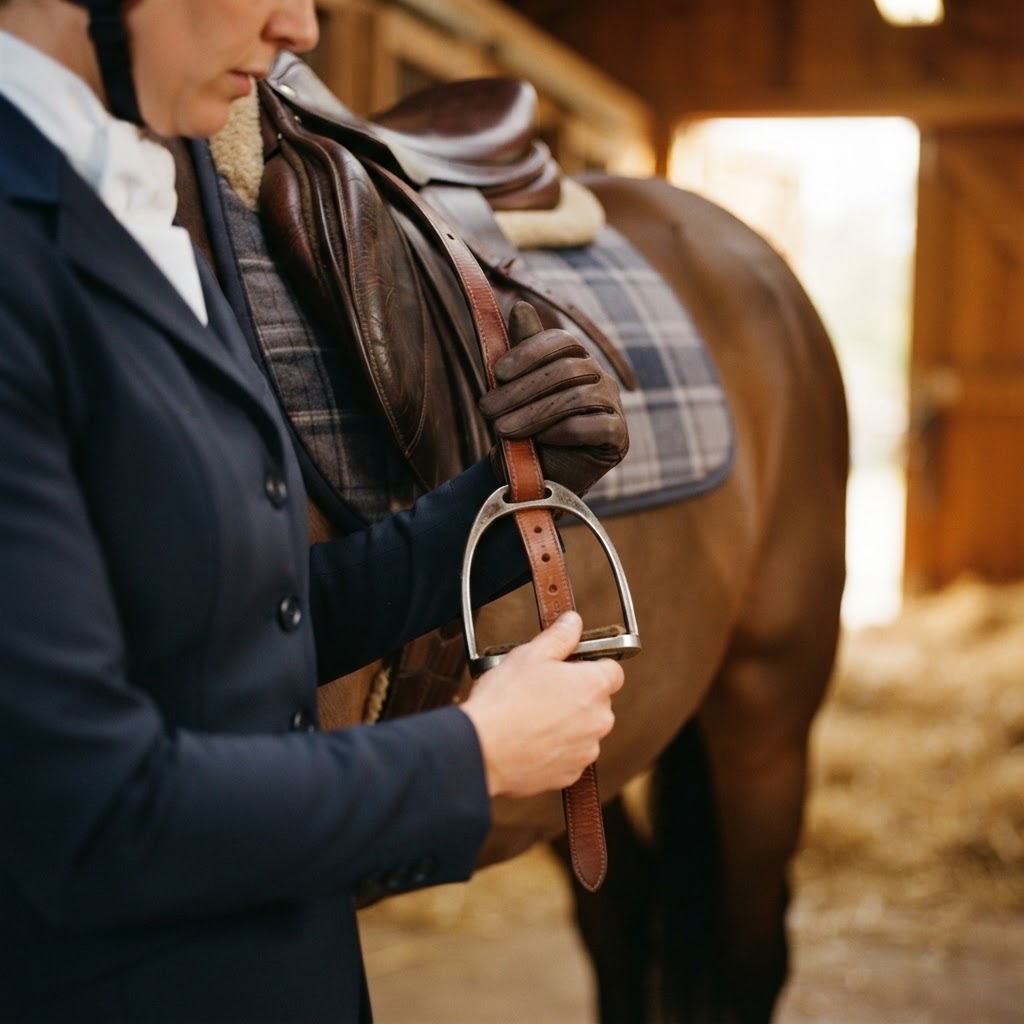
It sounds basic, but I've seen plenty of riders thread their leathers the wrong way. The leather should run over the stirrup bar, not under it. The buckle end faces down toward the stirrup, and the tail of the leather tucks into the keeper.
Here's the correct sequence:
- Lift the stirrup bar flap on your saddle
- Thread the buckle end of the leather over the bar from the outside
- Pull it through so the buckle sits just below the bar
- Attach the stirrup to the bottom of the leather
- Tuck the excess tail through the keeper loop
The reality is that most riders do this once and forget about it. But if your leathers are twisted, the buckle can sit sideways and create uneven pressure. Check them every time you tack up, especially if you've recently adjusted the length.
A common mistake I see at every show: riders who swap between saddles but keep the same leathers. Different saddles have different stirrup bar positions. Your leathers might be the right length on your dressage saddle but too short on your jumping saddle. Measure for each saddle if you compete across disciplines.
Best Stirrup Leathers for Dressage vs Jumping
The requirements for dressage and jumping leathers are different, and the material you choose affects feel, durability, and maintenance. Here's how the options stack up:
| Feature | Dressage | Jumping |
|---|---|---|
| Length | 135-160cm (longer leg) | 125-145cm (shorter leg) |
| Width | Narrower (comfort on long contact) | Wider (stability over fences) |
| Material preference | Leather for feel | Synthetic for zero stretch |
| Buckle type | Traditional pin buckle | Freejump 4x6 system or traditional |
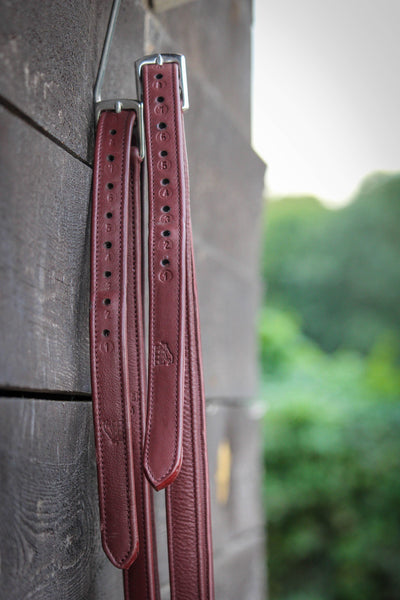
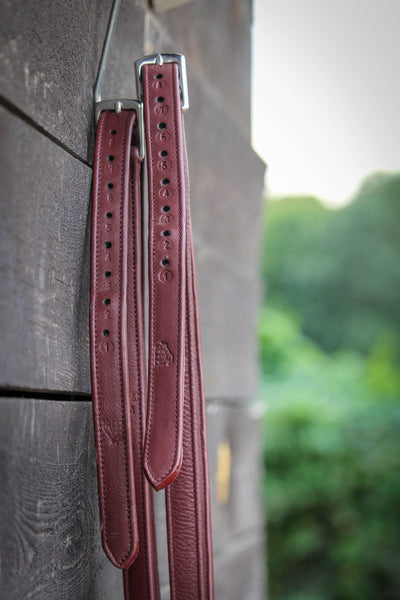
For dressage, I'd lean toward traditional leather. The feel through your leg matters in dressage more than any other discipline, and a quality leather strap gives you better contact. The Jump'In Plunged Calfskin leathers at $263.59 are a solid choice. The calfskin is soft enough to feel the saddle, and the plunged buckle design keeps the profile thin against your leg.

Jump'In Plunged Calfskin Stirrup Straps, $263.59 AUD. The calfskin construction gives dressage riders the feel they need without bulk under the leg.
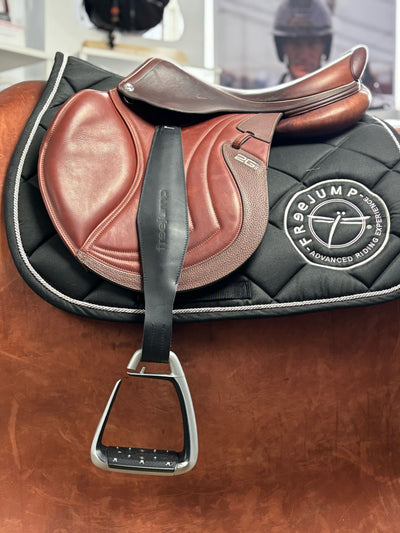
For jumping, the Freejump 4x6 system is hard to beat. At $379, they're not cheap, but they don't stretch, they're lighter than traditional leather, and the 4x6 webbing system distributes pressure evenly. I've seen riders scope 1.20m courses in these without the leather shifting or creating a pressure point. If you're jumping regularly, these are the ones to get.

Freejump 4x6 Stirrup Leathers, $379 AUD. Synthetic webbing means zero stretch, which is why jumping riders prefer them over traditional leather.
If budget is the deciding factor, the Jump'In Leather Straps at $215.47 offer the same French craftsmanship at a lower price point. They're a plain leather strap without the plunged buckle, so there's a slightly bulkier profile, but the quality is there. For riders starting out or those who don't compete at a high level, these are plenty.

Jump'In Leather Stirrup Straps, $215.47 AUD. French-made leather straps for riders who want quality without the premium price tag.
And at the entry level, the Lady Godiva Comfort Deluxe at $50 is a budget option for casual riders or those with a spare set on a second saddle. Only two left in stock at time of writing, so don't hang about if you need a pair.

Quality stirrup leathers are worth the investment. The wrong pair can affect your position and your horse's comfort.
Types of Spurs for Horses
Spurs are not created equal, and the type you choose should match your horse, your discipline, and your leg length. Under EA rules effective 1 January 2026, only smooth rowels are permitted in dressage. Serrated rowels are banned. In eventing, rowels must rotate freely and be round and smooth, with no tines. Pony riders cannot use rowel spurs at all.
Here are the main types available, using the Freejump SPUR'ONE range as our reference point. These are designed by Pininfarina (the Italian design house behind Ferrari), with carbon fibre bodies and Elastollan overmolding. They're made in France.
- Round End: The mildest option. A smooth, rounded tip with no rowel. Good for sensitive horses or riders with a strong leg. $120 AUD, 2 in stock.
- Prince of Wales (25mm): A mild rowel with a small diameter. The most common choice for general riding and lower-level competition. $140 AUD, 1 in stock.
- Hammer (25mm): A flat, hammer-shaped end. More directional pressure than a rowel. Useful for horses that respond to a clear, localised aid. $140 AUD, 1 in stock.
- Extra Long: Longer shank for riders with short legs on tall horses. The reach means you don't have to twist your ankle to make contact. $160 AUD, 1 in stock.
- Disk: The largest surface area, distributing pressure over a wider zone. Currently out of stock at $175 AUD.

Freejump SPUR'ONE Round End, $120 AUD. The mildest option in the range, ideal for sensitive horses.

Freejump SPUR'ONE Prince of Wales, $140 AUD. The most versatile spur shape for general competition use.
Dummy spurs and Impulse spurs are also EA-legal. Dummy spurs have no rowel at all, just a smooth knob. They're the gentlest option and are often used in pony club or by riders whose horses need only the lightest touch. The key distinction under EA rules is whether the rowel is smooth and freely rotating. If you're unsure, check the EA National Rules on the Equestrian Australia website before you compete.
How to Use Spurs on a Horse
Spurs are a refinement tool, not a go-faster button. What I've found in practice is that riders who need spurs the least use them the best. They're for fine-tuning a response that's already there, not for creating one that isn't.
Here's how to think about it: your leg aid should work without spurs first. If you're kicking to get a response, adding spurs just means you're kicking harder. The spur should turn a light aid into a precise one, not a heavy aid into an unbearable one.
The basic technique is a rotation of the heel inward and upward. You're not jabbing, you're nudging. The rowel (or rounded end) touches the horse's side briefly, then your heel drops back. The aid lasts less than a second. If you're holding the spur against the horse's side for more than a beat, you're using it wrong.
For riders with shorter legs on taller horses, the Extra Long SPUR'ONE at $160 solves the reach problem. I've seen riders practically dislocate their ankles trying to reach a 16.2hh horse's side with a standard shank. The longer shank lets you make contact without contorting your position.
One thing nobody tells you: your riding boots affect how your spurs sit. A stiff tall boot holds the spur in place better than a soft paddock boot with half chaps. If your spurs are slipping down your heel, it's probably your boots, not the spur straps.
Are Horse Spurs Cruel?
This is a fair question, and the honest answer is: spurs are only as kind as the rider using them. A well-placed aid with a smooth rowel is less invasive than a rider constantly kicking with a bare heel. The cruelty comes from poor hands, poor timing, and choosing a spur that's too sharp for the horse's sensitivity level.
The EA rules exist precisely to prevent the kind of spurs that cause harm. Serrated rowels, fixed rowels, tines, and sharp points are all banned because they can cut or bruise. What's permitted under the current rules is smooth, rotating, rounded contact. If you're competing under EA rules, you're already working within a framework designed to protect horse welfare.
For riders concerned about welfare, start with the mildest option. The Round End SPUR'ONE has no rowel at all. It's a smooth, rounded surface that applies pressure without any rotating contact. If your horse responds to it, there's no reason to go sharper. Many horses never need anything beyond this.
The reality is that most welfare issues with spurs come from riders who aren't honest about their own leg. If your leg is quiet and your timing is good, spurs are a communication tool. If your leg bounces and you grip with your heels to stay on, spurs become a weapon. Sort your seat out first, then add spurs. Not the other way around.
For riders looking to understand the full range, our saddles and saddle accessories collections include everything you need to complete your tack setup. And if you want to pair your new leathers with quality safety stirrups, the Freejump range is the one to look at.
Frequently Asked Questions
How do I twist stirrup leathers to prevent them sticking out?
Run the leather through the stirrup bar twice (a half-twist) before attaching the stirrup. This keeps the leather flat against the saddle flap and prevents it from twisting outward. Check the twist every few rides, as leather can settle over time.
What do spurs actually do to a horse?
Spurs provide a more precise, localised leg aid. Instead of a broad squeeze from your whole calf, a spur delivers a specific nudge to a small area of the horse's side. This lets you refine instructions rather than amplify them. The horse feels a clearer signal, not necessarily a stronger one.
Can spurs hurt a horse?
Yes, if used incorrectly or if the spur is too sharp. EA rules ban serrated rowels, fixed rowels, and sharp points specifically to prevent injury. A smooth, freely rotating rowel used with good timing does not harm the horse. Poor timing or constant pressure, even with a mild spur, can cause bruising or sensitivity.
When should I start using spurs on a horse?
Only when your leg is steady enough that you're not accidentally jabbing the horse. If you're still learning to keep a quiet leg, spurs will send mixed signals. Most coaches recommend establishing a solid seat and leg position first, then adding spurs as a refinement tool once you're competing at a level where precise aids matter.
Why do riders use spurs at all if the horse already responds to leg aids?
For refinement, not volume. At higher levels of dressage or show jumping, the difference between a good round and a great one is in the precision of your aids. A spur lets you give a whisper-quiet instruction that the horse understands immediately, rather than a bigger movement that disrupts your position.
What are horse-friendly spurs?
Horse-friendly spurs have smooth, rounded contact surfaces and freely rotating rowels. The Freejump SPUR'ONE Round End is the most horse-friendly option because it has no rowel at all. Dummy spurs are similar. Anything with a smooth surface that can't dig or catch is considered horse-friendly under EA guidelines.
What length stirrup leathers do I need for dressage?
Dressage riders typically go one size longer than their jumping length, because the dressage position requires a longer leg. Most adult women in dressage use 135-145cm leathers, while men and taller riders often need 145-160cm. Measure your inseam and add 10-15cm for your dressage length.
Ready to Upgrade Your Stirrup Leathers and Spurs?
Shop our full range of stirrup leathers and riding spurs at iRide EQ. From the Freejump 4x6 system to the complete SPUR'ONE range, we stock the gear that serious Australian riders trust. Free shipping on orders over $299.
Shop Stirrup Leathers