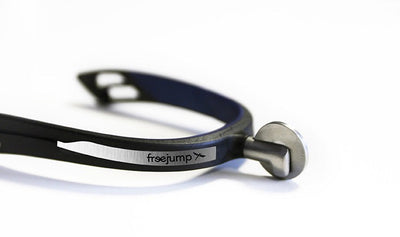
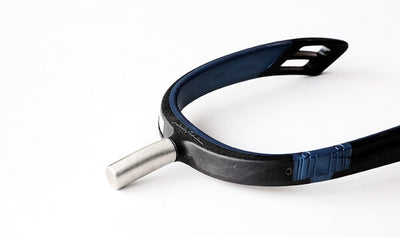
Quick answer: The best horse spurs for Australian riders are the Freejump Spur'One range — carbon fibre bodies with stainless steel tips, all under the 4cm FEI limit. Choose round end for sensitive horses, Prince of Wales as your all-rounder, and hammer spurs for jumping only (they're banned in dressage).
The rider's take: I didn't wear spurs for my first two seasons of competition — figured I didn't need them. Then I moved up to 90cm and my horse started ignoring my leg at the base of fences. A coach handed me a pair of round-end spurs at a local Ag show and the difference was immediate. Two rounds, clear both times. Now I ride with Prince of Wales for jumping and a plain round end for flatwork. The key is knowing which type is actually legal for your discipline — because get that wrong at an EA show and you're eliminated.
Spurs are one of those pieces of riding gear that seems simple until you actually need to buy a pair. There's the type question (round end, Prince of Wales, hammer, disk?), the legality question (what's allowed in dressage vs jumping vs eventing?), and the fit question (how does it sit on your boot?). Get any of those wrong and you've wasted your money at best, or picked up an elim at worst.
For Australian riders, the landscape is narrower than you might think. Most equestrian shops stock budget metal spurs from brands you've never heard of. We carry the Freejump Spur'One range — French-made, carbon fibre, and engineered to the same standard as their safety stirrups. Five models, all FEI-compliant for their intended disciplines. They're not the cheapest spurs on the market, but they're the only ones I'd put on my boots for a show.
Here's what you need to know before you buy.

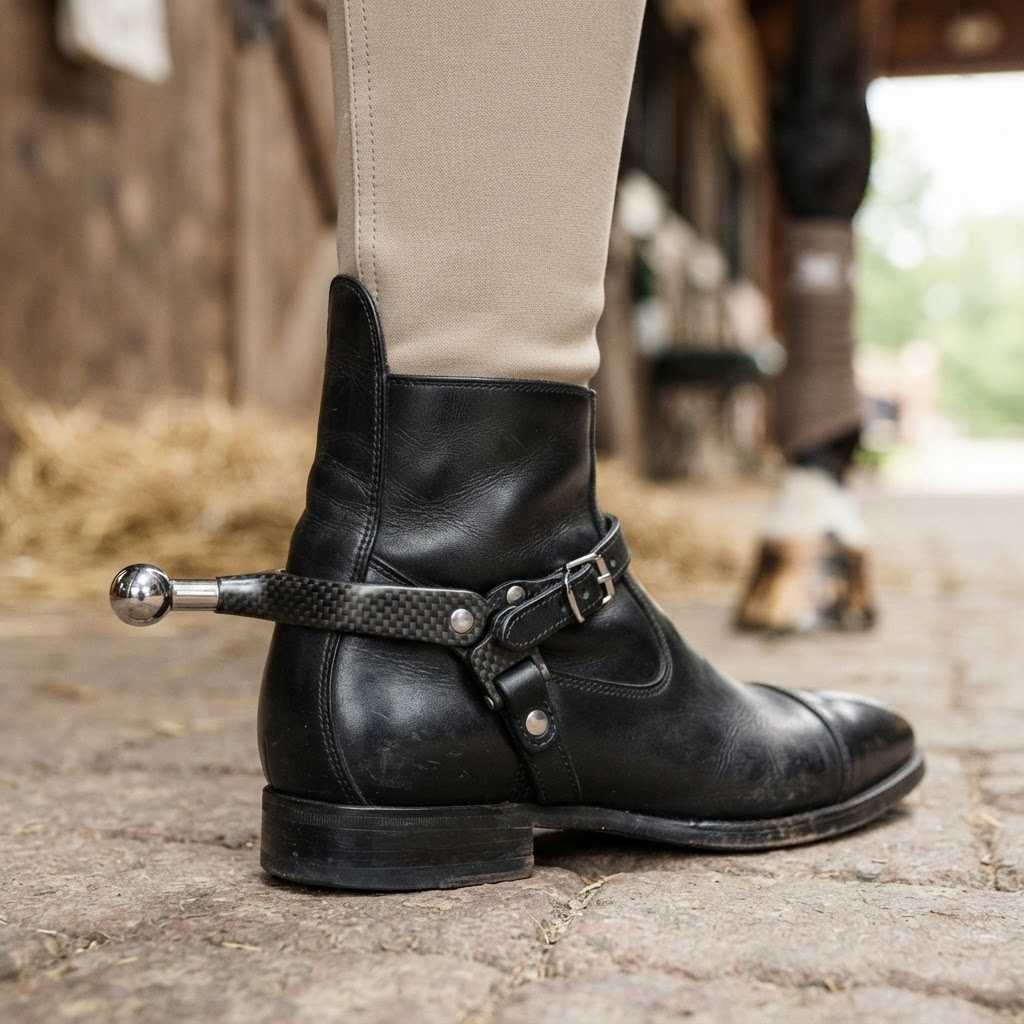
Spurs sit on the heel of your riding boot — boot thickness affects which spur fits.
What Types of Horse Spurs Are Available?
Spurs come in several shapes, and the shape dictates the intensity and kind of pressure the horse feels. Here's the plain-English breakdown:
- Round End (15mm): The mildest option. A blunt, rounded tip that nudges rather than pokes. Best for sensitive horses, young riders, and dressage purists who want a subtle leg aid. If you're buying your first pair, start here.
- Prince of Wales (25mm): The most common spur in Australia. Flat, slightly angled tip with moderate intensity. It's the all-rounder — you'll see these in show jumping, eventing, and flatwork. If you're not sure, PoW is the safe bet.
- Hammer (25mm): A broad, flat face that distributes pressure wider than a pointed spur. Here's the catch — hammer spurs are banned in FEI dressage. They're legal for jumping and eventing, but you cannot wear them in a dressage test. Don't learn this the hard way at an EA-affiliated event.
- Extra Long (30mm): Same shape as a standard spur but longer. For riders with long legs or wide horses where a standard spur can't reach effectively. 30mm is still under the 4cm FEI maximum, so it's legal across all disciplines (except pony classes for some types).
- Disk (30mm rotating): A rotating disk tip that distributes pressure through rolling contact. Lighter touch than it looks. Smooth disk spurs are dressage-legal (Freejump's are hand-polished). Good for horses that need a lighter, more precise aid.
Honestly, the number of riders I see at shows wearing the wrong spur type for their discipline is staggering. I watched a rider get eliminated from a dressage test at a regional EA event last year because she forgot to swap her hammer spurs from the jumping phase. Thirty seconds of checking the rules would have saved her entry fee.
Which Spurs Are Legal Under EA and FEI Rules?
Equestrian Australia follows FEI equipment rules for all affiliated competition. The rules differ by discipline, and they change — so always check the current EA rules before a show. Here's the compliance matrix for the Freejump Spur'One range based on FEI rules as of 2024:
| Spur Type | Dressage | Show Jumping | Eventing | Pony Classes |
|---|---|---|---|---|
| Round End 15mm | ✅ Allowed | ✅ Allowed | ✅ Allowed | ✅ Allowed |
| Prince of Wales 25mm | ✅ Allowed | ✅ Allowed | ✅ Allowed | ✅ Allowed |
| Hammer 25mm | ⛔ Banned | ✅ Allowed | ✅ Allowed | ⛔ Banned |
| Extra Long 30mm | ✅ Allowed (<4cm) | ✅ Allowed | ✅ Allowed | ✅ Allowed |
| Disk 30mm | ✅ Smooth disk OK | ✅ Allowed | ✅ Allowed | ⛔ Rowels banned |
One big rule change to know: spurs are now optional in FEI dressage as of January 1, 2024. They used to be compulsory. So if your horse goes better without them in a dressage test, you can now leave them in the tack room. For pony riders, the rules are stricter — no rowels of any kind (that includes disk spurs), no hammer spurs, and a shorter 3.5cm maximum shank for dressage.
The general FEI rules across all disciplines: spurs must be smooth metal (or plastic), the shank must be max 4cm, and the shank or knob must point down. No notched or serrated rowels. No combed spurs. These are the basics — but the hammer and pony restrictions are the ones that catch people out at events.
Shop our full spurs range at iRide EQ, or pair them with riding whips for your next competition.
The Freejump Spur'One Range: Carbon Fibre, French Made
Freejump is a French equestrian brand founded by Yann Dubourg in Bordeaux in 2001 — they're celebrating 25 years this year. Most Australian riders know them for their safety stirrups and leathers, but their Spur'One line applies the same engineering thinking to rider leg aids.
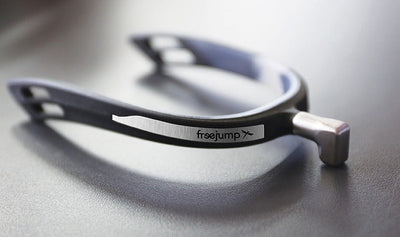
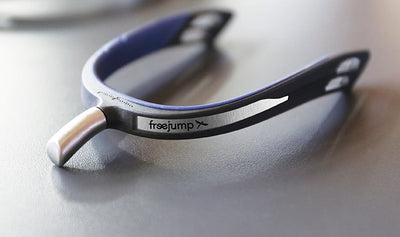
The Spur'One body is carbon fibre with an Elastollan inner overmould, and the tips are hand-polished stainless steel. There's a built-in articulation that adjusts to the width of your boot, which means the spur sits flush rather than gaping. They're sold in pairs, one size fits all.
Here's the range as stocked at iRide EQ, with prices in AUD:
| Model | Length | Price (AUD) | Stock |
|---|---|---|---|
| Spur'One Round End | 15mm | $120 | Low stock (2 units) |
| Spur'One Prince of Wales | 25mm | $140 | Low stock (1 unit) |
| Spur'One Hammer | 25mm | $140 | Low stock (1 unit) |
| Spur'One Extra Long | 30mm | $160 | Low stock (1 unit) |
| Spur'One Disk | 30mm | $175 | Out of stock |
I'll be straight with you — our total spur stock is limited. Four units across four models, and the Disk is currently unavailable. If you know which model you want, don't sit on it. European brands like Sprenger make decent spurs too, but Australian riders can shop the complete Freejump range with local delivery — no waiting on international shipping for something this size.

Competition-ready: spurs are part of a complete rider gear setup for EA events.
How to Choose the Right Spur for Your Horse
The right spur depends on two things: your horse's sensitivity and your leg length. A horse that's forward and responsive doesn't need much — a round end is plenty. A horse that's dull to the leg might need a Prince of Wales or a hammer (for jumping only). If you ride a wide horse and your legs don't naturally reach the barrel, an extra long spur bridges that gap.
Here's my honest advice: if you're moving up a level and feeling like your leg isn't getting through, try a round end first. It's the mildest, and it still gives you that extra clarity in the aid. Too many riders jump straight to a Prince of Wales or hammer when the fix is actually a stronger leg, not a sharper spur.
The other thing nobody mentions: your riding boots matter. A spur that fits a slim dressage boot might sit differently on a chunkier jumping boot. The Freejump Spur'One's articulated design handles this better than a fixed metal spur, but it's still worth checking the fit before you walk into the ring. The spur should sit snug against the heel counter — not sliding around, not gaping away from the boot.
Spur Maintenance and Boot Fit Tips
Spurs are low-maintenance gear, but a few things keep them working properly. After each ride, wipe the stainless steel tips clean — sweat and arena sand will dull the polish over time. Store them somewhere they won't get banged around, because a bent tip changes the contact surface and can make a legal spur illegal.
One thing to flag: despite our collection being called "spurs and straps," we don't currently stock separate spur straps. The Freejump Spur'One design uses its own elastic strap built into the spur, which is part of the one-size articulation system. If you're using a different brand's spurs that need replacement straps, you'll need to source those separately.
If you're between sizes on boots, remember that a thicker boot means a tighter spur fit. And if you ride in both dressage and jumping, you'll likely want two pairs of spurs — a dressage-legal option (round end or PoW) and a jumping option (add hammer to the mix). Trying to swap spurs between phases at a one-day event is a recipe for a missed warm-up.
Pair your spurs with the rest of your competition kit — check our bridles and full spurs collection at iRide EQ.
Frequently Asked Questions
Are spurs compulsory in dressage competition?
No. As of January 1, 2024, FEI made spurs optional in dressage (previously compulsory). EA follows FEI rules, so Australian riders can choose to ride without spurs in EA dressage tests.
Which spurs are banned in dressage?
Hammer spurs, notched or serrated rowels, and combed spurs are banned in FEI dressage. Smooth metal spurs with blunt tips (round end, Prince of Wales) and smooth disk spurs are permitted, provided the shank is under 4cm and points down.
What is the maximum spur length allowed in competition?
FEI rules cap spur shank length at 4cm for all disciplines. Pony dressage has a stricter limit of 3.5cm. All Freejump Spur'One models are well within these limits — the longest is 30mm (3cm).
Are Freejump spurs worth the price?
At $120 to $175 AUD, Freejump Spur'One spurs are a premium option. The carbon fibre body reduces weight, the stainless steel tips are hand-polished for smooth contact, and the articulated design fits a range of boot widths. For competition riders who want gear that lasts and complies with FEI rules, they're a solid investment.
Can I use the same spurs for dressage and jumping?
Round end and Prince of Wales spurs are legal for both dressage and jumping. Hammer spurs are legal for jumping and eventing but banned in dressage. If you compete in both disciplines, a round end or PoW is your safest all-round choice.
Do Freejump Spur'One spurs come in different colours?
Freejump makes the Spur'One in Black/Black, Black/Blue, and Black/Red. iRide EQ currently stocks the Black/Black colourway only. Check our spurs collection for current availability, as stock is limited.
What spurs are legal for pony classes?
Pony competition rules are the strictest. No rowels of any kind (including disk spurs), no hammer spurs, and a shorter 3.5cm maximum shank for dressage. Round end and Prince of Wales spurs are the safe options for pony riders.
Ready to Upgrade Your Leg Aid?
Shop the complete Freejump Spur'One range at iRide EQ — French-made spurs with carbon fibre bodies and stainless steel tips. Pair them with riding boots and stirrups and leathers for your full competition setup.
Shop Spurs Now