Quick answer: The best show jumping bridle for Australian riders balances fit, rule compliance, and your horse's comfort. Jump'In's French-made range at iRide EQ spans from the $263 Liberty entry bridle to the $887 Crystal, with anatomical options like the Wednesday for horses that need extra poll relief. Double bridles are not permitted in EA jumping, but bitless bridles are.
The rider's take: I learned the hard way about bridle fit at a local Ag show last year. My horse started tossing his head in the first round, and it wasn't until the warm-up for round two that I realised the flash noseband was sitting too low and catching the bit. Swapped to a plain cavesson for the next class and he jumped clear. That experience sent me down a rabbit hole on bridle types, noseband placement, and what EA actually allows. Here's what I found.
Choosing the right jumping bridle is one of those gear decisions that riders tend to overthink or completely ignore. There's a middle ground, and it starts with understanding what the rules permit, what your horse actually needs, and what's available in Australia without waiting three weeks for international shipping.
The full bridle range at iRide EQ is stocked right here in Australia, and every single bridle in the jumping collection is made by Jump'In, a French equestrian brand based in Fiennes, Pas-de-Calais. They sponsor Grand Prix riders like Julien Gonin and Louise Brogniez, and their bridlemaking follows traditional French leatherworking methods. The range runs from the Liberty entry-level bridle at $263.59 through to the Crystal at $887.03, with anatomical designs, bitless options, and competition-grade models in between.
One thing I'll say upfront: don't buy a bridle because it looks pretty. I've seen riders spend $700 on a bridle that didn't fit their horse's head shape at all. Fit first, aesthetics second. Always.

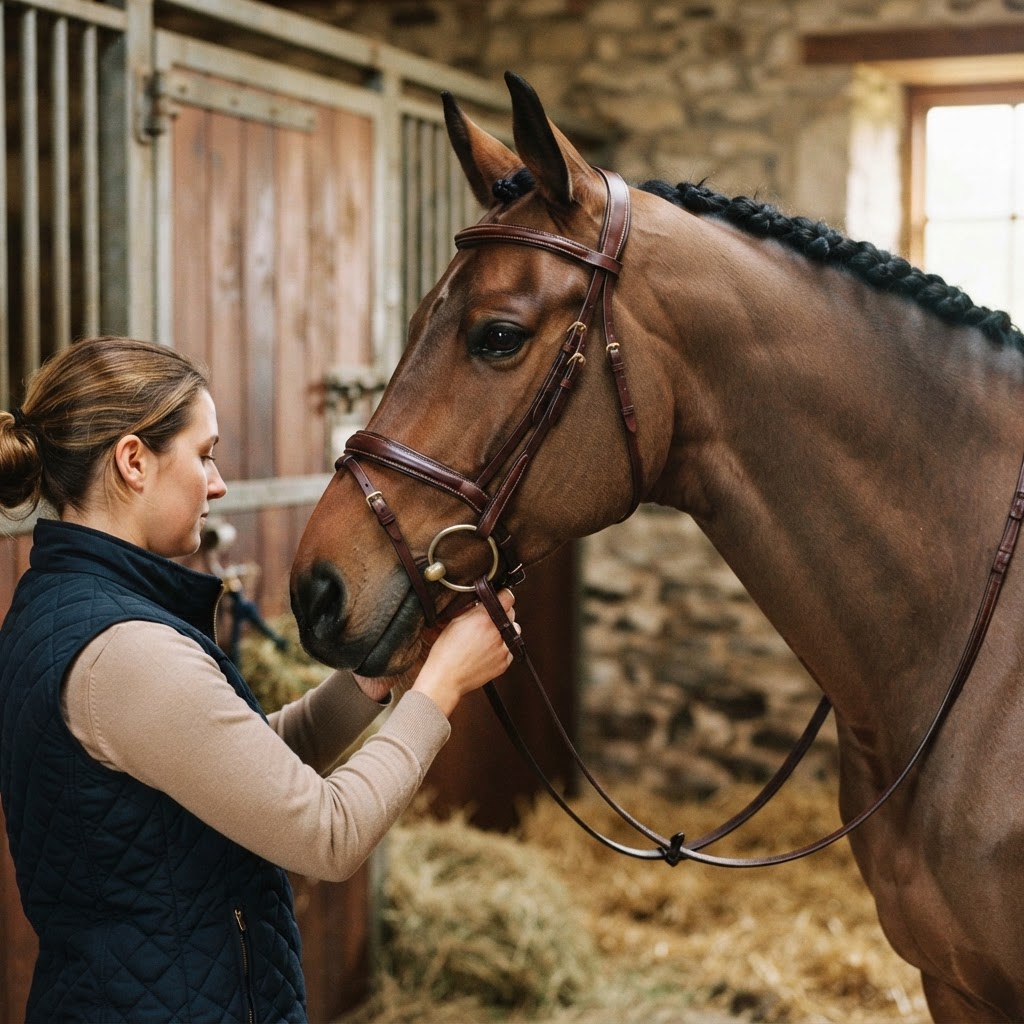
A properly fitted jumping bridle is the foundation of clear rounds and horse comfort.
Best Show Jumping Bridle: What Actually Matters
When riders ask about the "best" show jumping bridle, what they usually mean is "which one should I buy?" The honest answer depends on your horse's conformation, your budget, and whether you're hacking at home or jumping at EA-affiliated competitions.
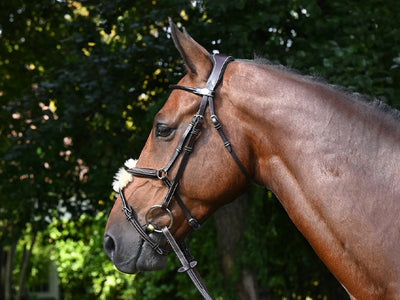
For most Australian riders, the Liberty Bridle at $263.59 is where I'd start. It's Jump'In's entry-level jumping bridle, made from the same French leather as the premium range, just with simpler detailing. Four sizes in stock, all available. If you're moving up from a budget synthetic bridle, the difference in feel and adjustability is immediate.

The Liberty Bridle - Jump'In's most accessible French leather jumping bridle at $263.59 AUD.
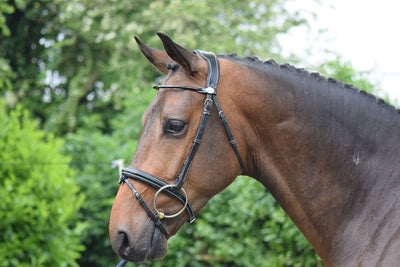
Step up to the London Bridle at $311.72 and you get finer stitching and a slightly more refined look. Same leather, same fit philosophy. I've used both, and honestly the difference is mostly cosmetic. Both are fully stocked across all four sizes.

The London Bridle at $311.72 AUD - same French leather as the Liberty with finer stitching.
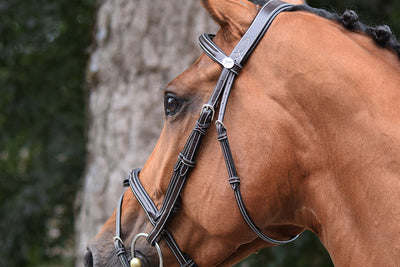
If you want a competition step-up, the Clincher Bridle at $503.13 is where things get interesting. Five sizes in stock, all available. The Clincher features a rolled leather design that stands out in the show ring without being flashy. It's the kind of bridle that looks better the more you use it, as the leather develops a patina.

The Clincher Bridle at $503.13 AUD - rolled leather that develops a rich patina with use.
At the top end, the Crystal Bridle at $887.03 is Jump'In's flagship. It features Swarovski crystal detailing and is the one you'd save for championship days. Two sizes still in stock. Is it worth nearly $900? For most riders, no. For someone campaigning at a serious level who wants their turnout to stand out, maybe. I'd never recommend it as a first bridle.

The Crystal Bridle at $887.03 AUD - Jump'In's flagship with Swarovski detailing for championship days.
Jumping Bridle with Flash: When You Need One (and When You Don't)
The flash noseband is one of the most misunderstood pieces of tack in Australian show jumping. A flash is a secondary strap attached below the cavesson that loops around the horse's nose. It's designed to keep the horse's mouth closed and prevent them from evading the bit by opening their jaw.
Here's the thing: a lot of riders slap a flash on because they think they're supposed to. I've seen horses at local shows with the flash done up so tight the skin bunches underneath it. That's not helping anyone. If your horse doesn't have an evasion issue with mouth opening, you don't need a flash.
Several of Jump'In's bridles come with or can be fitted with a flash. The Monday Bridle at $647.50 (4 of 5 sizes in stock) is one option. But if you're using a flash, make sure you understand how to fit it. The cavesson should sit two fingers below the cheekbone, and the flash strap should be snug, not cranked down. EA rules permit flash nosebands in jumping, so you're fine from a rules perspective.
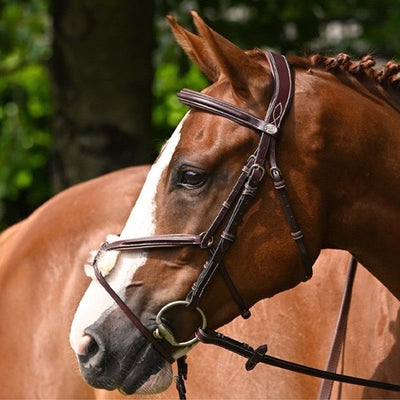
For riders who prefer a cleaner look, the New York Bridle at $407.97 comes with a plain cavesson and is fully stocked across four sizes. It's a middle-ground option that looks sharp without the extra hardware.

The New York Bridle at $407.97 AUD - clean cavesson design without a flash attachment.
If you want to understand noseband types more broadly, our horse nosebands guide breaks down cavesson, flash, drop, and figure-eight designs and when each is appropriate.

Quality French leather develops character with use - a well-maintained bridle lasts for years.
Anatomical Jumping Bridle: Worth the Premium?
Anatomical bridles are designed to distribute pressure more evenly across the horse's head, avoiding sensitive nerves around the poll, cheekbones, and facial crest. The concept is sound: less pressure on sensitive areas means a more comfortable horse, and a more comfortable horse jumps better.
Jump'In offers several anatomical options. The Wednesday Bridle at $718.59 is the standout. It features an anatomical headpiece and noseband shaped to follow the natural contours of the horse's face. Four sizes in stock, all available. This is the one I'd recommend for horses with a pronounced jaw or those that are sensitive around the poll.

The Wednesday Bridle at $718.59 AUD - anatomical design for poll relief and even pressure distribution.
One thing to be aware of: the Summer Bridle Anatomical at $714.22 (which comes up in autocomplete searches for "anatomical jumping bridle") is currently out of stock. If you're specifically after an anatomical bridle right now, the Wednesday is your best bet. It's in the same price range and has the same anatomical noseband design.
The Monday Bridle at $647.50 is another anatomical option, with a slightly different headpiece shape. Four of five sizes in stock. If you're between the Monday and the Wednesday, the main difference is the noseband design: the Wednesday has a wider anatomical noseband, while the Monday is a bit more traditional.

The Monday Bridle at $647.50 AUD - anatomical headpiece with traditional noseband styling.
Are anatomical bridles worth the extra money? If your horse has conformation that makes traditional bridles sit poorly, yes. If your horse goes fine in a standard bridle, the difference may be marginal. I'd never tell someone they must have an anatomical bridle. But for a horse with a wide poll or prominent cheekbones, it can make a noticeable difference in how they go.
For the riders who like to match their tack, consider pairing your anatomical bridle with dressage bridles for flatwork days and a quality set of reins for a secure grip in all conditions.
Can You Jump in a Double Bridle?
No. Under FEI Jumping Rules (which EA National Rules follow), double bridles are not permitted in jumping competitions. This applies to all levels, from Pony Riders through to Grand Prix. The FEI Tack and Equipment document makes this clear, and EA's national rules, effective January 2026, are based on the FEI standard.
What about bitless bridles? Here's where it gets interesting. The FEI Tack and Equipment document (effective February 2027) permits bitless bridles in jumping under Article 4.4. EA also permits bitless bridles in showjumping and eventing. So if you've been thinking about going bitless, the rules are on your side.
Jump'In makes a dedicated Bitless Bridle at $359.84, and it's one of the more popular options in the range for riders who are exploring bitless riding. Three of four sizes in stock. It's designed specifically for jumping, with the pressure distribution tuned for that discipline.

The Bitless Bridle at $359.84 AUD - permitted under FEI and EA jumping rules.
If you're transitioning to bitless, take the time to retrain. A bitless bridle works on different pressure points, and your horse needs to learn the new signals. Don't just swap and show. Spend a few weeks in flatwork first.
While you're thinking about what goes on your horse's head, it's worth checking out our range of browbands and bits to complete your tack setup. The right Jump'In combination of bridle, bit, and reins can transform how your horse goes.
Stock Alert: What's Available Right Now
The Jump'In jumping bridle range at iRide EQ runs to 20 products, and stock shifts constantly. As of October 2026, four bridles are out of stock: the Manhattan ($478), Carat ($551.25), Hackamore ($551.25), and Summer Bridle Anatomical ($714.22). If you had your eye on any of those, add yourself to the notification list on the product page.
The good news is that the core range is well-stocked. The Liberty, London, Bruxelles, New York, Clincher, and Wednesday bridles all have full stock across all sizes. Partial stock on the Paris, Bitless, Tuesday, Monday, Thursday, Friday, and Crystal means you may need to check your size before ordering.
Here's a quick comparison of the key models:
| Bridle | Price (AUD) | Stock Status | Best For |
|---|---|---|---|
| Liberty | $263.59 | Full (4/4) | Entry-level, everyday jumping |
| London | $311.72 | Full (4/4) | Everyday with refined detailing |
| Bitless | $359.84 | Partial (3/4) | Bitless jumping (FEI/EA permitted) |
| New York | $407.97 | Full (4/4) | Plain cavesson, clean look |
| Clincher | $503.13 | Full (5/5) | Competition, rolled leather |
| Monday | $647.50 | Partial (4/5) | Anatomical headpiece |
| Wednesday | $718.59 | Full (4/4) | Anatomical noseband and headpiece |
| Crystal | $887.03 | Partial (2/5) | Championship-level turnout |
| Where to buy: All bridles available at iRide EQ with fast Australian delivery. | |||
Frequently Asked Questions
Can you jump in a double bridle?
No. FEI Jumping Rules prohibit double bridles at all levels of show jumping, and EA National Rules (based on FEI) follow the same restriction. This applies from Pony Riders through to Grand Prix. If you need two bits for control, you'll need to address the underlying training issue rather than adding a second bit.
What is the best show jumping bridle?
For most Australian riders, the Jump'In Liberty at $263.59 is the best starting point. It offers French leather quality at an accessible price. For competition, the Clincher at $503.13 or the anatomical Wednesday at $718.59 are popular upgrades. The "best" bridle is the one that fits your horse's head shape and suits your discipline level.
Are anatomical bridles worth it?
If your horse has a wide poll, prominent cheekbones, or sensitivity around the headpiece, an anatomical bridle can make a real difference. The Jump'In Wednesday at $718.59 distributes pressure across a wider area and avoids nerve pressure points. For a horse that goes well in a standard bridle, the benefit may be less noticeable but still present.
What colour jumping bridle should I get: black or brown?
Jump'In bridles come in havane (brown) and black. Havane is the traditional French show colour and looks warm against most coat colours. Black is more formal and is the standard for higher-level EA competition turnout. For local shows and everyday riding, havane is the more forgiving choice. Both age beautifully with proper care.
What is a flash on a bridle?
A flash is a secondary strap attached to the cavesson noseband that wraps around the horse's nose below the main noseband. It's designed to keep the horse's mouth closed and prevent jaw evasion. Flash nosebands are permitted under EA jumping rules. They should be fitted snugly, not tightly, with room for at least one finger underneath.
What does a flash do on a bridle?
A flash prevents the horse from opening its mouth to evade the bit. It works by stabilising the lower jaw. Not every horse needs one. If your horse tends to cross their jaw or open their mouth during jumping, a flash can help. If they don't have this issue, a plain cavesson is simpler and cleaner. Never crank a flash tight, as it can cause discomfort and restrict breathing.
Can I use a bitless bridle for show jumping in Australia?
Yes. Both FEI (effective February 2027) and EA permit bitless bridles in showjumping and eventing. The Jump'In Bitless Bridle at $359.84 is designed specifically for jumping. If you're switching from a bitted bridle, allow several weeks of flatwork retraining before competing.
Find Your Perfect Jumping Bridle
Every Jump'In bridle in our jumping bridles collection is stocked in Australia and ready to ship. From the $263 Liberty to the anatomical Wednesday, find the bridle that fits your horse and your budget. Browse the full bridle range or explore Jump'In bits, reins, and training aids.
Shop Jumping Bridles