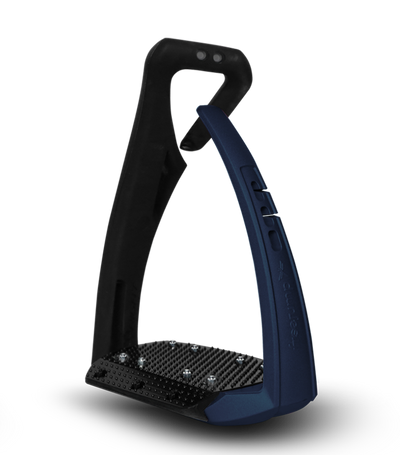
Quick answer: The best horse stirrups for Australian riders depend on your discipline and safety priorities. Freejump is the standout choice — their single-branch Soft'Up Pro+ design offers quick foot release and a wider platform, making them the go-to for competition jumping and everyday training. Available at iRide EQ with fast Australia-wide delivery.
The rider's take: In 15 years of keeping horses, I've seen two foot-trap falls that could have been much worse. Both were in traditional double-branch stirrups where the foot slid through and got wedged. After the second one — a young rider at a local Ag show who got dragged — I switched every set of stirrups in our stable to Freejump single-branch. The peace of mind alone is worth it. The foot release works. I've tested it myself (not on purpose, mind you).

The right stirrups affect your balance, security, and safety — choose carefully for your discipline.
Stirrups are more than a foothold. They're the connection between rider and saddle, affecting your balance, security, and comfort during every ride. The stirrup you choose influences your leg position, heel stability, and ability to respond to your horse's movement.
Australian riders face specific challenges: long rides across varied terrain, hot conditions that affect grip, and the need for reliable equipment in remote areas where a tack failure means a long walk home. Here's what actually matters when choosing stirrups in Australia.
Understanding Stirrup Types
Not all stirrups work the same way. The design affects how your foot sits, how the stirrup hangs, and — most importantly — how easily your foot releases in a fall.
Single-Branch Stirrups (Freejump)
Freejump pioneered the single-branch design, which uses one metal arm connecting the footplate to the saddle. The result is a lighter stirrup that hangs more naturally and releases your foot faster in a fall. For jumping and cross-country, where the risk of being caught is highest, this is the design I'd recommend.
The Freejump Soft'Up Pro Plus is their flagship model — the footplate is wider than traditional stirrups, giving you a more stable platform. The single branch is engineered to flex under lateral pressure, which means if your foot slides sideways in a fall, the stirrup releases rather than trapping your foot.
Freejump also makes the AirS, Air Pure, and Soft Up Lite — each at different price points but all with the same single-branch safety philosophy. The AirS Custom lets you choose colours, if that matters to you.
Traditional Double-Branch Stirrups
These are the stirrups most riders grew up with — two metal arms connecting the footplate to the saddle. They're familiar, stable, and widely available. The downside is that the closed design can trap a foot more easily than a single-branch stirrup.
There's nothing wrong with double-branch stirrups for low-risk riding — hacking, basic flatwork, trail riding. But if you're jumping, eventing, or working with young or unpredictable horses, the safety argument for single-branch is strong.
Stirrup Leathers and Accessories
Don't overlook the leathers. Cheap leathers stretch unevenly, which means your stirrups end up at different lengths — and that affects your balance without you realising it. Check your leathers regularly for wear, especially at the buckle hole where the stress concentrates.
Jump'In makes quality leather stirrup straps, including plunged calfskin options that sit flatter against the saddle flap. Freejump also makes stirrup leathers — their PROGRIP leathers have a non-slip surface that keeps the stirrup in position. Both are available through our stirrups and leathers collection.
Stirrup leathers should be checked regularly for uneven stretching and wear at the buckle holes.
Safety Standards — What Actually Matters
Unlike helmets and body protectors, stirrups don't have a mandatory safety standard in Australia. That means it's on you to choose wisely.
Here's what I'd look for:
- Foot release: The stirrup should release your foot easily under lateral or upward pressure. Single-branch designs (Freejump) do this naturally. Some double-branch stirrups have rubber-band release mechanisms, but these can degrade over time.
- Footplate width: A wider footplate gives you more stability. The Freejump Soft'Up Pro Plus has a noticeably wider platform than traditional stirrups. If you have wide feet or ride in chunky-soled boots, this matters.
- Material quality: Cheaper stirrups can bend or break under stress. Look for aircraft-grade aluminium or stainless steel. Freejump uses aircraft-grade aluminium — light, strong, and corrosion-resistant.
- Grip surface: The footplate should have grip — either textured metal or a grip pad. The Freejump Grip Pad is a good add-on if your boots are slippery.
One thing I'd flag: don't assume expensive means safe. A $400 pair of designer stirrups with no release mechanism is less safe than a $150 pair of Freejump Soft Up Lite. Safety is about the design, not the price tag.
The Freejump Range — Which One Should You Buy?
Here's a breakdown of the Freejump stirrup range available at iRide EQ, from top to bottom:
Soft'Up Pro Plus — The Flagship
The most popular Freejump stirrup. Single-branch, wide footplate, and the fastest foot release in the range. If you're jumping at any level, this is the one. Available through our Freejump collection.
AirS and AirS Custom — Mid-Range with Colour Options
The AirS offers similar safety features to the Pro Plus at a slightly lower price point. The AirS Custom lets you choose the arm and footplate colours — if you want your stirrups to match your competition wear, this is the one.
Soft Up Lite — Entry Level
The Soft Up Lite is Freejump's entry-level single-branch stirrup. Same safety philosophy, lighter on features. If you're on a budget but still want the single-branch safety advantage, start here.
Air Pure — Minimalist
The Air Pure is the cleanest design in the range — no extra features, just the single-branch safety and a basic footplate. A good choice for everyday training and hacking.
Maintaining Your Stirrups
Stirrups are low-maintenance but not zero-maintenance. Here's what I do:
- Monthly check: Look for cracks in the metal, loose screws (if applicable), and worn grip surfaces. Replace the grip pad if it's smooth.
- Leather care: Clean and condition your stirrup leathers every few months. Check the buckle holes for cracking — that's where they fail.
- After wet rides: Dry your stirrups and leathers naturally. Don't put them near a heater — rapid drying cracks leather.
- Replace after a fall: If you've had a fall where the stirrup took impact, replace it. Micro-cracks in aluminium aren't always visible, and a compromised stirrup can fail when you least expect it.
For more on tack care, see our guide on cleaning and caring for leather horse tack.
Frequently Asked Questions
Are Freejump stirrups worth the price?
For jumping, eventing, or riding young horses — yes. The single-branch safety design genuinely reduces the risk of foot entrapment, and the wider platform improves stability. If you're only hacking or doing basic flatwork, traditional stirrups are fine. But if safety is a priority, Freejump is the brand I recommend without hesitation.
What's the difference between single-branch and double-branch stirrups?
Single-branch stirrups (like Freejump) use one metal arm, making them lighter and easier to release your foot in a fall. Double-branch stirrups use two arms — more familiar but can trap a foot more easily. Single-branch is the safer design, especially for jumping.
Do I need safety stirrups for dressage?
Not strictly required, but recommended. The risk of foot entrapment is lower in dressage than in jumping, but it still exists — especially if your horse spooks or trips. If you're already using Freejump for jumping, there's no reason not to use them for dressage too.
How often should I replace my stirrups?
With proper care, quality stirrups last years. However, replace them immediately after a fall where the stirrup took impact — micro-cracks in aluminium aren't always visible. Check monthly for wear, loose screws, and worn grip surfaces. Replace stirrup leathers every 2-3 years or when the buckle holes show cracking.
What size stirrups do I need?
Stirrup size refers to the footplate width. Most adult riders use a standard width (around 12-13cm). If you have wide feet or ride in chunky-soled boots, look for a wider footplate like the Freejump Soft'Up Pro Plus. Your boot should fit through the stirrup with about 1cm clearance on each side — too tight and your foot can get trapped, too loose and your foot slides around.
Can I use Freejump stirrups with any saddle?
Yes. Freejump stirrups are compatible with any saddle that uses standard stirrup leathers. They attach the same way as traditional stirrups. Just make sure your leathers are in good condition — Freejump stirrups are lighter than traditional stirrups, which means any stretch in your leathers will be more noticeable.
What stirrup leathers work best with Freejump stirrups?
Freejump makes their own leathers — the PROGRIP leathers have a non-slip surface that pairs well with their stirrups. Jump'In also makes quality leather stirrup straps, including plunged calfskin options. Both are available in our stirrups and leathers collection.
Shop Stirrups at iRide EQ
The full Freejump stirrup range — Soft'Up Pro Plus, AirS, Air Pure, Soft Up Lite — plus stirrup leathers from Freejump and Jump'In. Free shipping over $249 Australia-wide.
Browse Stirrups →![Freejump Cartridge 60CC [Airbag] FREEJUMP](http://irideeq.com/cdn/shop/files/F02203_b70f8559-5c88-4eb1-8bd5-573f02e52322.jpg?v=1732493571&width=400)