Quick answer: For EA-affiliated competition in Australia, your helmet must carry a current accepted certification mark — AS/NZS 3838 is the local standard, and you should check the current EA equipment rules for the full accepted list before you compete. MIPS adds rotational-impact protection worth having if the fit and budget allow. iRide EQ's range is built around the French-made Freejump Voronoi series. Replace any helmet after a single impact, no exceptions.
The helmet you buy is the one piece of gear you hope to never test. Unlike boots or breeches, it exists for one reason — and every standard, certification and fit rule in this guide matters because a fall from a horse can generate forces comparable to a low-speed car crash. Here's the framework for choosing one that will actually do its job, including what MIPS is really worth and when to replace a helmet you've never dropped. Browse our full range of riding helmets at iRide EQ as you go.
Equestrian Australia (EA) mandates that all riders at affiliated events wear a helmet certified to AS/NZS 3838 or an accepted equivalent — enforced at competition. But even if you never compete, the same principles apply. A fall from a horse can generate forces comparable to a low-speed car crash, and head injuries account for the majority of equestrian hospitalisations in Australia each year. This guide covers safety standards, MIPS technology, discipline-specific styles, fitting, replacement timelines, and leading brands stocked at iRide EQ.

A correctly fitted riding helmet is non-negotiable — it's the most important safety equipment you own.
Australian Safety Standards Explained (AS/NZS 3838, PAS015, ASTM)
The AS/NZS 3838 standard is the benchmark for all equestrian helmets sold in Australia. It specifies rigorous testing covering impact attenuation, penetration resistance, retention system strength, and field of vision. A helmet carrying this mark has passed drop tests onto flat and curved anvils, a penetration test, and chinstrap stress tests ensuring it stays in place during a fall.
What AS/NZS 3838 Actually Tests
The standard evaluates three primary areas. Impact attenuation measures how well the helmet absorbs energy — the helmet is dropped from a set height and peak acceleration to the headform is recorded. Penetration resistance tests whether a sharp object can pierce the shell. The retention system test applies a dynamic load to the chinstrap to verify the buckle and webbing will not fail under real-world forces.
European (PAS015) and American (ASTM F1163) Equivalents
Many premium brands manufacture helmets meeting regional standards. The British PAS 015 is one of the most demanding in the world and is accepted by EA alongside AS/NZS 3838. The American ASTM F1163, certified through the SEI programme, is also accepted. When in doubt, choose a dual-certified helmet for maximum confidence.
Standards Comparison Table
| Standard | Region | Key Tests | EA Accepted? |
|---|---|---|---|
| AS/NZS 3838 | Australia / NZ | Impact, penetration, retention | Yes (primary) |
| PAS 015 | United Kingdom | Impact, crush, temperature conditioning | Yes |
| ASTM F1163 (SEI) | USA | Impact, retention, conditioning | Yes |
| VG1 01-040 | European Union | Impact, penetration, retention | Yes (with conditions) |
| Freejump | No | Competition jumping & eventing | Mid to premium |
Understanding MIPS Technology
MIPS — Multi-directional Impact Protection System — is one of the most significant advancements in equestrian helmet safety in decades. Developed by neuroscientists at Sweden's Karolinska Institute, MIPS is a low-friction layer between the helmet's shell and inner padding. In an oblique impact, this layer allows the helmet to slide slightly relative to the head, redirecting rotational forces away from the brain.
Why Rotational Forces Matter
Most equestrian falls do not produce a straight, linear impact. A rider typically falls at an angle — the head hits the ground while the body continues moving, generating rotational acceleration. This causes the brain to rotate within the skull, stretching and tearing neural fibres. Studies show rotational acceleration is a stronger predictor of concussion than linear acceleration alone.
How MIPS Works in Practice
Inside a MIPS-equipped helmet, a thin plastic layer is anchored to the inner foam by elastomer anchors. During an angled impact, this layer shifts 10 to 15 millimetres, mimicking the brain's own cerebrospinal fluid protection. By redirecting rotational energy, MIPS can reduce rotational acceleration to the brain by an estimated 10 to 25 percent. For riders who hack on roads, jump cross-country, or ride young horses, this extra protection is well worth the modest premium.
Helmet Styles by Discipline
Equestrian helmets fall into three broad categories — the traditional velvet show hat, the jockey skull cap, and the modern skull cap with a cover. Each has evolved to meet the needs of different equestrian sports, and choosing the right one is as much about aesthetics and competition rules as safety.
Show Hats (Velvet Covered)
The classic show hat is a fixed-peak helmet covered in velvet or synthetic fabric, traditional for show hunters, equitation, and showing classes. The fixed peak means the same helmet is used across flat and jumping phases. Brands like Charles Owen produce show hats combining traditional aesthetics with MIPS and dual-certification.
Skull Caps and Jockey Skulls
The skull cap is a fixed-shell helmet without a peak, worn with a separate silk cover. Standard in eventing, racing, and hunting, its key advantage is the absence of a fixed peak — a fall onto the face is less likely to lever the helmet off or cause neck torque. For eventing, the detachable cover offers flexibility to swap silks for cross-country colours.

Whether schooling at home or competing at an EA event, a compliant helmet protects what matters most.
How to Measure and Fit
A helmet can only protect you if it fits correctly. An ill-fitting helmet will not perform as intended in a crash. Measuring your head and fitting a helmet properly is straightforward but requires attention to detail. Do not assume your size from a previous helmet, as sizing varies significantly between brands.
Step-by-Step Measurement Guide
Measure your head circumference using a flexible tape around the widest part — roughly one centimetre above your eyebrows and ears, around the occipital bone. Compare the measurement in centimetres to the brand's sizing chart. Most helmets range from 52 cm to 62 cm. If between sizes, size up slightly and use the retention dial to fine-tune.
Checking the Fit
The fit should be snug but not painfully tight. The helmet should sit level with the front edge one to two finger-widths above your eyebrows. Shake your head gently — the helmet should move with your head, not independently. Fasten the chinstrap snugly with no more than one finger between strap and chin. If you can push the helmet off the back of your head with the strap fastened, it is too large. Inner padding compresses slightly over time, so a firm fit when new will settle after a few rides.
When to Replace Your Helmet
Helmets are not a lifetime investment. The protective materials inside — primarily expanded polystyrene (EPS) foam — degrade over time, even without a fall. Understanding when to replace your helmet is critical to ensuring it will perform when needed.
After Any Impact
The golden rule: if your helmet has been involved in any impact — a fall, being dropped on a hard surface, or even being sat on — replace it immediately. The EPS foam is designed to compress and absorb energy, and once compressed it cannot recover. A helmet that has taken a hit may look fine outside but the internal foam is compromised. Some manufacturers offer crash replacement programmes with a discount for damaged helmets.
Age and General Wear
Even without impact, materials degrade through sweat, heat, UV, and temperature fluctuations. Most manufacturers recommend replacing every five years from first use, or eight years from manufacture. In Australia's hot climate, consider replacement closer to four-to-five years. Inspect regularly for shell cracks, loose webbing, fading, or a loose fit that cannot be corrected with the dial.
Pro tip: In Australia's hot climate, store your helmet in a cool, dry place — never in a hot car or tack room. Heat above 50°C can permanently compromise the EPS foam. If you compete at EA events, carry a spare compliant helmet; officials will not let you ride if your helmet fails gear check, and a backup means your day is not over before it begins.
Top Brands Compared
The equestrian helmet market in Australia is dominated by a handful of established brands, each with its own strengths. At iRide EQ we stock the leading names, and understanding the differences will help you choose the right helmet.
Charles Owen
A British heritage brand with over a century of experience, Charles Owen is the gold standard for traditional equestrian headwear. Their helmets are renowned for a deep fit with excellent skull coverage. Many models are triple-certified — meeting AS/NZS 3838, PAS 015, and ASTM F1163 simultaneously. The AYR8 and My2000 are popular competition helmets in Australia, while newer MIPS models like the Luna bring rotational protection to a more accessible price point.
Samshield
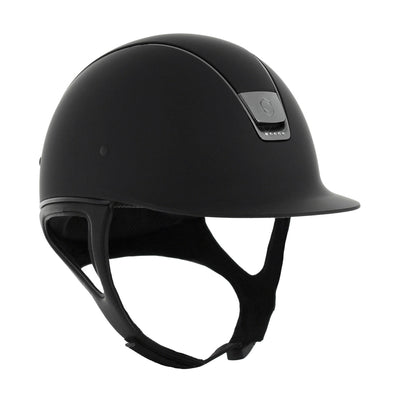
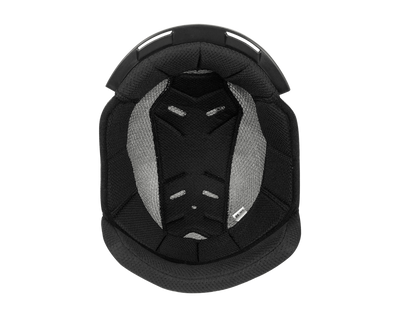
French brand Samshield has disrupted the market with a focus on customisation and contemporary design. The Premium and Shadowmatt feature a distinctive front band customisable with crystals, leather, or coloured piping. Samshield helmets use a variable-density EPS liner providing different cushioning across zones. The Airfit system lets riders customise the interior fit, and interchangeable front bands mean you can refresh the look without buying a new helmet.
One K
One K helmets are a favourite for riders wanting a modern, ventilated, and competitively priced helmet without compromising safety. The Defender range comes in MIPS and non-MIPS variants with extensive ventilation. The interchangeable chinstrap and visor system allows personalisation, and the ABS outer shell with EPS liner provides solid protection. One K represents excellent value for riders wanting MIPS without premium European prices.
Freejump
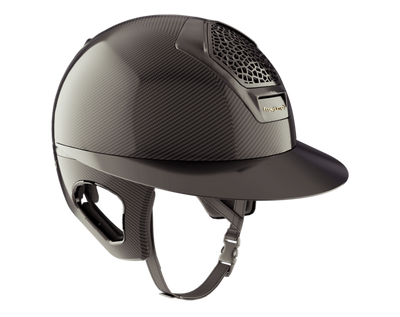
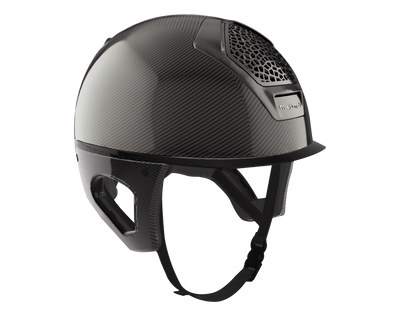
French safety brand Freejump is best known for their revolutionary safety stirrups, but their helmet range brings the same engineering-first philosophy to head protection. Freejump helmets are designed for competition riders who demand both certified safety and a lightweight, aerodynamic fit. Built and tested in France to European VG1 and EN1384 standards — both accepted by Equestrian Australia — Freejump helmets suit show jumping and eventing disciplines where a low-profile, secure fit matters. If you're already riding in Freejump stirrups, their helmets are a natural pairing for a complete safety-focused competition setup.
Brand Comparison Summary
| Brand | MIPS Available | Best For | Price Range |
|---|---|---|---|
| Charles Owen | Yes | Traditional showing & eventing | Mid to premium |
| Samshield | Yes | Custom style & show jumping | Premium |
| One K | Yes | Everyday riding & budget MIPS | Mid-range |
Are horse riding helmets legally required in Australia?
There is no federal law mandating helmets for all equestrian activity. However, Equestrian Australia requires all riders at affiliated competitions to wear a helmet certified to AS/NZS 3838 or an accepted equivalent. Most riding schools, pony clubs, and trail riding operators also require approved helmets when mounted.
What is the AS/NZS 3838 standard?
AS/NZS 3838 is the joint Australian and New Zealand standard for equestrian helmets, specifying testing for impact attenuation, penetration resistance, retention system strength, and field of vision. A helmet bearing this certification has passed all required tests and is accepted at EA affiliated events.
Is MIPS worth the extra cost?
Yes. MIPS has been shown to reduce rotational acceleration to the brain by 10 to 25 percent in oblique impacts, the most common type of fall. Given rotational forces are a major contributor to concussion and diffuse axonal injury, the additional $30 to $80 is a worthwhile investment.
How often should I replace my riding helmet?
Replace every five years from first use, or eight years from manufacture, whichever comes first. In Australia's hot climate, consider replacement closer to four-to-five years. Crucially, replace immediately after any impact, regardless of whether the shell appears damaged.
Can I use a European helmet in Australian competitions?
Yes, provided it meets a standard accepted by Equestrian Australia — PAS 015 (UK), ASTM F1163 with SEI (USA), or VG1 01-040 (EU). Always check the label inside the helmet and current EA rules before competing.
How do I know if my helmet fits correctly?
A correctly fitted helmet sits level with the front edge one to two finger-widths above your eyebrows. It should feel snug and move with your head when shaken. The chinstrap should allow only one finger between it and your chin. If you can push the helmet off the back of your head with the strap fastened, it is too large.
Shop Riding Helmets at iRide EQ
Browse our full range of riding helmets — AS/NZS 3838 certified options for every discipline and budget. Fast Australia-wide delivery on all orders.