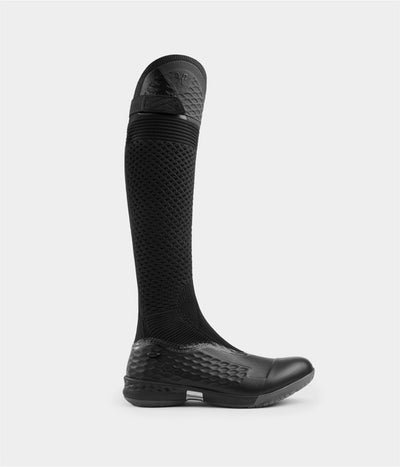
Quick answer: The best horse riding boots in Australia depend on your discipline and budget — tall leather dress boots for dressage and showing, synthetic field boots for jumping, and paddock boots with half chaps for everyday riding. Brands at iRide EQ include Freejump and more, with fast Australia-wide delivery.
Choosing the right pair of horse riding boots is one of the most important gear decisions any equestrian will make. Whether you are hacking out on weekends, schooling young horses at home, or gearing up for your first competition, the boots on your feet directly influence your safety, comfort, and performance in the saddle. A well-fitted boot gives you the correct heel depth in the stirrup, protects your lower leg from friction and impact, and supports a stable, effective leg position.
In Australia, the range of conditions riders face — from dusty outback trails to humid coastal arenas — makes boot selection even more critical. The heat, the dust, and the seasonal rain all take their toll on equestrian footwear, so understanding which materials, styles, and brands suit your climate and discipline will save you money and keep you comfortable year-round. Explore the full riding boots and footwear collection at iRide EQ to find options matched to your needs.
This guide walks you through every type of riding boot available to Australian riders, compares materials and brands, explains sizing across EU, UK, US, and AU standards, and covers the competition rules set by Equestrian Australia so you can make an informed purchase with confidence.

The right riding boots protect your feet, give correct heel position in the stirrup, and complete your competition turnout.
Tall Boots vs Paddock Boots vs Half Chaps
Understanding the three main styles of riding footwear is the foundation of choosing the right boot. Each type serves a different purpose, and many riders own more than one style to cover all their riding activities. Your choice will depend on how often you ride, what discipline you pursue, and whether you compete or ride purely for pleasure.
Tall Boots (Dress and Field Boots)
Tall boots extend to just below the knee and come in two primary varieties: dress boots and field boots. Dress boots are traditionally stiff, plain, and worn for dressage and showing. Field boots feature lacing at the ankle and are the standard choice for show jumping and eventing, offering more ankle flexibility. Tall boots provide the most polished appearance for competition and deliver excellent grip and protection along the entire lower leg. They are an investment piece — quality leather tall boots can last many years with proper care.
Paddock Boots (Jodhpur Boots)
Paddock boots are ankle-height boots that end above the ankle bone. They are the most versatile and affordable option, popular for everyday riding, stable work, and lessons. Paddock boots pair with half chaps to simulate the protection and grip of a tall boot at a fraction of the cost. They are easy to put on, comfortable to walk in, and ideal for riders who spend hours at the barn. Most paddock boots feature a zip or lace closure and a reinforced toe for durability.
Half Chaps
Half chaps are protective lower-leg covers worn over paddock boots. They extend from the ankle to just below the knee and provide the grip and leg protection of a tall boot when combined with a paddock boot. Half chaps are available in leather and synthetic materials, with features like stretch panels, reinforced inner leg patches, and zip or hook-and-loop closures. For riders on a budget or those who prefer the convenience of separate footwear, the paddock boot and half chap combination is an excellent everyday solution.
| Feature | Tall Boots | Paddock Boots | Half Chaps (with Paddock Boots) |
|---|---|---|---|
| Height | Below the knee | Above the ankle | Ankle to below knee |
| Best for | Competition, dressage, showing, jumping | Everyday riding, stable work, lessons | Everyday riding with tall-boot feel |
| Price range | $$$ (premium) | $ (affordable) | $$ (mid-range combo) |
| Competition legal | Yes — all disciplines | Limited (check rules) | Limited (check rules) |
| Ease of use | Moderate (break-in period) | Easy | Easy |
Leather vs Synthetic Riding Boots
The material of your riding boots affects everything from durability and comfort to price and maintenance. Both leather and synthetic options have their merits, and the right choice depends on your budget, how frequently you ride, and the climate you ride in.
Leather Boots
Leather remains the gold standard for riding boots, and for good reason. Premium leather conforms to the shape of your foot and lower leg over time, creating a custom fit that no synthetic material can match. Leather is breathable, which helps regulate temperature and reduce sweating — an important consideration in the Australian summer. It is also naturally water-resistant when conditioned, and it can be repaired and reconditioned to extend its lifespan significantly. High-quality leather boots from brands like Freejump offer exceptional performance, elegance in the show ring, and longevity that justifies the higher upfront cost.
- Durability: With proper care, leather boots can last 5–10 years or more
- Comfort: Moulds to your leg for a bespoke fit
- Breathability: Natural material allows air circulation
- Maintenance: Requires regular cleaning, conditioning, and polishing
- Cost: Higher initial investment but better value over time
Synthetic Boots
Synthetic materials have improved dramatically in recent years, and modern synthetic riding boots offer impressive performance at a lower price point. They are lightweight, often waterproof, and require minimal maintenance — a simple wipe-down is usually all that is needed. Synthetic boots are ideal for riders who are just starting out, those on a budget, or anyone who wants a low-maintenance option for hacking and everyday schooling. However, synthetics do not breathe as well as leather, and they will not mould to your leg in the same way. They are also harder to repair if damaged.
- Durability: Typically 1–3 years depending on use
- Comfort: Good, but does not conform like leather
- Breathability: Limited — can feel hot in summer
- Maintenance: Very low — wipe clean with a damp cloth
- Cost: Budget-friendly, great for beginners
Discipline Guide: Which Boots for Your Sport
Different equestrian disciplines have different footwear requirements, both for performance and for competition compliance. Choosing boots suited to your primary discipline will improve your riding and ensure you meet the relevant rules. Below is a guide to the most common disciplines ridden in Australia and the boots best suited to each.
Dressage
Dressage demands a clean, elegant leg and a polished silhouette. Tall dress boots — plain, black, and without laces — are the standard. The stiff construction of a dress boot helps maintain a still, quiet leg, which is essential for precise aids. A snug fit through the calf is important for both appearance and feel.
Show Jumping and Eventing
Field boots with ankle lacing are the traditional choice for jumping disciplines. The lacing allows greater ankle flexion, which is needed to absorb the shock of landing and to maintain a secure position over fences. For eventing, the same field boots serve across all three phases, though many eventers opt for synthetic options for the cross-country phase to protect their leather boots from mud and water.
Showing
Showing requires a traditional, immaculate turnout. Tall leather boots in black, polished to a mirror finish, are mandatory for most showing classes. Some Hunter and Working Hunter classes permit brown boots, but check the schedule before committing.
Everyday Riding and Hacking
For everyday riding, paddock boots with half chaps offer the best combination of practicality, comfort, and value. They are easy to take on and off, comfortable for barn chores, and provide sufficient grip and protection for schooling and hacking out.
| Discipline | Recommended Boot Type | Material | Colour |
|---|---|---|---|
| Dressage | Tall dress boots | Leather | Black |
| Show Jumping | Tall field boots (laced ankle) | Leather or synthetic | Black |
| Eventing | Tall field boots | Leather (synthetic for XC) | Black |
| Showing | Tall dress boots | Leather | Black (brown in some classes) |
| Everyday / Hacking | Paddock boots + half chaps | Leather or synthetic | Black or brown |

Proper boot fit affects both your safety and your position — always measure foot length and calf circumference before buying tall boots.
Sizing and Fit: A Guide for Australian Riders
Getting the correct size is the single most important factor in riding boot satisfaction. A boot that is too loose will rub and slip; one that is too tight will pinch and restrict circulation. Because most premium riding boot brands use European sizing, Australian riders need to understand how EU sizes convert to AU, UK, and US measurements.
How to Measure
Before ordering, measure both your foot length and — if buying tall boots — your calf circumference. Measure your calf at its widest point while wearing the breeches you normally ride in, as the fabric adds bulk. Measure your foot from heel to longest toe while standing, as feet expand under body weight. It is best to measure in the afternoon, as feet tend to swell slightly throughout the day.
Understanding International Size Conversions
Australian shoe sizing traditionally follows the UK system for adults, but many retailers now list EU sizes. The table below provides a reference for converting between AU, EU, UK, and US sizes for both women and men. Always check the specific brand's sizing chart, as slight variations exist between manufacturers.
| AU (Women's) | EU | UK | US (Women's) |
|---|---|---|---|
| 5 | 38 | 5 | 7 |
| 6 | 39 | 6 | 8 |
| 7 | 40 | 7 | 9 |
| 8 | 41 | 8 | 10 |
| 9 | 42 | 9 | 11 |
| 10 | 43 | 10 | 12 |
| AU (Men's) | EU | UK | US (Men's) |
|---|---|---|---|
| 7 | 40 | 7 | 7.5 |
| 8 | 41 | 8 | 8.5 |
| 9 | 42 | 9 | 9.5 |
| 10 | 43 | 10 | 10.5 |
| 11 | 44 | 11 | 11.5 |
| 12 | 45 | 12 | 12.5 |
Calf Width Considerations
Many premium brands offer tall boots in regular, slim, and wide calf fittings. If you fall between sizes, it is usually better to size up in calf width rather than risk a boot that is too tight. Brands like Freejump offer modular sizing systems that allow you to select foot size and calf width separately, ensuring a near-custom fit without the bespoke price tag.
Pro tip: When buying European-branded boots such as Freejump, always order based on your measured EU foot size rather than converting from an Australian size — the conversion charts are a guide only, and a direct EU measurement eliminates rounding errors that can leave you half a size off.
Boot Care and Maintenance
Riding boots are a significant investment, and proper care will extend their life by years. The Australian climate presents unique challenges — high humidity in coastal regions, dry heat inland, and dust everywhere — so a consistent care routine is essential to keep your boots looking and performing their best.
Daily Care
- Wipe down leather boots with a damp cloth after every ride to remove dust, sweat, and horse hair
- Open zips fully and remove any dirt from the zip teeth with a soft brush
- Let boots air-dry naturally away from direct heat — never use a heater or hair dryer
- Insert boot trees or rolled-up magazines to maintain shape while drying
Weekly Care
Once a week, give your leather boots a deeper clean. Use a dedicated leather cleaner to remove built-up grime, then apply a leather conditioner to replenish natural oils lost through sweat and heat. In Australia's dry inland climate, conditioning is especially important to prevent leather from cracking. In humid coastal areas, allow boots to dry thoroughly between rides to prevent mould growth.
Monthly Care
- Apply a quality leather polish or cream in a matching colour
- Buff to a shine with a soft horsehair brush and a polishing cloth
- Check and tighten any screws on spur rests or heel blocks
- Inspect zips for signs of wear and lubricate with zip wax if needed
Storage
Store boots upright with boot trees inserted, in a cool, dry place away from direct sunlight. Avoid leaving boots in a hot car or tack room, as extreme heat can warp the leather and damage zips. A breathable boot bag will protect them from dust while allowing air circulation.
Competition Rules: What Equestrian Australia Requires
If you plan to compete, it is essential to understand the footwear rules set by Equestrian Australia (EA). Non-compliant boots can result in elimination or penalties, so check the current EA rule book for your discipline before entering a competition.
General Requirements
EA rules generally require riders to wear smooth-soled boots with a defined heel. The heel must be at least 1.5 cm high to prevent the foot from slipping through the stirrup. Boots must be black or brown, clean, and in good repair. Runners, sneakers, and boots without a heel are not permitted in any EA-sanctioned competition.
Discipline-Specific Rules
- Dressage: Black tall boots are required for all levels above Preliminary. At Preliminary level, paddock boots with half chaps may be permitted, but check the current schedule. Half chaps must match the boot colour and may not have logos or decorative stitching.
- Show Jumping: Black or brown tall boots are standard. Paddock boots with matching half chaps are permitted at lower levels in some states, but always verify with the organising committee.
- Eventing: Tall boots are required for the dressage and show jumping phases. For cross-country, boots with a smooth sole and defined heel are mandatory; some riders use synthetic boots for this phase for easier cleaning.
- Showing: Tall leather boots are universally required. Turnout standards are strict, and boots must be immaculately clean and polished.
Always check the latest version of the EA National Rules and any state-level supplements, as rules are updated periodically. When in doubt, contact your state EA office or the competition organiser for clarification.
Frequently Asked Questions
What are the best riding boots for beginners in Australia?
For beginners, paddock boots paired with half chaps offer the best value, comfort, and versatility. They are affordable, easy to put on, and provide the grip and protection you need while learning. Synthetic options are a great low-maintenance starting point, and you can upgrade to leather tall boots once you settle on a discipline.
How should riding boots fit?
Riding boots should fit snugly without pinching. Your heel should sit securely in the back of the boot with minimal slipping, and there should be about a thumb's width of space at the toe. For tall boots, the calf should be close-fitting but not restrictive — you should be able to zip them comfortably while wearing your breeches. New leather boots will feel stiff and should drop approximately 1–2 cm in height after breaking in.
Can I wear paddock boots and half chaps in competition?
It depends on the discipline and level. Equestrian Australia rules generally require tall boots for dressage above Preliminary level, showing, and higher-level show jumping. Paddock boots with matching half chaps may be permitted at lower levels and in some state competitions. Always check the current EA rule book and competition schedule before entering.
How long do leather riding boots last?
With proper care, quality leather riding boots can last 5 to 10 years or more. The lifespan depends on how often you ride, how well you maintain the leather, and the climate you ride in. Regular cleaning, conditioning, and proper storage are the key factors in maximising boot longevity. Investing in a premium brand like Freejump often pays off in the long run due to superior construction and repairability.
Are Freejump boots worth the investment?
Freejump boots are renowned for their innovative design, premium materials, and exceptional fit. Features like their modular calf sizing, technical stretch panels, and lightweight construction make them a favourite among serious riders. If you ride frequently or compete regularly, the comfort, performance, and durability of Freejump boots justify the investment. For occasional riders, a quality leather or synthetic alternative may be more appropriate.
How do I care for riding boots in the Australian summer?
In the Australian summer, heat and humidity are the biggest challenges for boot care. Wipe down boots after every ride to remove sweat, and let them air-dry in a shaded, well-ventilated area — never in direct sunlight or near a heat source. Condition leather weekly to prevent drying and cracking, and use boot trees to maintain shape. If you ride in humid coastal areas, ensure boots dry completely between rides to prevent mould.
Shop Riding Boots at iRide EQ
Browse our full range of riding boots and footwear — tall boots, paddock boots and half chaps for every discipline. Fast Australia-wide delivery on all orders.