Quick answer: Warmbloods and thoroughbreds overlap in height but carry their frames very differently, and that changes what rug, boot and bridle sizes each needs. A warmblood's broader barrel and heavier bone usually calls for full or warmblood-size bridles, larger rugs around the 7ft mark, and bigger boots. A thoroughbred's fine build, narrow shoulders and prominent withers typically suit cob-to-full bridles, 6'6–7ft rugs with anti-rub protection, and smaller boots. Measure rather than guess — for rugs, run a tape from the centre of the chest to the tail and subtract 10cm, and expect mixed bridle sizing on plenty of horses. It's normal, not a failure.
Ask any agistment paddock in the Southern Highlands and you'll find the same two shapes standing side by side: the warmblood built like a rugby second rower and the off-the-track thoroughbred who looks like he's been drawn with a finer pencil. Both stand anywhere from 15.2 to 17 hands. Both can jump, both can do dressage. But in practice, tack that fits one is routinely wrong for the other — rugs that slip, bridles that gap at the cheek, boots that spin mid-round.
This guide walks through rug, boot and bridle sizing for both builds, with the measuring methods I use and the specific fixes for the fit problems each conformation creates. Along the way I'll point to real gear from our horse rugs and accessories, horse boots and bridles collections at iRide EQ, because knowing your horse's shape only helps once you can act on it.
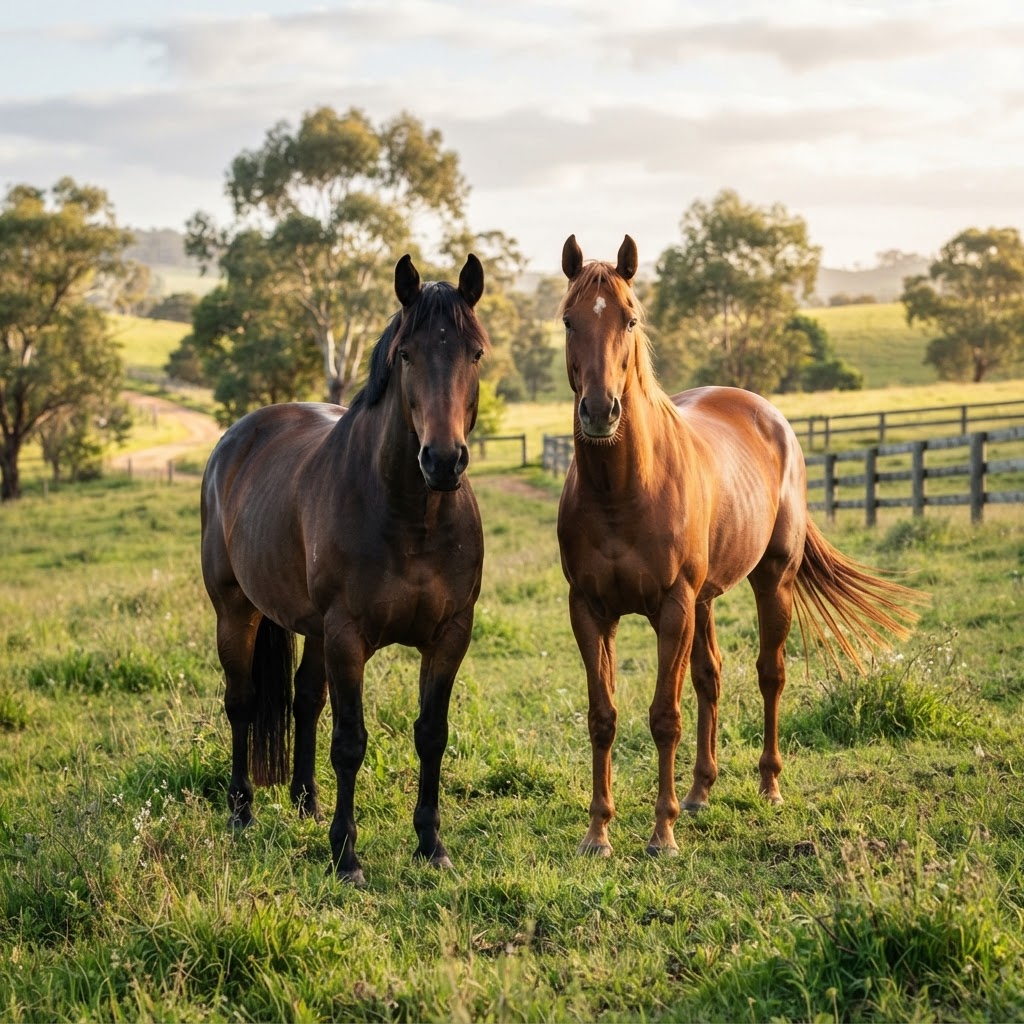
Same height range, very different builds — and that's where tack fit diverges.
What Is a Warmblood Horse?
A warmblood is a middleweight sport horse type — think Hanoverian, Warmblood, Dutch and Irish Sport Horse lines — bred to combine tractable temperament with athletic jumping and dressage ability. Standing 15.2 to 17.3 hands and weighing 500 to 680kg, the typical warmblood carries a broader barrel, heavier bone and a larger, kinder head than a thoroughbred. In practice, that means a full or warmblood-size bridle, and boots cut for a leg with more substance.
The build has consequences. A warmblood's deeper girth and wider barrel push rugs up a size, and their larger heads make cob-size bridles — which fit most thoroughbreds — sit tight through the browband and noseband. If you've inherited tack from an off-the-track horse, expect to size up before it fits your warmblood properly.
How Should a Horse Rug Fit?
A rug fits when it sits with a hand's width of clearance at the withers, doesn't pull across the shoulders when the horse lowers his head to graze, and meets at the tail flap without dragging on the ground. Surcingles should overlap 10-15cm under the belly, and leg straps should be crossed and twisted — not hanging straight, where they can catch a hindleg.
Australian rug sizing works in imperial feet, measured from the centre of the chest, around the shoulder, to the middle of the tail, minus 10cm:
| Rug size | Typical height | Notes |
|---|---|---|
| 6ft | 14.2–15hh | Ponies and small Galloways |
| 6'6 | 15.2–16hh | Most thoroughbreds, finer warmbloods |
| 7ft | 16.2–17hh | Most warmbloods |
| 7'3 | 17hh+ | Large warmbloods — measure, don't guess |
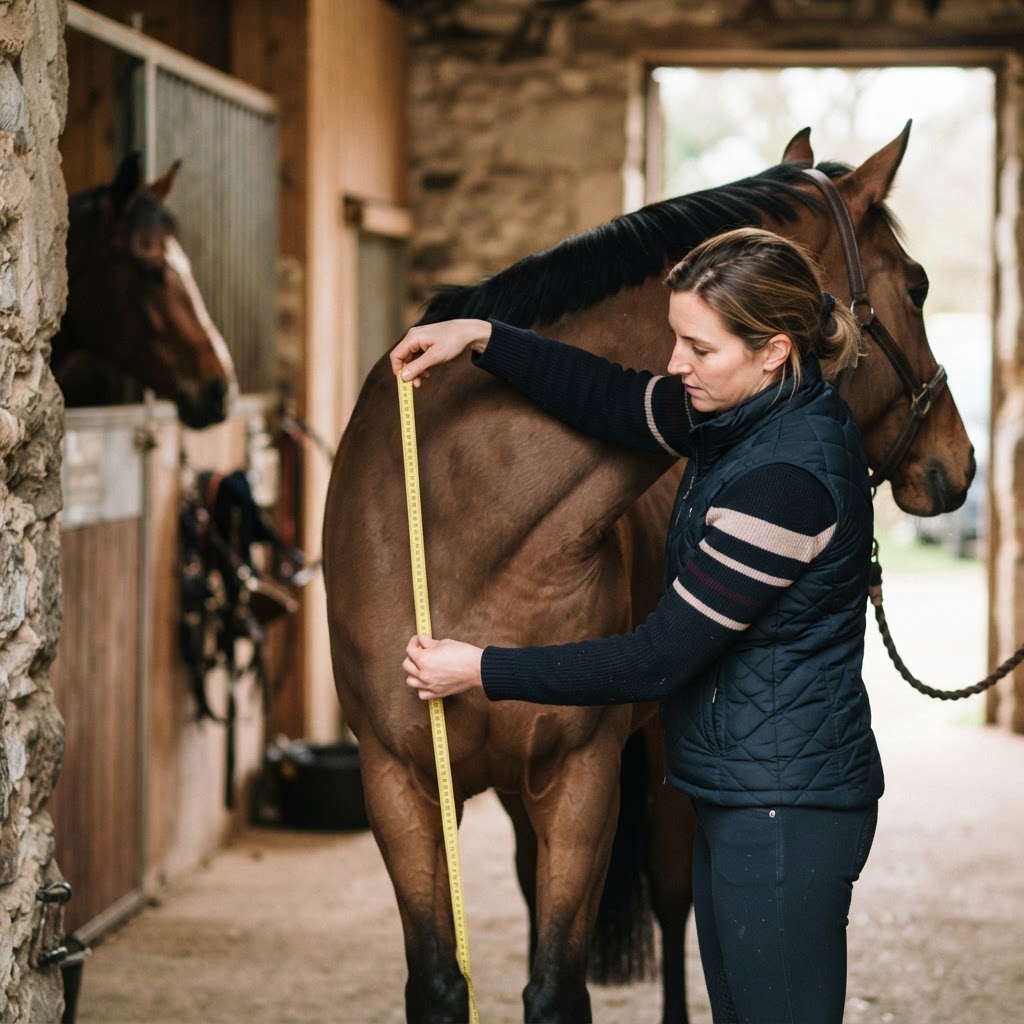
The rider's take: I've kept thoroughbreds next to warmbloods for fifteen years, and the reality is the TB rug drawer never stops being a problem. Narrow shoulders plus a prominent wither means rugs that looked right at the shop slip back and rub a bald patch in a fortnight. What I've found works: an anti-rub bib under the chest, crossed and twisted leg straps, and a wither shield on anything heavier than a sheet. Our warmblood mare, meanwhile, has never rubbed a rug in her life — her problem is finding browbands wide enough.
For the thoroughbred's classic rub points, the gear we stock targets each one directly. The EquiFit BLANKETBIB ($231.03) sits between the chest and rug to stop shoulder rub, while the WITHERSHIELD ($231.03) protects the wither from rug pressure. Pair them with the lightweight Essential® FlyMask ($69.82) in spring and you've covered the three spots a fine-built horse actually needs help with.

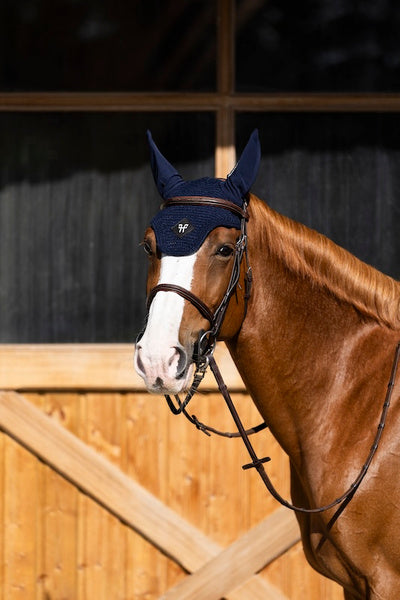
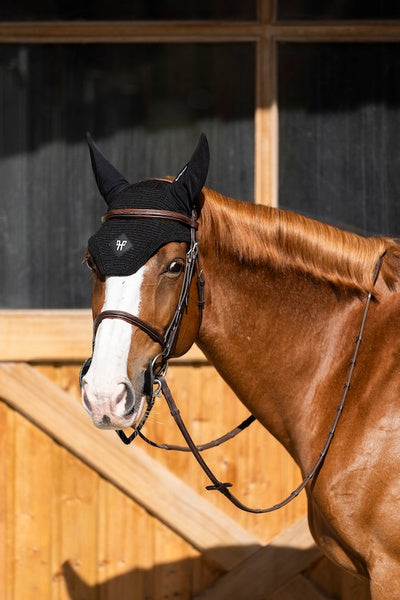
The EquiFit Essential FlyMask — light fly protection that clears the rug's pressure points.

The EquiFit WitherShield — built for exactly the wither shape thoroughbreds are famous for.

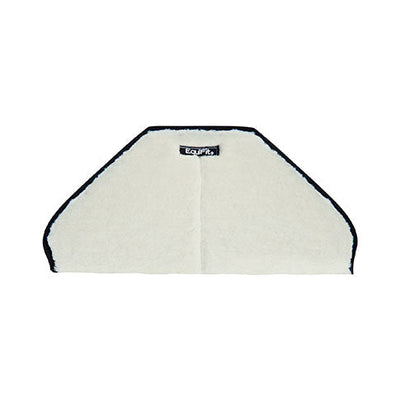
The EquiFit BlanketBib — stops chest rub before it starts.
We don't stock standard turnout or stable rugs — the rugs themselves are a supplier gap at present — so this guide sticks to the accessories that fix the fit problems. When you're buying the rug itself, measure the horse, not the old rug: elastic stretches, and last season's 6'6 may have been wrong all along.
How to Measure a Horse for a Bridle
Bridle sizing trips people up because most horses don't match one size cleanly. Measure four points: the poll to the corner of the mouth for the cheek pieces, the nose circumference about two fingers below the cheekbone for the noseband, the throat to just below the ear for the browband, and the chin groove for the curb if you use one. A thoroughbred's finer, tapered head usually lands in cob or cob-full territory. A warmblood's broader jaw typically needs full or warmblood sizes — and a wider browband, always.
Mixed sizing is normal. A full headpiece with cob cheeks, or a full noseband on a cob bridle, is the routine answer to an in-between head — not a defeat. The Jump'In One Collection makes this practical because the Paris Noseband ($120.31) and cheek pieces are sold separately, so you can mix sizes within a single, matching bridle rather than compromising on fit.

The Jump'In Paris noseband — sized to mix within a single bridle.

The Jump'In Carat — a premium full-size option for broader warmblood heads.
When you check fit, aim for two fingers' clearance under the noseband and cheek pieces, a browband that doesn't pinch when the horse flexes at the poll, and a throatlash that fits a flat hand — not a fist. Explore our full dressage bridle and jumping bridle ranges for both builds.

Two fingers under the noseband, a flat hand at the throatlash — the everyday bridle check.
How Should Horse Boots Fit?
Boots need to sit with the strike guard centred over the tendon or fetlock they protect, no gaps at the top or bottom edge, and straps snug enough that you can't spin the boot with your hand. Too big and they slip; too small and they pinch the exact structures they're meant to protect. A thoroughbred's finer cannon bone often takes a smaller size than the label suggests, while a warmblood's leg usually fills a medium or large comfortably.
The discipline rules matter as much as the fit: boots are not permitted in EA dressage competition — they're for warm-up and training only — but they're standard gear for show jumping and cross-country. For everyday protection, the EquiFit Essential Everyday Boot ($185.13) is the workhorse option, while the D-TEQ Boots ($503.37) add Interchangeable T-Foam liners and a stiffer strike zone for serious jumping. Overreach protection comes from the Bell Boot with fleece rolled top ($79.95), and Lady Godiva's Pro Bamboo Tendon Boots ($150) are a soft, breathable Australian-made option for finer legs.

The EquiFit Essential Everyday boot — the training workhorse for both builds.

The fleece rolled-top bell boot — overreach protection without rub.

EquiFit D-TEQ front boots — premium tendon protection for jumping.

Lady Godiva Pro Bamboo tendon boots — a softer cut for finer legs.

Eloquence merino fleece bell boots — overreach protection with a luxe finish.
After any boot session, run your hand down the leg when you take them off. Heat or pressure marks mean the boot is doing its job absorbing impact — but consistent rub lines mean a size change, and it's better to find out in the stable than after a round.
Side by Side: The Sizing Shortcuts
| Warmblood | Thoroughbred | |
|---|---|---|
| Height / weight | 15.2–17.3hh, 500–680kg | 15.2–17.0hh, ~450kg |
| Build | Broad barrel, heavy bone, larger head | Fine bone, lean, high withers, narrow shoulders |
| Bridle | Full or warmblood, wide browband | Cob, some full; mixed sizing common |
| Rug | 7ft+ usually, clean fit | 6'6–7ft, needs anti-rub bib and wither shield |
| Boots | Medium–large | Small–medium, check guard alignment |
| Watch for | Tight browbands, short cheek pieces | Rub, rug slip, girth galls, boot spin |

Tack fit starts at the shoulder and girth — the two points both builds get wrong most often.
If your horse is off the track, the Racing Victoria Off The Track program, Team Thoroughbred NSW and Queensland OTT all run retraining pathways with good guidance on feeding and rugging thoroughbreds through the transition. Their thin skin and faster metabolism also mean they feel rug weight and pressure differently from a warmblood — check rugs and gear every few days while their condition changes.
Frequently Asked Questions
What size rug does a 16.2 horse need?
Most 16.2hh horses take a 7ft rug, but build matters more than height — a fine 16.2 thoroughbred may suit 6'6 with anti-rub protection. Always measure chest-to-tail and subtract 10cm rather than sizing by height alone.
What size rug does a 15hh horse need?
Around 6'6 for most 15hh horses, with 6ft suiting finer builds. If the rug slips back or the shoulders look tight when the head goes down to graze, adjust the size.
How do horse rug sizes work?
Australian rug sizes are in imperial feet, measured from the centre of the chest, around the shoulder, to the middle of the tail, minus 10cm. Each size step is roughly 3 inches (15cm).
How to fit a horse bridle properly?
Check for two fingers' clearance under the noseband and cheeks, a browband that doesn't pinch at the poll, and a throatlash fitting a flat hand. Mixed sizing — a full headpiece with cob cheeks — is normal and often the best fit.
How to put boots on a horse?
Align the strike guard with the tendon or fetlock, sit the boot flush with no gaps at the edges, and do the straps snugly enough that the boot can't be spun by hand. Always check the leg for rub marks after removing them.
What are the best boots for horses?
It depends on the job: brushing or tendon boots for flatwork and jumping, bell boots for overreach protection, and therapy boots for travel. Boots aren't permitted in EA dressage competition, so they're a training and warm-up tool in that discipline.
How to tell if a rug fits a horse?
A hand's width of wither clearance, no shoulder pull when grazing, 10-15cm of surcingle overlap under the belly, crossed and twisted leg straps, and a tail flap that meets without dragging. Watch for rub marks on the withers, shoulders and chest after a few days.
How to care for a thoroughbred horse?
Thoroughbreds need higher-energy feeding to hold condition, rug checks every few days because their fine skin rubs easily, and consistent gentle handling — especially off the track. Programs like Off The Track Victoria and Team Thoroughbred NSW offer structured retraining guidance.
Fit Your Horse's Build at iRide EQ
From wither shields and anti-rub bibs for fine thoroughbreds to full-size Jump'In bridles for broader warmblood heads, shop our rug accessories, horse boots and bridles with fast Australian delivery.
Shop Horse Boots