Quick answer: The Freejump Spur'One is a French-made line of riding spurs designed as part of Freejump's Pininfarina collaboration, sold in Australia from $120 to $175 AUD across five neck styles. They are competition-legal for EA dressage in most configurations, though the rules on length and rowel type are worth checking before you buy.
The rider's take: I'll be honest — I bought spurs long before I had a leg that deserved them. It took a coach stopping mid-lesson and telling me my heel was swinging like a pendulum before I understood that a sharp spur on an unsteady leg is just noise to the horse. The Spur'One range is built for riders who've earned the leg aid and want equipment that backs it up without rough edges.
Spurs are one of the most personal pieces of gear in your tack room. Get them right and they sharpen your communication to a whisper. Get them wrong and you've got a horse that flinches every time your leg comes near. That's why the design of the neck — the length, the tip, the angle — matters more than most riders give it credit for.
Freejump is the French brand that built its name on safety stirrups worn by Olympic medallists, and the Spur'One line is part of their design partnership with Pininfarina — the Italian studio best known for shaping Ferrari bodies. That collaboration also produced the Soft'Up Classic stirrup and the Foxy boot. Whether "designed by the people who shaped supercars" matters for a $140 pair of spurs is fair to ask, so let's look at what you actually get.

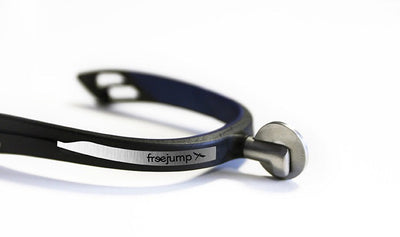
Freejump Spur'One Round End
from $120 AUD
View Product
The Spur'One Round End: the smoothest tip in the range and the one I'd point most riders toward.
What Actually Makes a Spur "Designed"?
Most spurs are stamped stainless steel, and honestly, most of them do the job. So the question with Spur'One isn't whether the metal works — it's whether the design brief earns the price. The range covers five distinct neck profiles, and Freejump has kept the geometry of each deliberately tight: short, medium and extra-long shanks with matched tip styles, so you pick by feel rather than by catalogue page.
The finish is what stands out when you hold them. The stainless is polished rather than chromed, the straps sit flat against the branch, and the necks are symmetrically curved rather than the slightly lopsided profile you sometimes get on budget spurs. Does that make your leg aid better? Not on its own. But sloppy gear has a way of teaching sloppy habits, and spurs you're proud to wear are spurs you'll position properly.
The Spur'One Range: Five Neck Styles, Five Jobs
Here's the whole lineup as stocked in Australia, with what each neck style is actually for:
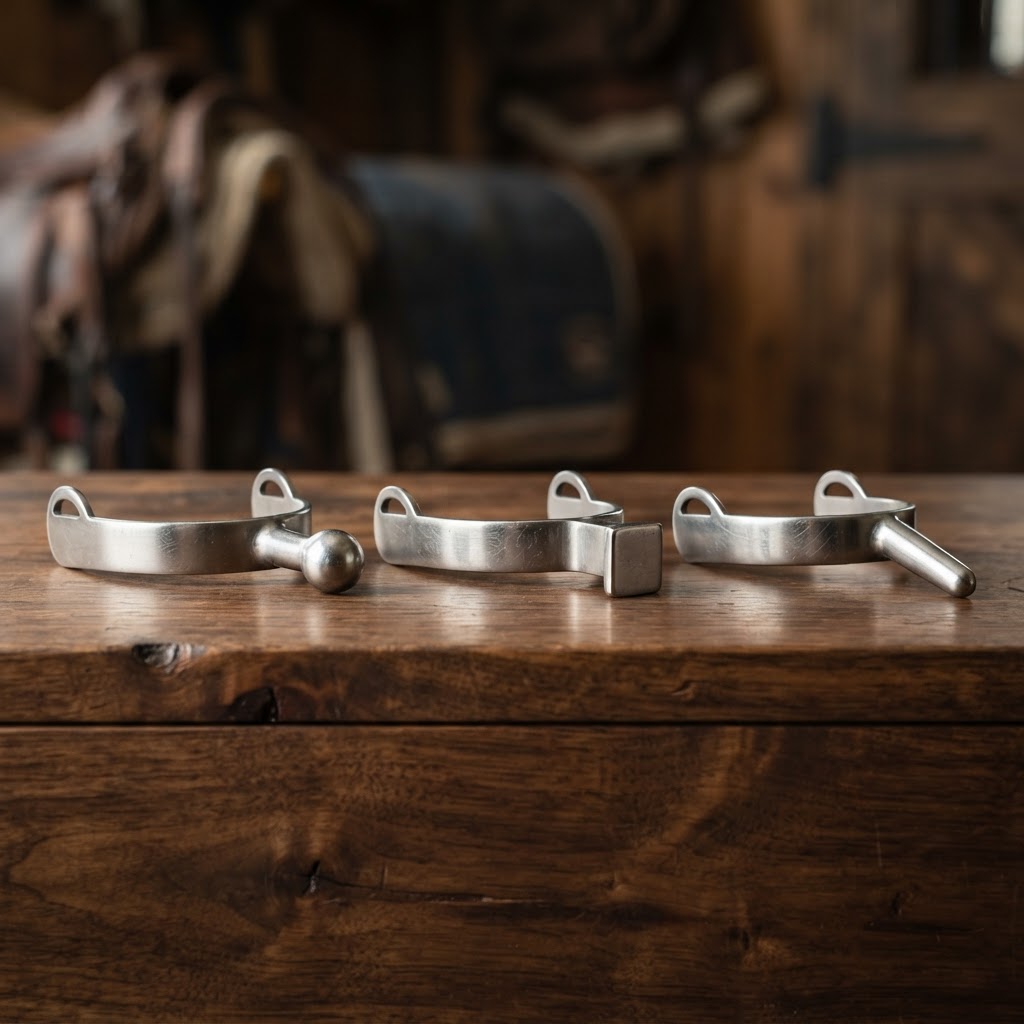
Round End — the everyday pick
The Round End has a smooth polished ball on a short neck. It's the style I'd put on nearly every rider's boot — enough presence for the horse to feel, forgiving enough that a slightly unsteady leg doesn't leave a mark. At $120 it's also the entry point to the range.

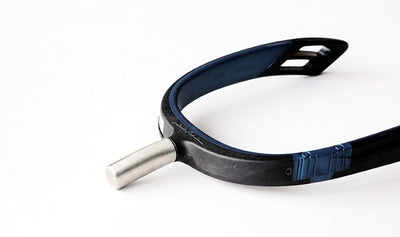
The Spur'One Hammer: a flat, wide face instead of a point — strong without being sharp.
Hammer — strong but not sharp
The Hammer swaps a point for a flat, wide face. It spreads pressure over more surface, which makes it a middle-ground option: sharper than the Round End in what the horse feels, but without the concentration of a pin tip. $140 for the pair.
Prince of Wales — the classic angled shank
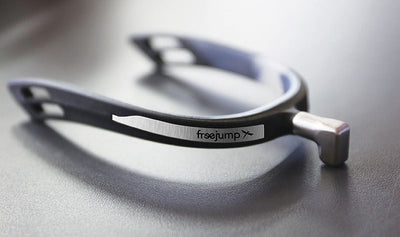
The Prince of Wales is the traditional angled neck that slopes slightly upward at the tip. It's the style you see on most dressage boots at EA competitions, because the angle suits a long, wrapped leg. Also $140.

The Spur'One Prince of Wales: the angled neck that suits a longer dressage leg.
Extra Long — for the experienced leg only
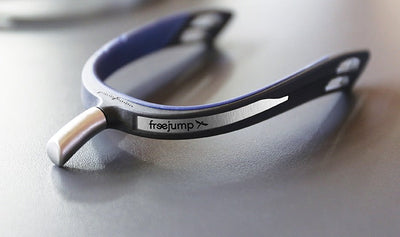
The Extra Long does what the name says. Longer necks reach further without your leg having to move, which means they amplify everything — including mistakes. I've seen riders move to a long shank to fix a dull horse and create a sensitive wreck instead. Only for riders with an independent, quiet leg. $160.
Disk — the rowel-free "rotation" option
The Disk ($175) uses a smooth rotating disc rather than a fixed tip, spreading contact even further. It was sold out at the time of writing, so check the spurs and straps collection for current availability rather than assuming it's on the shelf.

The Spur'One Extra Long: more reach, more responsibility.

Spurs are only as good as the leg carrying them — position at the girth matters more than shank length.
Are They Legal for Competition in Australia?
Short answer: yes in most configurations, but check the annex for your discipline and level before you ride a test in them. The EA Dressage Equipment Annex is the document that matters for dressage. Its key points on spurs:
- Blunt and smooth: spurs must be of smooth material with no sharp projections capable of wounding the horse.
- Rowels: disc rowels must be smooth and blunt; serrated or "toothed" rowels are forbidden.
- Length limits: the annex caps spur length — the rules reference maximum lengths around 3.5–4.0 cm depending on the level, with some provisions for riders at higher levels.
- Style restrictions: some levels exclude certain spur types, including rowelled designs, for younger horse or lower-level classes.
That makes the Round End, Hammer and standard Prince of Wales straightforward choices for dressage, while the Extra Long needs a measuring tape before you enter — the Spur'One extra-long shank sits close to the upper limits for many levels. And don't make the mistake I did years ago: rules change between seasons, so read the current annex rather than trusting what your mate told you at the state titles. Jumping and eventing run their own equipment rules, so confirm with your discipline body before a competition entry.
Spur'One vs Traditional Spurs: Is the Premium Worth It?
A basic pair of Prince of Wales spurs from a budget brand can cost $40. The Spur'One equivalent is $140. Here's what the extra money buys, honestly framed:
| Model | Tip style | Price (AUD) | Best for | EA dressage note |
|---|---|---|---|---|
| Spur'One Round End | Smooth ball | $120 | Everyday flatwork, sensitive horses | Legal — smooth and blunt |
| Spur'One Hammer | Flat face | $140 | Stronger aid without a point | Legal — smooth and blunt |
| Spur'One Prince of Wales | Angled neck | $140 | Dressage, longer leg | Legal — check length for your level |
| Spur'One Extra Long | Long neck, angled | $160 | Experienced riders only | Measure against the annex length cap |
| Spur'One Disk | Rotating disc | $175 | Very sensitive horses | Disc rowel must be smooth and blunt |
What you're paying for is consistency — matched pairs, even curves, a finish that survives being thrown in a tack box — plus a design language that matches the rest of the Freejump gear a lot of riders already wear. If your budget spurs work and your position is solid, nobody at the in-gate can tell the difference. But if you're kitting out a Freejump set-up, or you've simply had cheap spurs bend on you, the Spur'One line is the tidiest premium option stocked in Australia.
Every pair currently listed in the spurs and straps collection carries live pricing in AUD and ships Australia-wide. Stock was down to a handful of units in each style when this review was published, so treat the collection page as the source of truth on what's actually on the shelf. You'll want a schooling whip as your first-line aid anyway — spurs refine a leg aid, they don't replace one.
Frequently Asked Questions
Are Freejump Spur'One spurs legal for dressage in Australia?
In most configurations, yes. The EA Dressage Equipment Annex requires spurs to be smooth and blunt, bans serrated rowels, and caps spur length at certain levels. The Round End, Hammer and Prince of Wales styles meet the smooth-and-blunt requirement; the Extra Long should be measured against the current annex before competing.
What's the difference between hammer and Prince of Wales spurs?
The Hammer has a flat, wide face that spreads pressure; the Prince of Wales has an angled neck sloping up to a traditional tip. Riders with a long dressage leg usually prefer the Prince of Wales angle; the Hammer suits riders who want a stronger feel without a concentrated point.
How should riding spurs fit on my boots?
The spur rest sits on the heel counter, with the neck angled slightly upward toward the horse's side. The strap should be snug enough that the spur doesn't slide around but not so tight it distorts the heel. On tall boots, the spur sits slightly lower than you think — where your heel naturally meets the horse.
Do I need spurs as a beginner?
Generally, no. Beginners benefit far more from a quiet, steady leg than from a sharper aid. If your coach suggests spurs, start with the shortest, smoothest option — the Round End in this range — and treat them as a refinement tool, not a shortcut.
How long should my spurs be?
Most flatwork riders suit a short-to-medium shank around 2–3 cm. Longer shanks reach the horse with less leg movement, which is useful for experienced riders on trained horses but counterproductive otherwise — and the EA annex caps length for dressage at around 3.5–4.0 cm depending on level.
Where can I buy Freejump Spur'One spurs in Australia?
iRide EQ stocks the Spur'One range with live AUD pricing in the spurs and straps collection, alongside Freejump stirrups and leathers. Stock levels vary, so the collection page shows what's on the shelf right now.
Shop Spurs and Straps at iRide EQ
Browse the spurs and straps collection for the full Freejump Spur'One range, with AUD pricing and Australia-wide delivery.
Shop Spurs Now