Quick answer: For an Australian dressage competition, start with a correctly fitted certified riding helmet, a tidy show jacket, approved shirt and stock tie, pale competition breeches, gloves and polished tall boots. Check the current Equestrian Australia rules and your event schedule before you leave; club, unaffiliated and EA-affiliated competitions can have different expectations, and a 40-degree summer forecast may change the sensible layering plan.
Dressage competition wear has a job beyond looking smart in the warm-up. It should let you ride without tugging at your shoulders, keep you cool enough to think through the test and pass a gear check without last-minute panic. The safest approach is a clean, conservative base with fabrics that suit Australian weather.
That does not mean every rider needs the most expensive outfit in the shop. A well-cut show jacket, a breathable competition shirt, pale competition breeches and properly maintained boots will take you a long way. Spend money where poor fit will distract you, not on decoration that never gets tested in the saddle.

A calm, functional outfit matters more once the warm-up starts.
What does a dressage competition outfit need to include?
Your exact list depends on the level and organiser, but the classic Australian dressage outfit is pleasingly straightforward. Think tidy, fitted and easy to inspect. Your helmet needs to be certified for the rules that apply to your event, your shirt should sit neatly under the jacket and your breeches should stay put through rising trot, sitting trot and the final halt.
- Helmet: Wear a current, correctly fitted helmet and check the label before show day. A helmet that has taken a fall should be replaced, even if the shell looks fine.
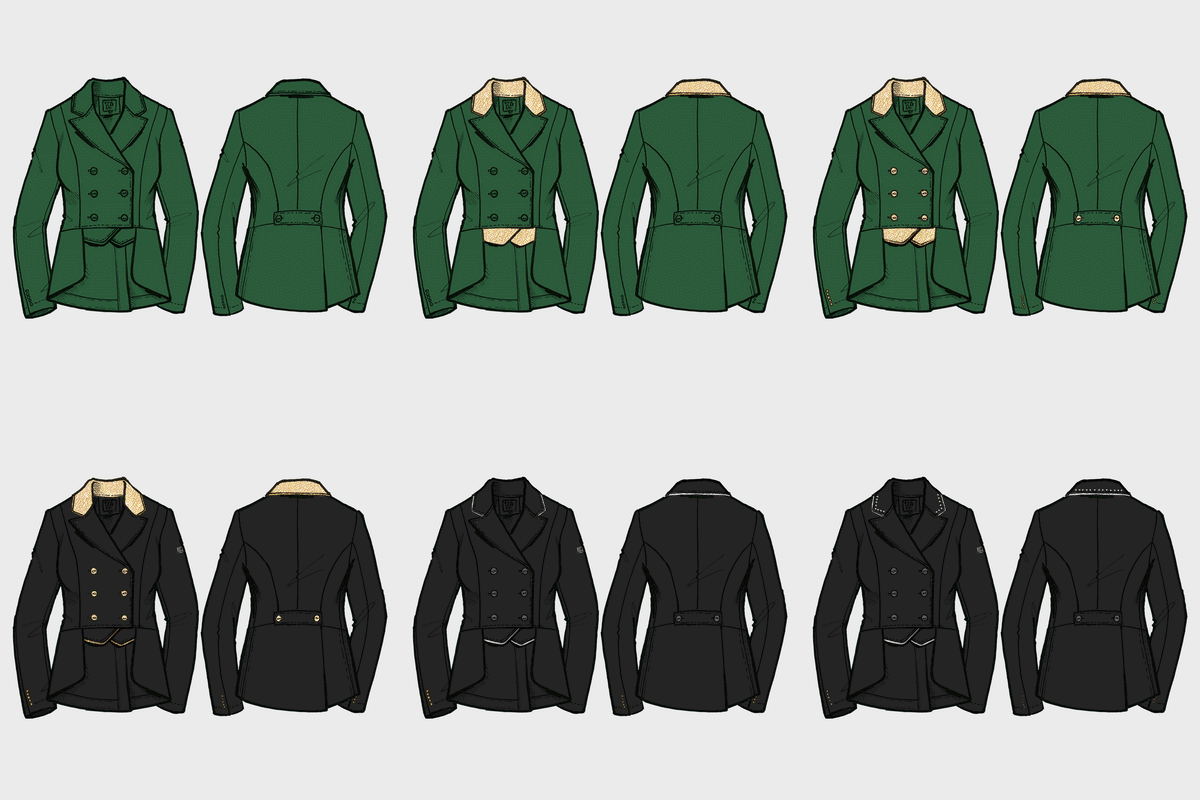
- Jacket: Choose a dark, tailored show jacket with enough room through the back for a full rein contact. Navy, black and conservative dark tones are the least risky choices.
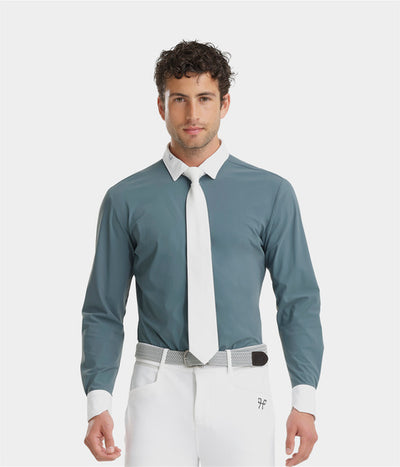
- Shirt and stock: A white or pale competition shirt with a tidy stock tie gives the traditional finish. Fasten it properly; a loose stock looks untidy and can become annoying in the wind.
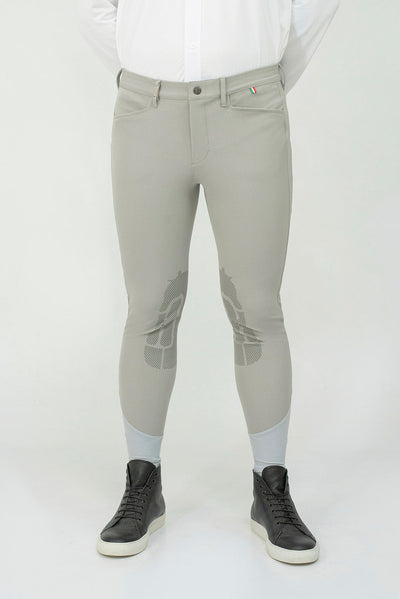
- Breeches: Pale beige, cream or white breeches are the usual competition choice. Pick a waistband that stays flat beneath your jacket and a seat that does not grab or wrinkle.
- Boots and gloves: Tall black riding boots and gloves complete the outfit. Black, brown and dark conservative glove colours are generally the safer call for formal competition.
Do not forget the small things. Remove bulky jewellery, secure long hair, clean your spurs if you use them and pack a spare pair of gloves. At an EA-affiliated event, being technically tidy is much less stressful than discovering a missing stock pin beside the arena.
How should you choose a show jacket for Australian weather?
A dressage jacket should move with you, not turn your upper body into a cardboard box. Stand in your riding position when you try it on. Reach forward as if taking a contact, lift your arms slightly and sit in a chair. If the shoulder pulls or the buttons gape, the problem will be worse after an hour in the saddle.
There are useful options in the live iRide EQ range. The For Horses collection includes the BOHEME Show Jacket and CARLO Show Jacket, while Jump’In offers the AIRTEC Lady Competition Jacket and its men's equivalent. Horse Pilot is another sensible place to look for technical competition and training layers. These are real product names from the current catalogue; sizes, colours and pricing can change, so check each product page before building your show-day plan.
The rider's take: I once wore a beautifully structured jacket at a winter dressage day in the Southern Highlands and regretted it by the second test. The fit looked sharp in the mirror, but the stiff shoulders made my rein adjustments feel clumsy. Now I test every jacket mounted, not just standing in front of a changing-room mirror.
For a hot NSW or Queensland event, look for stretch and ventilation without choosing something so thin that it loses its shape. A lightweight jacket can be a relief during a 35-degree warm-up, but it still needs to look like competition wear rather than a casual riding jacket. If the forecast is brutal, wear a breathable base layer underneath and keep the jacket on a hanger until you are close to warm-up. A damp jacket is miserable, and leaving it crumpled in the float guarantees creases.
What should you wear underneath the jacket?
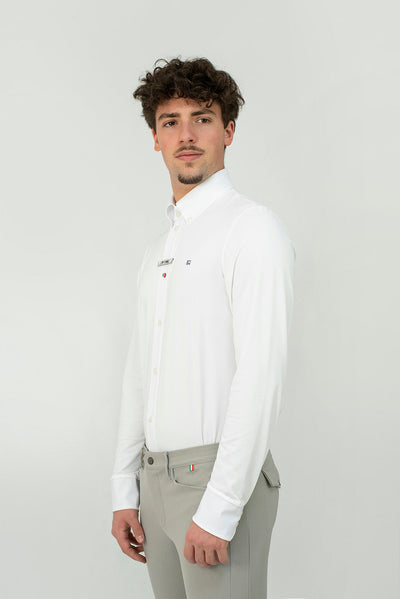
The shirt and base layer decide whether you stay comfortable once the temperature climbs. A competition shirt should have a high, neat neckline and enough room through the chest to sit flat under your stock. Avoid testing a new collar on the morning of a competition. Chafing is a tiny problem at home and a giant problem during a twenty-minute warm-up.
For Horses, Jump’In and Horse Pilot all appear in the current competition-wear catalogue with different approaches to show shirts and technical riding layers. The live range includes the For Horses ADRIANO Show Shirt, the Jump’In Carla Competition Shirt and Horse Pilot Aerolight Long Sleeves. Treat those names as starting points rather than promises about fit: compare the product measurements with a shirt you already like, and allow room for your stock tie to sit flat.
On a cool winter morning, a thin riding base layer beneath the shirt can work well if the rules and final appearance allow it. Avoid thick cotton singlets that trap sweat beneath a jacket. In summer, a technical fabric that dries quickly is usually easier to live with than a heavy weave. Pack a spare shirt in a sealed bag; dust, horse slobber and a spilled coffee do not care about your timetable.

A neat shirt, stock and jacket create the formal line judges expect.
How do breeches, boots and gloves affect your ride?
Competition breeches should disappear once you mount. That is the goal. Look for a smooth waistband, enough rise at the back and fabric that follows your hip without cutting in. Full-seat grip can be useful, but it should support a stable leg rather than lock you into the saddle. Sit, walk and bend before buying. If the knee seam lands in the wrong place at home, it will rub under pressure at the show.
Boots deserve the same scrutiny. Your tall boots should be broken in before competition day, polished without being slippery and fitted closely enough to support the lower leg. Never debut stiff new boots at an important test. I would rather ride in a familiar pair with a few honest scuffs than spend the whole centreline thinking about a blister.
Gloves need grip and a secure wrist, but not so much bulk that you lose feel in the rein. Browse the riding gloves range for competition-friendly options, and keep a spare pair in your grooming kit. If you wear spurs, check the strap position and clean the leather; the spurs and straps collection is useful when your old pair has stretched or cracked.

What changes for an EA-affiliated dressage event?
Rules and event conditions matter more than Instagram styling. Read the current EA dressage rules and the organiser’s schedule, especially if you are moving from a local club day to an EA-affiliated event. Requirements can cover helmet standards, permitted tack, rider presentation and protective equipment. The schedule is also where you will find arrival times, gear-check information and any local instructions.
Keep your outfit conservative if you are unsure. Dark jacket, pale breeches, tidy shirt and stock, approved helmet, gloves and polished boots rarely create drama. Novelty colours, large logos and dramatic accessories can wait for a training day. If you compete in a hotter part of Australia, plan shade, water and a spare dry shirt; looking tidy is easier when the rider is not overheating.
| Item | Practical choice | Show-day check |
|---|---|---|
| Helmet | Certified, fitted, conservative colour | Inspect label, straps and shell |
| Jacket | Dark, tailored, stretch through the shoulders | Ride-test it and remove creases |
| Shirt and stock | Pale shirt with a secure, tidy stock | Pack a spare and spare pin |
| Breeches | Pale, comfortable, smooth at the waist | Check seams and saddle movement |
| Boots and gloves | Broken-in boots with grippy gloves | Clean, polish and pack backups |
Use the same thinking for the horse’s presentation. A clean saddle pad, tidy bridle and correctly fitted tack matter more than matching every thread. Browse dressage saddle pads and bridles if your current gear is tired, then check the rules before making a competition purchase.
How can you build a reliable dressage packing list?
Pack by order of use rather than tossing everything into one enormous bag. Put the outfit in a garment bag, boots in a boot bag and small items in a labelled pouch. The night before, try the complete look on, including helmet, stock and gloves. This catches the awkward collar, missing pin or jacket that no longer closes while you still have time to fix it.
- Travel outfit: shirt, stock, jacket, breeches, socks and underwear that will not rub.
- Backups: spare gloves, shirt, socks, stock pin and hair ties.
- Finish: boot polish, lint roller, stain remover, safety pins and a soft cloth.
- Rules: screenshot or print the relevant EA and event requirements.
My final test is simple: can I mount, breathe, adjust my reins and ride the first halt without thinking about my clothes? If yes, the outfit is doing its job. If no, fix the troublesome item before you worry about matching colours.
Frequently Asked Questions
What colour jacket should I wear for dressage in Australia?
Dark navy or black is the safest conservative choice. Check the current EA rules and your organiser’s schedule if you want to wear a different colour.
Do I need a stock tie for a dressage competition?
A traditional stock tie is common formal dressage wear, but requirements can vary by event and level. Read the schedule and pack a spare pin.
Can I wear a base layer under my competition shirt?
A thin base layer may help in cool weather if it does not change the tidy appearance of your outfit and the event rules allow it. Avoid bulky layers.
Are white breeches compulsory for dressage?
Pale breeches are the conventional choice, but the exact rule depends on the competition. Confirm the current dress requirements rather than relying on an old checklist.
Can I wear a new show jacket at my first test?
It is better to ride-test a new jacket several times first. Check shoulder movement, button security and comfort in sitting trot.
What should I pack for a hot Australian dressage show?
Pack a breathable spare shirt, spare gloves, water, shade protection and a lightweight layer that still meets the event’s presentation expectations.
Build your next show-day outfit
Shop competition wear, show jackets, competition shirts, breeches and riding boots at iRide EQ, then check your event rules before ordering.
Shop competition wear