Quick answer: For an EA-affiliated dressage event in Australia, start with a correctly fitted approved riding helmet, a dark competition jacket, a pale shirt with stock or tie, light-coloured breeches, gloves and polished tall boots. Your horse's turnout matters too, but this guide focuses on the rider. Check the current EA rules and the event's own schedule before show day because class type, age group and rule updates can change what is accepted. A neat, comfortable outfit is better than an expensive one that pulls, rubs or distracts you during the test.
Dressage attire has a reputation for being fussy. Some of it is: white breeches show every arena splash, and a stock tie has a talent for sitting crooked precisely when the steward is looking. But the basic formula is sensible. Dress neatly, ride safely, choose pieces that let you move and confirm the current rules for the event you have entered.
Australian riders also need to dress for the conditions. A wool jacket that feels fine on a cool morning in the Southern Highlands can become a portable sauna by lunchtime, while a lightweight technical coat may be the difference between staying composed and arriving at the halt looking wilted. Build your outfit around the competition wear you already own, then fill the gaps with practical pieces from your show shirt and riding gloves collections.

Good dressage attire should look tidy in the arena and feel unremarkable in the saddle.
What does EA require for a dressage rider?
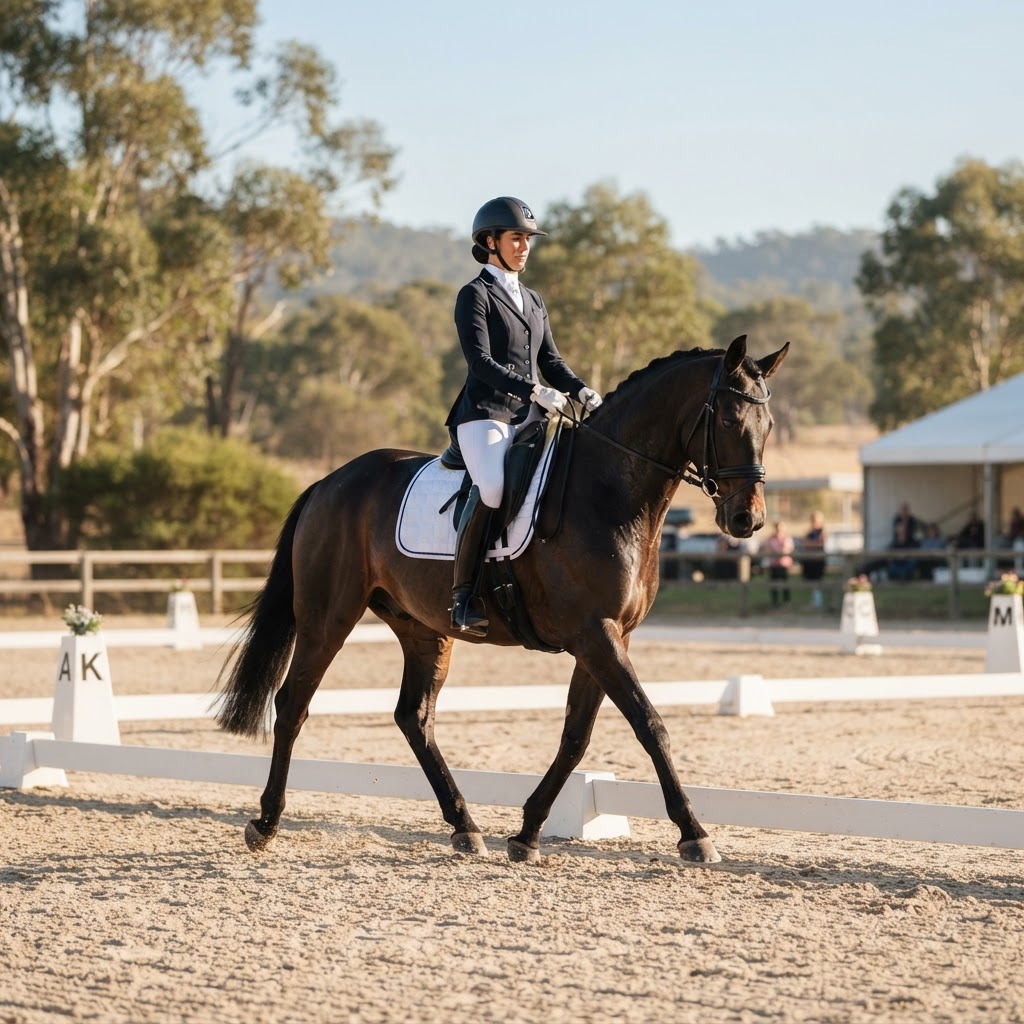
Equestrian Australia rules are the starting point for EA-affiliated competition, but the current rulebook and the event schedule are the final word. Dressage riders are generally expected to present in formal, conservative attire: a dark jacket, a light shirt, stock or tie, light breeches, gloves and suitable riding boots. The rider must also wear protective headgear that meets the current approved standard, with the chin strap correctly fastened.
That last detail is not a decorative one. A helmet can be beautifully fitted and still be worn incorrectly if the strap is loose, twisted or left undone. Inspect the label and quality mark inside the helmet rather than relying on a product name or a retailer's old description. Standards change, and EA has been managing a phased transition to newer helmet requirements, so check the current EA approved safety standards page before an important show.
Dressage classes can have different expectations from show horse, young horse or lower-level community events. Some organisers allow more flexibility than a championship class, while a venue may publish additional instructions about jackets, spurs or protective equipment. Print or save the schedule. I have seen riders spend the whole warm-up wondering whether a detail was legal when five minutes with the event documents would have settled it.
Which jacket, shirt and stock combination looks right?
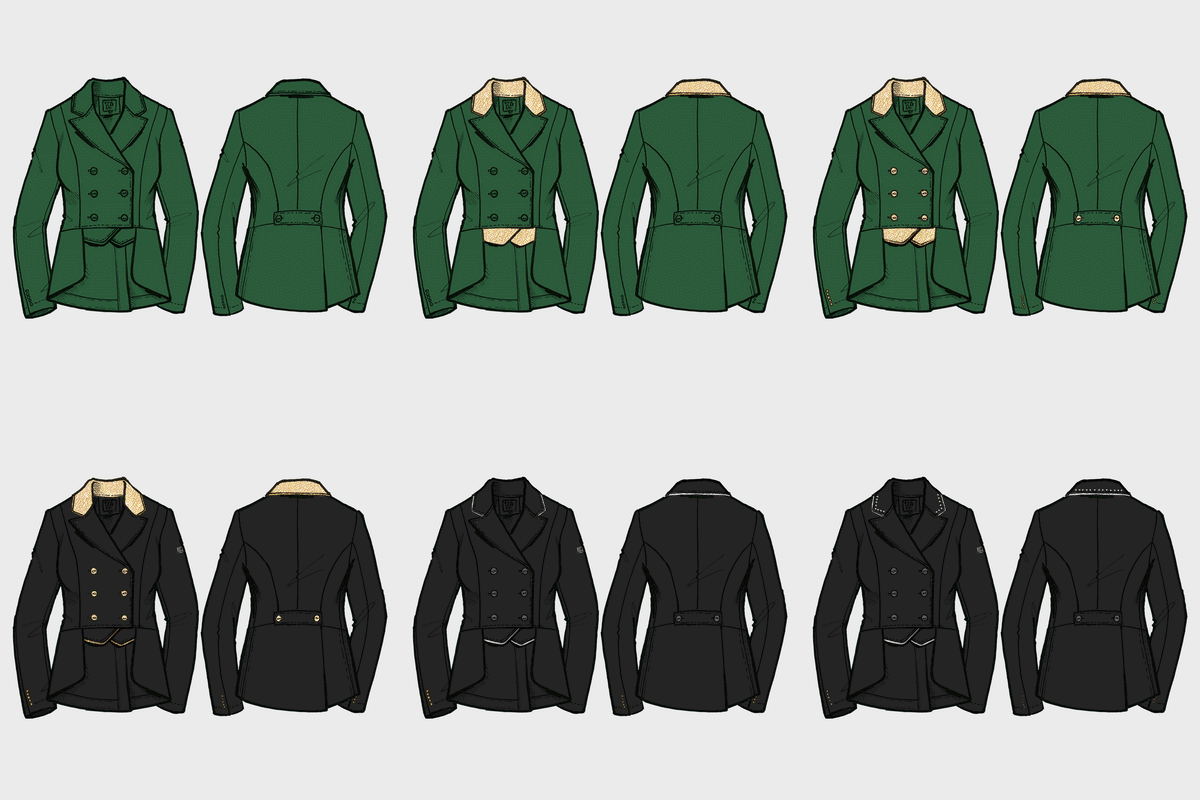
A dressage jacket should close cleanly without pulling across your shoulders when you reach forward. The hem should sit neatly over the saddle rather than riding up behind you, and the sleeves need to leave enough room for a watch and gloves without swallowing your hands. Navy, black, dark green and brown are common conservative choices. Bright colours may be accepted in some jumping settings, but dressage has traditionally favoured a quieter presentation, so read the rules for your class.
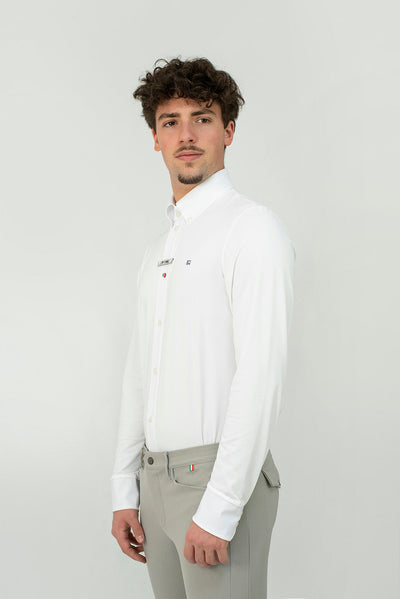
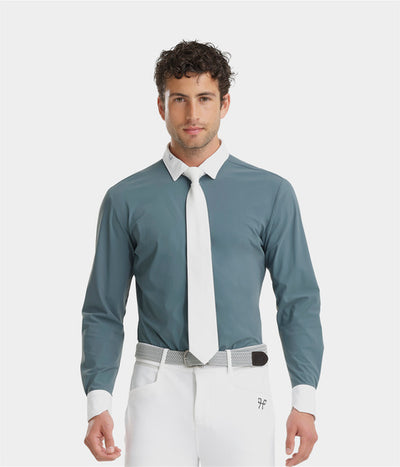
Under the jacket, wear a pale competition shirt with a stock tie or traditional tie as required. White is the safest choice for a formal EA event. A stock should sit flat, with the pin secure and the ends tucked so they cannot flap around your face. The neck opening should not feel tight when you take a deep breath; dressage asks for a long, relaxed upper body, and a collar that presses into your throat is a needless annoyance.
The rider's take: I learned the stock-tie lesson at a winter dressage day outside Orange, when I pinned mine too low and spent the first test trying not to feel it shift under my jacket. Now I mount wearing the full outfit at home, ride a few transitions and check the collar, sleeves and jacket hem before I ever pack the float. Five minutes of testing beats discovering a wardrobe problem at the writer's box.
How should breeches, boots and gloves fit for a test?
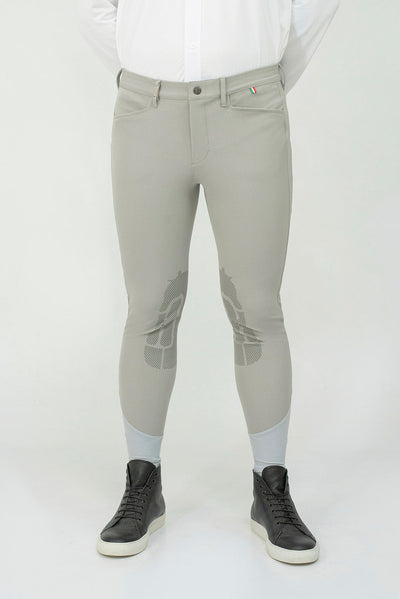
Light breeches are the classic dressage choice because they create a clean line from hip to boot. Fit matters more than the label. The waistband should stay put in rising trot, the seat should not wrinkle heavily beneath you and the knee should bend without the fabric dragging against the back of your leg. Full-seat grip can help some riders feel secure, but choose a pair that works with your saddle rather than locking you into one position.
Boots should be polished, supportive and appropriate for the class. Tall black riding boots create the traditional silhouette. Paddock boots with half chaps may suit training or informal events, but do not assume they are accepted in every EA dressage class. Wear your competition boots during schooling before the event; stiff new leather is a poor companion for a long warm-up.
Gloves are easy to overlook. Choose a pair that allows a soft rein feel and keeps seams from pressing into your fingers. Black is the safe, understated option. White gloves can look sharp, but they also show dust and contact marks quickly. On a dry Australian day, keep a spare pair in the gear bag. On a wet day, keep two.

A fitted dark jacket keeps the dressage silhouette traditional without stopping the rider from moving.
What changes in summer, winter and wet Australian weather?
Australian weather can turn a tidy outfit into a tactical problem. In summer, look for breathable fabric, mesh ventilation and a lining that does not cling to your shirt. A technical riding base layer can reduce bulk under a jacket, but test it in the heat before show day. Carry water, a spare shirt and a towel. Looking composed is easier when you are not quietly overheating.
Winter calls for layers rather than one enormous coat. A thin baselayer, competition shirt and fitted jacket allow you to adjust as the morning warms. If you need a jacket for travel or warm-up, use a riding jacket that can come off before you enter the arena. Keep the show jacket on a broad hanger and protect it from hay, damp float rugs and boot polish. A garment bag is not glamorous, but neither is trying to brush shavings off navy wool five minutes before your test.
Rain creates a second set of decisions. Check whether the organiser permits waterproof outerwear in the warm-up and where it must be removed. Pack a plastic cover for your helmet, a dry pair of gloves and a towel for your boots. Do not put a soaking jacket straight into a sealed bag after the class; let it air properly when you get home.
How do you build a complete dressage outfit without overspending?
Start with the safety items and pieces that affect your riding: a correctly fitted approved helmet, comfortable boots, breeches that stay in place and gloves that do not interfere with the reins. Buy the jacket after you know what you need from its cut and fabric. A premium price can buy better construction, but it cannot fix the wrong shoulder shape or a sleeve that is too short.
| Item | Safe starting choice | Check before you buy |
|---|---|---|
| Helmet | Approved black helmet with secure chin strap | Current EA standard, quality mark, fit and condition |
| Jacket | Dark, tailored competition jacket | Shoulder movement, sleeve length, ventilation and class rules |
| Shirt and stock | White shirt with neat stock or tie | Comfort at the neck and secure fastening |
| Breeches | White, cream or another accepted pale shade | Waist stability, seat comfort and visibility of seams |
| Boots | Polished black tall riding boots | Class requirements, ankle support and break-in time |
| Gloves | Close-fitting black riding gloves | Rein feel, seam placement and spare-pair practicality |
Spend first on fit and safety, then on finish. A well-maintained mid-priced jacket can look more polished than a costly coat with loose buttons and a collar that will not lie flat. For training days, rotate in practical riding tights and reserve the pale competition breeches for events where they will not meet a muddy gate latch.
What should you check the night before a dressage show?
Lay out the complete outfit, not just the jacket. Fasten the stock, inspect the helmet label, polish the boots, check every button and try the gloves with the reins. Put your competition number, spare hair ties, safety pins and a small sewing kit in the same bag. If your class permits hair accessories, keep the style secure and tidy rather than choosing anything that can catch on a collar.
Then ride through a short checklist. Can you turn your head without the stock shifting? Can you lift your arms without the jacket pulling? Do the boots flex at the ankle? Does the helmet stay stable when you look down at the centre line? These small tests catch the annoying problems that only appear once you are mounted.
Finally, read the event schedule again. Confirm your start time, arena, warm-up instructions and any rule notes. EA-affiliated shows can have different local procedures, and a current notice from the organiser outranks an old social media post. Pack for the weather you are likely to get, plus one change of gloves and shirt for the weather you are hoping not to get.
Frequently Asked Questions
Can I wear a coloured jacket for dressage in Australia?
Some events allow more colour than traditional dressage attire, but dark conservative jackets remain the safest choice. Check the current EA rules and the organiser's schedule for your specific class.
Do dressage riders have to wear white breeches?
Light or pale breeches are the usual formal choice. White, cream and other accepted pale shades are common, but class rules can vary, so confirm the requirements before competing.
Is a stock tie required for an EA dressage competition?
Formal dressage commonly uses a stock tie or traditional tie with a competition shirt. Read the current rules and event instructions because requirements may differ by class and competition level.
Can I wear paddock boots for dressage?
Paddock boots may be suitable for schooling or informal events, but they are not automatically accepted in every formal class. Tall riding boots are the safest traditional option; check the event rules.
What colour gloves are best for dressage?
Black gloves are understated and practical. White gloves can be accepted and look traditional, but they show dust and rein marks quickly, especially at outdoor Australian venues.
How do I keep a show jacket comfortable in summer?
Choose breathable fabric and a light lining, wear a tested baselayer and remove outer layers promptly outside the arena when the rules allow. Hydration and shade matter as much as the jacket fabric.
How should I check my helmet before a show?
Confirm the helmet fits securely, the chin strap is fastened correctly, the shell and harness are undamaged and the label and quality mark meet the current EA requirements. Replace a helmet after a significant impact or when its condition is uncertain.
Build a show-ready outfit
Shop competition wear, show jackets and competition breeches at iRide EQ, then check the current EA requirements before your next test.
Shop competition wear