Quick answer: The best dressage training tips for an amateur rider are simple, repeatable habits: establish a calm rhythm, improve your own balance, ride accurate figures, use transitions thoughtfully and build progress around your horse’s welfare. EA’s Training Scale can guide your thinking, but it is a framework rather than a compulsory weekly program.
The rider's take: I learnt this the hard way after spending an entire lesson chasing a prettier shoulder-in while my horse was getting hotter by the minute. A few weeks later, we went back to quiet transitions, bigger lines and proper breaks — and the work felt better before the scores did.
Dressage can look complicated from the outside: letters around the arena, precise movements, half marks and a long list of things for the judge to notice. For the amateur rider, though, the most useful training usually starts away from the flashy work. A balanced rider, a comfortable horse and a steady rhythm will take you a long way.
If you are preparing for a local Ag show or an EA-affiliated event, check the current EA Dressage Rules & Tests rather than relying on an old test sheet. Your everyday schooling plan can be flexible, but competition equipment and test requirements need current information. Good rider training aids, correctly fitted tack and sensible dressage saddle pads can support the work — none replace coaching or a horse that feels comfortable.

A quiet, regular rhythm is a better starting point than chasing advanced movements too soon.
1. Start with rhythm and relaxation
The first question I ask in a schooling session is not “Can we collect today?” It is “Does this feel calm, regular and rideable?” Rhythm means the footfalls stay even. Relaxation means the horse can move without bracing through the back, jaw or neck. Those qualities make every later exercise easier.
Begin with a few minutes of walking on a long rein, then gradually take up a contact without shortening the horse’s neck by force. Let the walk become purposeful. Ride large circles, changes of rein and straight lines, checking that you can breathe and that your hands are not busy for the sake of being busy.
- Use your breath: Exhale through transitions and soften your fingers when the horse answers.
- Keep the first trot modest: A balanced working trot is more useful than a rushed, impressive-looking one.
- Notice the environment: On a hot Australian afternoon, shorten intense work, offer water and choose safe, familiar footing.
EA training-scale material commonly discusses rhythm, suppleness, contact, impulsion, straightness and collection, with freedom also appearing in its educational material. Think of those ideas as a way to observe your schooling, not six boxes you must tick in a fixed order.
2. Improve the rider’s independent position
Many training problems are really rider-position problems wearing a horse-shaped disguise. If your shoulders fall behind the movement, your lower leg swings or your hands balance you, the horse has to compensate. Most of us have done it, especially after a long day at work or a tense first few minutes in the saddle.
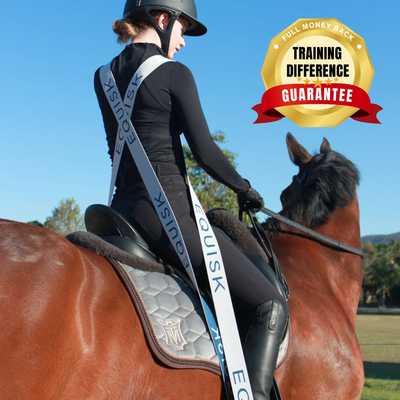
Work on a tall, soft posture rather than a rigid one. Your ear, shoulder, hip and heel should feel broadly aligned, but do not push your heels down until your leg becomes stiff. Keep your eyes up and look where you are going. A dressage saddle pad from the saddle pad collection can help keep the setup tidy, but check the saddle, girth and pad together for pressure, slipping or bunching.
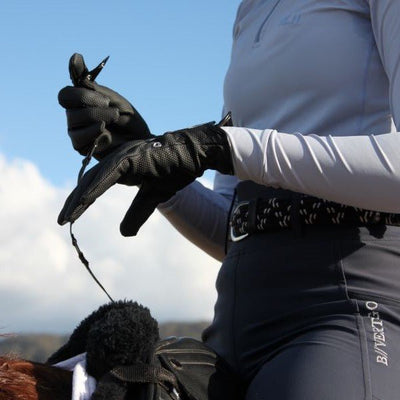
Try short periods of no-stirrup work at walk if your coach agrees, then take the stirrups back before fatigue changes your position. A few correct minutes beats twenty minutes of gripping. Include riding gloves that let you keep a light, consistent rein contact, and make sure your riding boots allow the ankle to move without the heel collapsing.
3. Make transitions your main training tool
Transitions are not filler between movements. They show whether the horse is listening, whether the rider is balanced and whether the connection survives a change of pace. Walk–halt–walk, walk–trot–walk and trot–canter–trot transitions are useful because they can be adjusted to suit a green horse, a more experienced horse or a rider returning after time away.
Prepare rather than surprise. Sit tall, close the outside rein without pulling backwards, support with the leg and allow the horse to step into the new pace. If the transition becomes hurried, go back to a simpler version. If the horse resists repeatedly or the change is sudden, do not label it stubbornness and drill harder. Check comfort, tack fit and health with a qualified professional.
- Ride fewer repetitions: Stop while the answer is still improving.
- Reward the try: A soft voice, a walk break or a longer rein can make the next effort clearer.
- Change the question: Use a large circle or straight line instead of repeating the same transition at the same letter.

Transitions reveal the quality of the connection long before advanced movements do.
4. Ride accurate lines without drilling
Accuracy is one of the easiest improvements for an amateur rider to feel. Ride from letter to letter, make your corners purposeful and finish one movement before preparing for the next. A good 20-metre circle is not about scraping the arena fence; it is about maintaining the same bend, tempo and shape all the way around.
Use serpentines, changes across the diagonal and large circles to improve balance. Add shallow loops or a few steps of leg yield only when the basic rhythm is staying consistent. If the horse loses the rhythm, make the line larger again. Do not keep repeating a movement simply because it appears in the test.
Practise tests in small pieces. Ride the centre line one day, the first circle another day and the final halt when the horse is already confident. EA’s current page lists Australian national tests from Preparatory through Advanced, plus FEI tests. Download the version your event specifies and check it again before show day.
5. Build suppleness and straightness gradually
Suppleness is not the same as forcing the horse’s head into an outline. It is the ability to bend and move through the body while staying comfortable and forward. Straightness is not just travelling on a perfectly straight track; it is the horse’s ability to stay aligned with the line of travel rather than drifting through the shoulders or quarters.
For an amateur session, simple exercises are enough: frequent changes of rein, gentle curves, leg yield from the quarter line to the rail and transitions on straight lines. Keep the angle small. If you need a huge amount of inside rein to create the bend, pause and ask your coach to look at the basics.
Do not use an exercise to diagnose or cure a problem. Sudden resistance, bucking, persistent head tossing, uneven movement or a major behaviour change deserves a veterinary conversation and a qualified tack or coaching assessment. Welfare is not a separate add-on to dressage training; it is part of the standard.

6. Keep sessions practical for Australian conditions
A training plan that ignores the weather is not a very good plan. In summer, ride early or later in the day, watch hydration and give the horse enough time to cool down. Check arena footing after heavy rain and avoid demanding work when the surface is deep, slippery or unusually hard. In the Southern Highlands or colder parts of Australia, a longer walking warm-up may make more sense than jumping straight into trot.
Keep a short log after each ride: what felt good, what felt difficult, how long focused work lasted and whether the horse recovered normally. This is more useful than writing “bad day” in large angry letters. It may show patterns — a problem appearing only on one rein, after a saddle change or when the horse is tired.
Use your coach, vet and farrier as a team. The right support depends on the individual horse, rider experience, facilities and goals. Online advice can help you ask better questions, but it cannot see your horse move.
Frequently Asked Questions
What is the best dressage exercise for an amateur rider?
Frequent, well-prepared transitions are one of the most useful choices because they develop attention, balance and communication. Keep them calm and stop before the horse becomes tired or frustrated.
How often should an amateur ride dressage?
There is no single schedule required by EA. Choose a routine that suits the horse, rider, facilities and other work, with rest and low-intensity days included. A qualified coach can help you build it.
What is the EA Training Scale?
EA training material presents the Training Scale as an educational framework involving qualities such as rhythm, suppleness, contact, impulsion, straightness and collection. It is not a law or a fixed program.
How can I improve my dressage scores?
Start with accuracy, rhythm and clear transitions. Ride the current test accurately, prepare early and ask your coach to identify one or two changes that will make the biggest difference.
What should I do if my horse resists during training?
Make the question easier and check comfort, tack fit, footing and fatigue. Persistent or sudden resistance should be assessed by a veterinarian and an appropriately qualified coach.
Can I train dressage in hot Australian weather?
Yes, but adjust the intensity and timing. Ride in cooler conditions, keep sessions shorter, provide water and allow a proper cool-down. Stop if your horse shows signs of heat stress.
Where can I find current Australian dressage tests?
Use the current Equestrian Australia Dressage Rules & Tests page and the version specified by your event organiser. Avoid assuming an old downloaded test is still current.
Support the basics of a better schooling session
Browse rider training aids, dressage saddle pads, bridles and riding gloves at iRide EQ.
Shop rider training gear