Quick answer: The jumping saddle pad that works best is the one that fits your saddle and horse, stays flat through a round and leaves clear space over the withers and spine. For Australian riders, the Horse Pilot Saddle pad is the technical option at AUD $159, the JNK Collective Saddle Pad-Black Crystal- Jump is a lower-cost everyday pick at AUD $70, and Jump'In's colourful Écusson Jumpad sits at AUD $262.50 for a more polished competition look. None is a substitute for a correctly fitted saddle.
The rider's take: I have seen more than one jumping round start with a beautiful pad pulled too far forward and finish with a sweaty, rubbed patch behind the saddle. In practice, I would take a plain pad that stays put over a showpiece that bunches at the withers every time. A quick check before mounting catches most of the problems.
A jumping saddle pad has a simple job: create a clean, stable layer between horse and saddle without stealing clearance or shifting as the horse jumps. That sounds straightforward until you are comparing quilting, girth tabs, half pads, colours, sizes and Australian summer heat. The best choice depends less on a universal ranking and more on your horse's back, your saddle shape and how you ride.
This guide compares the live jumping saddle pads at iRide EQ, then breaks down fit, materials, competition use and care. You will also find related options in saddle pads and numnahs, saddle half pads and horse girths, because the pad cannot be judged in isolation.
For a rider schooling on a 40-degree Queensland afternoon, moisture management matters. For an EA-affiliated show, a tidy profile and secure fit may matter more than a bold logo. And for a horse that is already sensitive through the back, the first call should be a qualified saddle fitter or veterinarian, not another layer of foam.

A jumping pad should sit neatly beneath the saddle and stay stable through the effort of a round.
What makes a jumping saddle pad work in practice?
A useful jumping pad begins with shape. The front edge should follow the saddle without being dragged up into the withers, while the spine channel should remain clear. Pulling the pad high into the pommel can look neat from the ground, but the real test is what happens once the horse moves. If the fabric folds, slides backwards or presses into the withers, the tidy outline is not helping.
Size matters as well. A pad that is too small can leave the panels sitting on its edge. One that is too large can bunch beneath the flap or interfere with the girth. Match the pad to the saddle rather than buying by the horse's rug size. Pony, Cob and Full labels are useful starting points, not a fitting appointment.
- Clearance: Check the wither and spine area before and after work.
- Stability: Look for useful girth tabs or a surface that does not creep.
- Flat contact: Smooth the pad from the front towards the back so there are no folds.
- After-work check: Inspect sweat patterns, hair direction, heat, rubbing and swelling.
The common mistake is adding a thick pad to solve a saddle problem. A pad may alter pressure and balance, but it cannot correct a saddle that is too narrow, too wide or uneven. A peer-reviewed study indexed by PubMed found that a well-chosen pad can reduce back load under a fitting saddle; that is very different from saying any pad fixes poor fit.
Which jumping saddle pads are worth considering?
The live range has a useful spread rather than one obvious winner. The Horse Pilot Saddle pad is listed at AUD $159, with a TU size and Burgundy or Light Grey variants. Its listing describes a technical, breathable design intended to adapt to the horse's back. Those are product-listing claims, not independent test results, but the clean shape makes it a sensible option for schooling and competition-minded riders who prefer understated gear.

As stocked at iRide EQ.
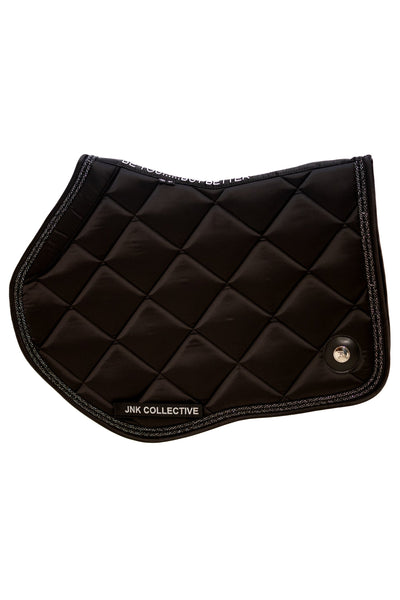
The JNK Collective Saddle Pad-Black Crystal- Jump is AUD $70 and comes in Pony, Cob and Full variants. The listing specifies diamond quilting, girth-point Velcro tabs, a non-slip stop cushion and waffle cotton, along with quick-drying, breathable, moisture-wicking and antibacterial claims. I would see this as the value option: check the actual fit and the final-sale note on the product page before ordering.

As stocked at iRide EQ.
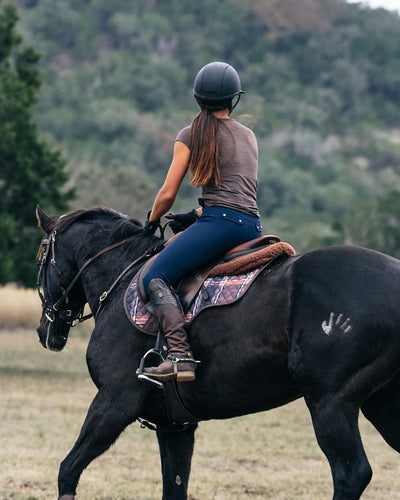
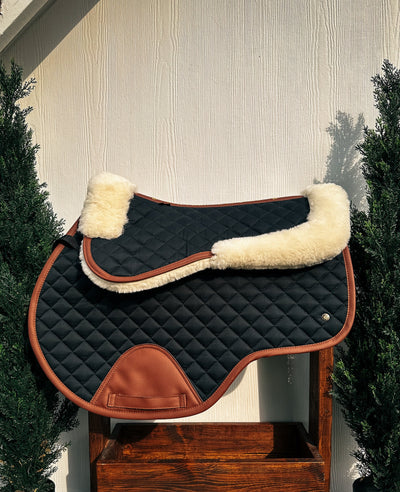
For riders wanting a coordinated look, the Sixteen Cypress / Equidae options are bundles rather than pad-only purchases. The Black & Cognac Show-Jump Bundle is listed at AUD $545 and includes a close-contact jump saddle pad, merino wool half pad and ear bonnet. The Field Plaid & Hickory Bundle is listed at AUD $685 and includes a pad, ear bonnet, gloves and choice of merino wool half pad. Judge the pad on its own fit, not on the bundle's styling.

As stocked at iRide EQ.

As stocked at iRide EQ.
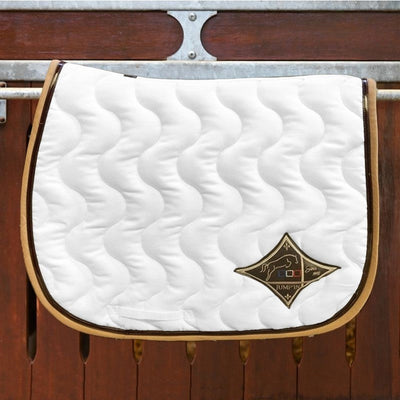
Jump'In's Écusson Jumpad listings are AUD $262.50 for the example colour checked and are Full size. The official product description mentions wavy quilting, a thick white honeycomb lining, wither space, two girth loops and French fabrication. There are many colour variants, so check the individual listing for the exact colour, price and availability before publication or purchase.

As stocked at iRide EQ.
| Option | Best suited to | Verified listing detail | Price checked |
|---|---|---|---|
| Horse Pilot Saddle pad | Technical training and a restrained show look | TU; Burgundy or Light Grey; breathable listing claims | AUD $159 |
| JNK Collective Saddle Pad-Black Crystal- Jump | Value-conscious everyday jumping | Pony/Cob/Full; Velcro girth tabs; diamond quilting | AUD $70 |
| Black & Cognac Show-Jump Bundle | Coordinated jump wardrobe | Pad, merino wool half pad and ear bonnet | AUD $545 |
| Jump'In Écusson Jumpad | Full-size colour matching | Wavy quilting; honeycomb lining; two girth loops | AUD $262.50 example |
Browse the full jumping saddle pad collection to compare current variants. Stock and pricing can change, so the product page is the final reference.

Fit starts before the girth is tightened: place the pad smoothly and check the front edge.
How should a jumping pad fit under the saddle?
Place the pad slightly forward, then slide it back into the saddle's natural position. This lifts the front fibres and stops the pad being pulled backwards against the coat. The front edge should not sit on top of the withers, and the spine channel should not be filled with fabric. With a close-contact jumping saddle, look carefully under the flap as well: a bulky fold can change what the rider feels.
A five-minute fit check
- Before tacking up: Check the pad is dry, clean and free from grit or hard seams.
- After girthing: Run a hand along the spine and inspect the wither clearance.
- After a few minutes: Mount, walk and recheck if the pad has migrated.
- After the round: Look for uneven sweat, dry spots, heat, hair rubs or tenderness.
Uneven sweat is not a diagnosis on its own, but a repeated pattern deserves attention. So does a horse that becomes reluctant to move forward, pins its ears during saddling or reacts when the back is groomed. Remove the pad, inspect the skin and seek professional advice if the signs persist. Do not keep layering pads to mask the issue.
Half pads deserve the same caution. The merino wool half pad included in some Sixteen Cypress bundles may suit one saddle and horse, but extra thickness can reduce clearance on another. If your saddle fitter has recommended a particular shim or half-pad arrangement, follow that plan rather than copying a social-media setup.

Are jumping saddle pads legal at EA and FEI shows?
There is no universal EA or FEI approval attached to the products listed here. Equestrian Australia's jumping rules page identifies the EA National Jumping Rules effective from 1 January 2026, while the FEI publishes separate 2026 Jumping Rules. A pad's colour, shape, brand or logo is not automatically approved for every class or show.
That does not mean competition presentation is irrelevant. Check the schedule for your event, use a clean and correctly fitted pad, and avoid assuming that a national EA show and an FEI competition use identical requirements. If you are unsure, ask the show secretary before travelling. It is a much cheaper fix than discovering at gear check that your carefully planned setup is not suitable.
For general show preparation, pair your pad research with a look at show day essentials, and check current rules for helmets, rider dress and horse tack separately. A coordinated pad can look smart, but welfare and fit come first.
How do Australian riders care for jumping saddle pads?
Wash the pad according to its care label and let it dry fully before storing it. In humid coastal areas, putting away a damp pad is an invitation to stale smells and irritated skin. On a hot Sydney or Brisbane day, do not leave a wet pad rolled in the float. Hang it in shade with airflow, then brush off dried hair once it is dry.
Keep a second pad in rotation if you ride most days. That gives each pad time to dry and makes it easier to notice wear in the quilting, girth tabs or lining. Inspect the underside for rough stitching, compacted padding and grit. A tiny seam rub can become a sore patch after a long jumping session.
Do not confuse breathable fabric with heat protection. A pad that manages moisture may be more comfortable, but workload, water, shade, breaks and sensible timing still matter in Australian summer. If your horse is hot or distressed, cool and manage the horse first; changing pads is not an emergency heat-management plan.
Frequently Asked Questions
What is the best jumping saddle pad in Australia?
There is no universal best. Start with saddle fit, wither clearance, spine clearance and stability, then choose the material, colour and price that suit your horse and riding.
Can a saddle pad fix a poorly fitted saddle?
No. A pad may change pressure or balance, but it cannot reliably correct a saddle that does not fit. Use a qualified saddle fitter when fit is in doubt.
How much does a jumping saddle pad cost?
The live examples checked ranged from AUD $70 for the JNK Collective pad to AUD $262.50 for an example Jump'In Écusson Jumpad listing. Bundles were AUD $545 and AUD $685.
Should a jumping pad sit in front of the saddle?
Place it slightly forward, then slide it back so the fibres lift and the pad follows the saddle. It should not bunch into the withers or fill the spine channel.
Are these saddle pads EA approved?
No evidence supports that claim. Check the current EA rules and the individual event schedule rather than treating a colour, brand or product as universally approved.
How often should a jumping saddle pad be washed?
Wash it often enough to remove sweat, hair and grit, following the care label. Dry it fully before storage and rotate pads if you ride frequently.
Can a breathable pad prevent a horse overheating?
No. Breathability and moisture management are product-design claims, not a guarantee. Use appropriate workload, hydration, shade, breaks and veterinary advice when needed.
Build a jumping setup that fits the horse first
Browse jumping saddle pads, half pads and horse girths at iRide EQ, then check the product details for current sizing and availability.
Shop jumping saddle pads