Quick answer: The Jump'In training aids range available in Australia includes the Howlett ($383.91), the traditional Gogue ($191.41), and the Elastic Gogue ($311.72) — three French-made schooling tools designed to encourage correct head carriage, build topline, and support young horses through their early education, whether on the lunge or under saddle.
The rider's take: I've used a Gogue on and off for years with young horses coming back into work after a winter spell. The reality is, no training aid fixes a hollow horse overnight — but a correctly fitted Gogue, used for short lungeing sessions, does seem to help a horse find a softer frame without you constantly nagging with the reins. The Howlett I'm newer to, but the principle appeals: the horse gets relief the moment they're in the right place. That's the philosophy I look for in any schooling tool — pressure and release, not pressure and hold.
When you're bringing a young horse along or re-schooling one that's learned to brace against the bit, the right training aid can make an enormous difference — used correctly. Used poorly, the same tool can create more problems than it solves. Jump'In, the French equestrian brand based in Fiennes, northern France, makes three training aids that cover most schooling scenarios: the Howlett, the Gogue, and the Elastic Gogue.
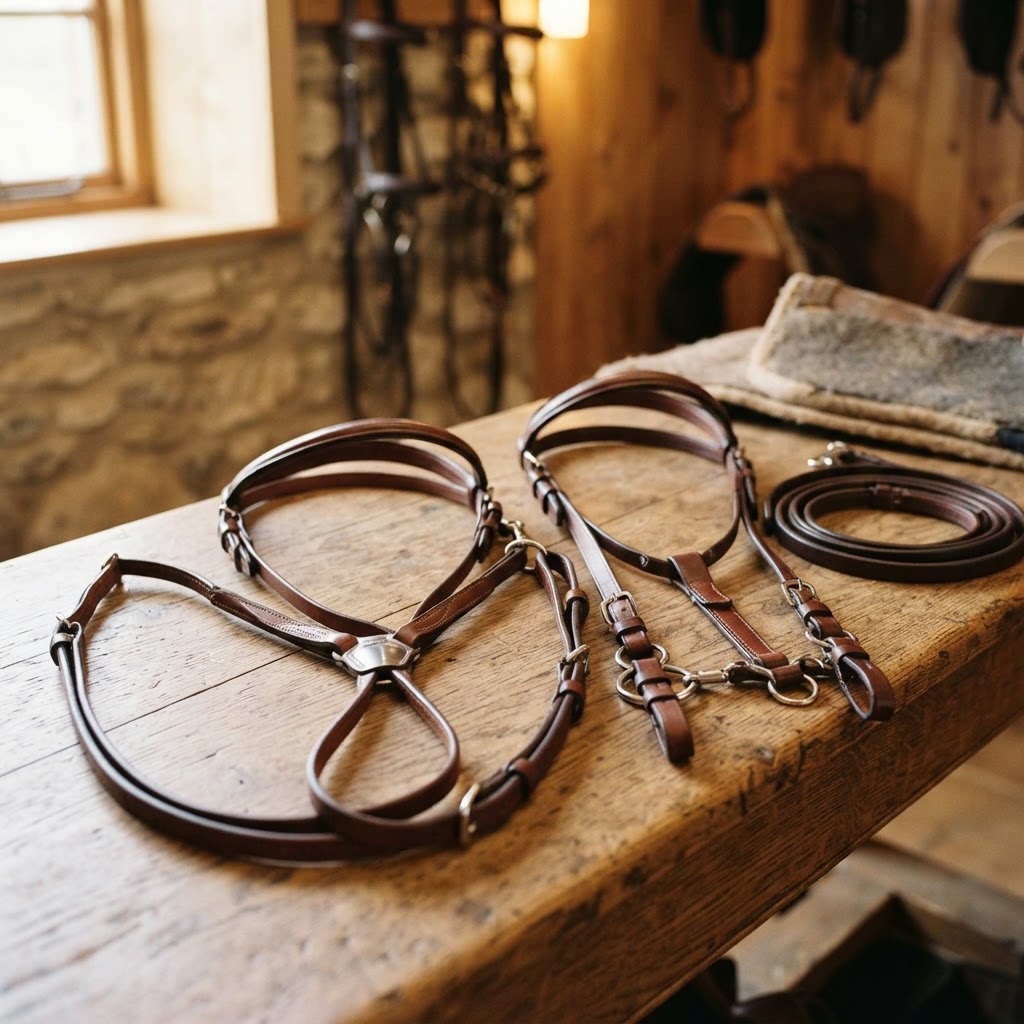
Each works on a different principle. The Howlett is a ridden aid that gives the rider a second set of contact points along the reins. The Gogue acts on the poll and mouth to encourage a lowered head, either on the lunge or ridden. The Elastic Gogue adds elastic components to prevent the horse from leaning on the aid. All three are schooling tools — not competition gear — and understanding the difference matters if you want results without creating tension in your horse's back.
In my 15 years keeping and schooling horses in Australia, I've seen training aids used brilliantly and used appallingly. The ones that work share a common thread: they give the horse a choice. The horse finds the correct position, the aid releases, the horse learns. The ones that fail are cranked up tight and left on for an hour, which just teaches the horse to brace against pressure. So let's look at what Jump'In offers and how to use each one properly.

Correctly fitted tack is the foundation before adding any training aid — the saddle, bit, and bridle must all fit properly first.
What Is a Howlett Training Aid and How Does It Work?
The Howlett is a classic schooling aid, and it's arguably the gentlest of the three because of how it functions. The rope of a martingale passes through the bit rings and attaches to rings positioned along the reins. When the horse achieves the correct working angle — nose slightly in front of the vertical, neck raised at the base — the Howlett gives. The rider then acts only on the bridle reins, and the horse experiences the relief.
What I like about the Howlett is that it works with one pair of reins. You're not juggling two or three sets of leather straps while trying to sit trot. The horse gets a clear reward for being in the right place, and you're not holding them there artificially. It's less restrictive than draw reins, and unlike the Gogue, it allows you to jump small fences while schooling — useful if you're producing a young horse that needs flat work and jumping integrated into the same session.
The Jump'In Howlett ($383.91 AUD) comes in the Week Collection, which means it uses SEGWICK English full-grain leather and stainless steel buckles. You can get it in Burgundy, Black, or Havana. One size fits most — there's some adjustment in the leather, but if your horse is particularly fine or particularly large, it's worth checking the measurements before ordering. Jump'In describes it as suitable for both young horses and young riders, which I'd agree with — the principle is simple enough that a novice can understand what the aid is doing, even if they're not ready to ride with it themselves.
One thing to watch: the rings along the reins need to be positioned correctly. Too close to the bit and the aid engages too early. Too far up the rein and the horse has to over-bend before getting any relief. I tend to start with the rings about a hand's width from the bit and adjust from there based on how the horse responds.
The Gogue: How It Differs from a Chambon
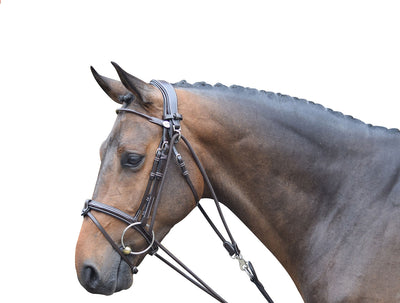
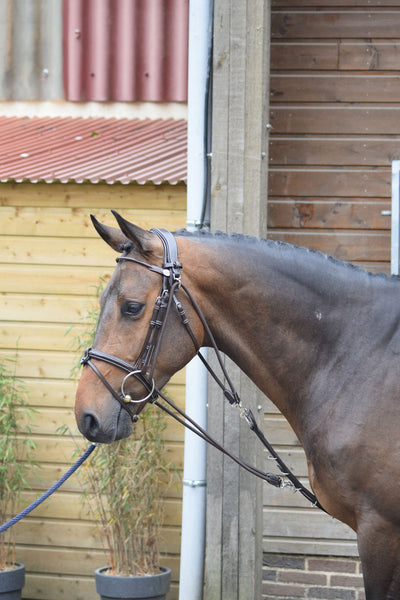
People often confuse the Gogue with the chambon, and while they look similar, the mechanics are different enough that it changes the way the horse works. A chambon clips to the bit rings and runs up to the poll — it's strictly a lungeing tool. The Gogue passes the cords through the bit rings and back down to the breastplate, creating a triangular shape. That means the pressure acts on both the poll and the corners of the mouth when the horse raises its head above the desired position.
The release happens when the horse brings its head down and its nose in. The pressure eases, the horse finds the comfortable position, and you get a rounder frame through the back and neck. The Gogue can be used two ways: independent mode for lungeing and free-schooling, or adjustable mode with a second pair of reins for ridden work.
In my experience, the Gogue is most useful for horses that tend to work with a high head carriage and a hollow back. A young thoroughbred off the track, for example, often carries itself up and short through the neck. A correctly adjusted Gogue on the lunge encourages the horse to stretch down and forward, which is the first step in developing a long topline and swinging back.
The Jump'In Gogue from the One Collection ($191.41 AUD) is the traditional leather-only version, available in Hazelnut. It's the simplest of the three and the one I'd recommend if you're new to training aids — there's no elastic or moving parts, just leather straps that you adjust to suit the horse.

The Gogue encourages the horse to lower its head and stretch through the topline — a crucial step in developing a swinging back.
Elastic Gogue vs Traditional Gogue: Which One?
This is the question I get asked most, and the answer depends on your horse's tendency to lean. The traditional Gogue is pure leather — the pressure is fixed and consistent. When the horse puts its head up, the Gogue applies pressure. When the horse drops its head, the pressure releases. Simple, predictable, and easy to feel.
The Elastic Gogue ($311.72 AUD) from Jump'In's Week Collection adds elastic components into the system. The elastic gives slightly under pressure, which means a horse that likes to lean on the aid and stay in a fixed position gets a less rigid feel. The elastic prevents the horse from "sitting" on the aid — it introduces a small amount of give that discourages the horse from balancing on the training aid rather than carrying itself.
What I've found in practice is that the Elastic Gogue suits horses that have a tendency to lock onto training aids and lean. You know the type — the horse that drops behind the contact and uses the aid as a fifth leg. The elastic means they can't find a fixed point to brace against. For a horse that's sensitive and already trying to find the right frame, the traditional leather Gogue is fine. For a heavier, more phlegmatic type, the Elastic Gogue is the better choice.
The Jump'In Elastic Gogue comes in the Week Collection with SEGWICK leather, available in Havana or Black, in Full size only. As with the traditional Gogue, start with loose adjustments and gradually tighten over a few sessions. Never start tight.
Howlett vs Gogue: Which Suits Your Horse?
The biggest practical difference between the Howlett and the Gogue is how you use them. The Howlett is designed primarily for ridden work — the horse is being schooled under saddle, and the aid integrates with your existing reins. You ride with your normal rein contact, and the Howlett acts as a supplementary influence that releases when the horse is in the right place.
The Gogue is more versatile because you can use it on the lunge and ridden. For lungeing, the independent mode means you don't need a second person or any reins at all — the Gogue is attached to the breastplate and bit, and the horse works in a triangle of leather that self-regulates head carriage. This is gold for young horses that don't yet have a rider on board.
My recommendation for most Australian riders is to start with the Gogue if you're working a young horse on the lunge, then progress to the Howlett once the horse is ready to refine its work under saddle. They're not either-or — they serve different stages of a horse's education. And neither one replaces correct riding, a well-fitting saddle, or a horse that's physically comfortable and not carrying tension from ill-fitting bits or a tight bridle.
If budget is a factor, the traditional Gogue at $191.41 is the entry point. The Howlett at $383.91 is the most expensive but also the most refined tool for ridden work. The Elastic Gogue sits in the middle at $311.72 and is worth the extra if your horse leans on aids.
Using Training Aids Safely: What Not to Do
I'll be direct here: training aids can do harm. I've seen horses with sore mouths, tense backs, and learned aversion to contact because a training aid was misused. So here are the rules I follow:
- Short sessions only. 15-20 minutes maximum with any training aid. I start with 10 minutes and build up. An hour in a Gogue is an hour of the horse learning to brace, not to give.
- Start loose, not tight. The first session should be so loose the aid barely engages. Adjust over a week. If you start tight, the horse has no idea what the aid wants and just fights it.
- Not for competition. Training aids like the Howlett, Gogue, and chambon are not permitted in EA or FEI dressage competition. Under FEI Jumping rules, draw reins may be used in warm-up and training only, with obstacles not exceeding 130cm. Keep these tools at home or in the schooling paddock.
- Don't use them to fix pain. If your horse is hollow and bracing, check teeth, saddle fit, and back before reaching for a training aid. A horse that's comfortable carries itself. A horse in pain won't, and no Gogue fixes that.
- Get eyes on the ground. Have someone watch your first few sessions, or video yourself. You need to see how the horse is responding, not just feel it through the reins.
The Jump'In range is well-made — the SEGWICK leather is supple from the first use, the fittings are solid stainless steel, and the stitching is what you'd expect from French craftsmanship. But good equipment used badly is still bad practice. Read the horse's response, and if the aid isn't helping after a few sessions, reassess. Sometimes the answer isn't a different training aid — it's a different approach entirely.
Frequently Asked Questions
What is a Howlett training aid used for?
The Howlett training aid is used during ridden schooling to encourage a horse to work in a correct frame. It attaches to the bit rings via a martingale rope and clips to rings along the reins, giving the horse relief when it achieves the right head carriage. It's less restrictive than draw reins and allows small jumps during schooling.
How does a Gogue training aid work?
The Gogue works by creating a triangular system: cords pass through the bit rings and attach to the breastplate. When the horse raises its head above the desired position, pressure is applied to the poll and mouth corners. When the horse lowers its head and brings its nose in, the pressure releases. It can be used on the lunge or ridden.
What is the difference between a Gogue and an Elastic Gogue?
The traditional Gogue is pure leather with fixed pressure. The Elastic Gogue has elastic components that give slightly under pressure, preventing the horse from leaning on the aid and finding a fixed point to brace against. The Elastic Gogue suits horses that tend to lock onto training aids, while the traditional version is better for sensitive horses already trying to find the right frame.
Are Jump'In training aids allowed in EA competition?
No. Training aids like the Howlett, Gogue, and chambon are not permitted in EA or FEI dressage competition. Under FEI Jumping rules, draw reins may be used in warm-up and training only, with obstacles not exceeding 130cm. These are schooling and lungeing tools, not competition gear.
How much do Jump'In training aids cost in Australia?
The Jump'In Howlett training aid is $383.91 AUD, the traditional Gogue (One Collection) is $191.41 AUD, and the Elastic Gogue (Week Collection) is $311.72 AUD. All are available from iRide EQ with fast Australian shipping. Prices are current as of September 2026.
Can I use a Gogue for lungeing?
Yes. The Gogue works in two modes: independent mode for lungeing and free-schooling, where it attaches to the breastplate and bit without reins; and adjustable mode for ridden work with a second pair of reins. The independent mode is the simplest way to introduce a young horse to the concept of head lowering without rider interference.
Which training aid should I use for a young horse?
For a young horse just starting their education, the Gogue on the lunge is the gentlest starting point — it encourages the horse to stretch down and forward without rider weight or rein pressure. As the horse progresses to ridden work, the Howlett provides a subtle influence that rewards correct carriage without being restrictive. Start loose, keep sessions short, and always prioritise saddle fit and mouth comfort.
Keep Reading
Shop Jump'In Training Aids in Australia
Browse the full range of Jump'In training aids at iRide EQ, including the Howlett, Gogue, and Elastic Gogue. Questions about which suits your horse? We're here to help — fast shipping Australia-wide, free over $249.
Shop Training Aids