Quick answer: The most useful groundwork exercises teach a horse to lead softly, halt from a light cue, back up without rushing, yield the shoulders and hindquarters, and stand quietly. Keep each session short, reward a thoughtful response, and stop before your horse becomes bored or tense. These basics help Australian riders build safer handling habits, better body awareness and a more reliable partnership before adding ridden work.
The rider's take: I learned the value of a proper halt the hard way at a windy showground outside Canberra. My mare was looking everywhere except at me, and five minutes of backing up one calm step at a time did more for our focus than another twenty minutes of marching around. Groundwork is not filler before the real work starts; it is often the bit that makes the real work possible.
A horse does not need a complicated obstacle course to benefit from groundwork. A headcollar, lead rope, a safe flat area and a few minutes of your attention are enough to practise the responses that matter in daily life: moving away from pressure, keeping a respectful distance, standing for a farrier and staying connected when the environment gets busy.
That matters in Australia, where a training session might happen in a small suburban paddock, a busy ag show yard or an open arena on a hot afternoon. Good groundwork can make loading, grooming and show preparation less dramatic. It also gives you a chance to notice changes in movement or mood before you get in the saddle. If your horse is sore, unusually resistant or unsafe to handle, stop and ask your veterinarian, qualified trainer or equine bodyworker for help.
Use the same thoughtful approach with equipment. A well-fitting halter and lead rope should not pinch or rub, and training aids should support a clear lesson rather than replace one. Riders building a broader schooling kit can also browse equine training aids, but the best tool is still a handler who knows when to soften the cue.

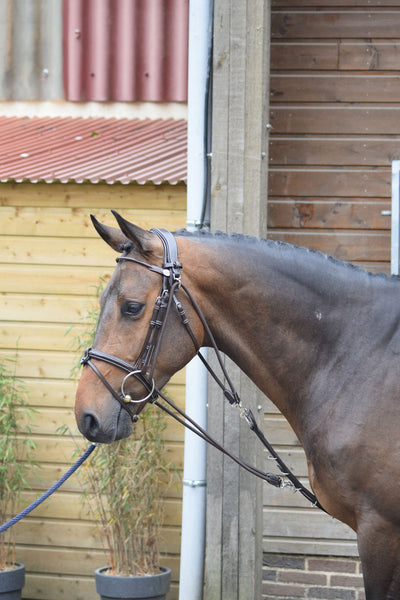
Groundwork can be practised almost anywhere your horse can relax and move safely.
What should a groundwork session teach first?
Start with attention and personal space. Your horse should be able to walk beside you without leaning into your shoulder, dragging behind or stepping across you. That does not mean demanding a rigid outline or marching with the lead rope tight. It means creating a calm bubble in which both of you can move without collision.
Try this simple opening routine
- Check the environment: Remove loose wire, slippery footing and distractions that could make a young or nervous horse panic.
- Walk forward: Ask for a few relaxed steps, then change your own rhythm. Notice whether your horse follows without pulling.
- Halt: Close your hand gently, breathe out and stop your feet. Release as soon as your horse stops with you.
- Reconnect: If the horse walks through your space, step back to a safe position rather than allowing the pressure to build.
The release is the lesson. Many handlers keep adding pressure because the first response was small, then accidentally teach the horse to ignore the light cue. Ask clearly, wait a moment and reward the try. If the response is unsafe, get professional help rather than escalating with a longer rope, a sharper correction or a frustrated voice.
Keep the first session to ten or fifteen minutes, especially in warm weather. A horse that is sweating heavily, breathing hard or losing focus needs a break and access to water. Groundwork is not a fitness test.
How do you teach a soft halt and a reliable back-up?
A soft halt is the foundation for nearly every other exercise. It gives you a pause button at the gate, beside the float and in the middle of a crowded warm-up area. Walk forward on a loose lead. Close your fingers around the rope without pulling backwards, stop your feet and wait. The instant your horse slows or stops, open your hand and allow the neck to lengthen.
At first, reward a square-ish pause of only a second or two. Build duration later. If your horse swings its hindquarters away, keep your feet planted and ask for the smallest correction, then return to quiet. Do not turn a halt into a wrestling match.
Backing up without fear
Stand facing the same direction as your horse, not directly in front of it. Use a light feel on the lead rope and a clear body signal, such as stepping towards the chest while keeping your own shoulders angled safely. The moment one hoof steps back, release. Add another step only when the first one is calm.
A horse that throws its head, rushes backwards or braces may not understand the request, may be worried about the handler's position, or may have discomfort in its mouth, poll, back or limbs. Take the behaviour seriously. Backing is not a dominance contest. A qualified trainer can help you separate confusion from pain or fear.
For everyday care, these pauses pair well with quiet grooming. A horse that can stand for a minute beside a grooming essentials kit is easier to check after a ride, before a lesson or on show day.
The rider's take: My favourite test is not whether a horse can back ten perfect steps. It is whether I can ask for one step, soften my hand and see the horse stay mentally with me. That tiny exchange tells me far more than a flashy liberty routine.
Which yielding exercises improve control and balance?
Yielding exercises teach a horse to move individual parts of the body away from a light request. They are useful for opening gates, positioning beside a mounting block and keeping a horse from crowding you. They should look unhurried. If the feet become quick or the neck twists dramatically, reduce the number of steps.
| Exercise | What it teaches | What to watch for |
|---|---|---|
| Shoulder yield | Move the shoulders away while the hind feet remain relatively quiet | Crossing too much, falling through the handler or stepping into personal space |
| Hindquarter yield | Move the hindquarters away from a light touch or position cue | Handler standing in the kick zone or horse spinning instead of stepping |
| Head and neck flexion | Relax around a soft feel without pulling the whole body around | Bracing, twisting or using the exercise to hide stiffness |
| Walk–halt–walk | Listen to changes in rhythm and stay attentive | Stopping heavily, rushing away or losing the handler's shoulder |
For a shoulder yield, stand near the horse's shoulder with your feet out of the path of the front legs. Ask the horse to step sideways one step, then return to neutral. For a hindquarter yield, stay well clear of the hind legs and ask the horse to move away from a light touch or gesture. Never practise this in a narrow stable aisle or while tied hard.
These movements are not a substitute for veterinary assessment. Repeated reluctance to turn one way, difficulty stepping under or a sudden change in balance deserves investigation. The goal is a willing response, not a pose that looks tidy for a photograph.

Quiet handling around the shoulder and hindquarters builds practical confidence for care routines.
How can groundwork help a horse stay calm in busy places?
Once the basics are quiet at home, add mild distractions one at a time. A folded tarp, a cone, a pole on the ground or a friend walking past can become part of a lesson. The aim is not to force a horse over an object. The aim is to let the horse look, think and choose a safe response while you remain predictable.
Use distance as your first adjustment. If a tarp is too much at two metres, work at six metres. If a busy arena is overwhelming, stand outside the gate and reward your horse for breathing, lowering its neck or turning attention back to you. Then leave before the horse reaches the point of panic.
Leading near traffic and other horses
Practise changes of direction, halts and personal space before adding another horse. Keep enough room that a spook does not put you under a hoof. Wear proper footwear and gloves with a sensible grip; a lead rope sliding through bare hands can cause a serious burn. Riders who are also reviewing everyday riding gloves should choose a pair that allows feel without becoming slippery when damp.
At an Australian show, take a quiet walk around the grounds before expecting your horse to stand beside the float all day. A 35-degree day, loudspeakers and unfamiliar horses can drain attention quickly. Offer shade, water and rest. A calm horse is not produced by drilling the same exercise for an hour.

What are the most common groundwork mistakes?
The biggest mistake is treating every unwanted response as disobedience. A horse may walk through a halt because the cue was unclear, the footing hurts, the saddle area is sore from yesterday or the handler has become tense. Start by checking the practical details before making the request stronger.
- Too much repetition: End after a good response. Five calm halts beat thirty irritated ones.
- Unsafe positioning: Do not stand directly in front of a horse that is backing or beside a hind leg during a yield.
- Mixed signals: Keep your feet, hands and voice consistent. A handler who keeps walking while asking for a halt teaches confusion.
- Skipping the release: Pressure that never turns off creates bracing, not softness.
- Training through heat or fatigue: Australian summer conditions can make a short session plenty.
Some riders also reach for a training aid before they can explain the lesson. That is backwards. Equipment can be useful for a specific, professionally supervised purpose, but no rope halter or stick can replace timing, safe positioning and a plan. If the horse becomes aggressive, bolts, rears or repeatedly threatens the handler, stop and seek face-to-face help.
Groundwork should leave both of you feeling more organised. Finish with a familiar walk, a quiet stand and a relaxed return to the paddock or stable. If the horse gives you a good try, let that be enough for the day.
Frequently Asked Questions
How often should I do groundwork with my horse?
Two or three short sessions each week can be useful, alongside normal handling and ridden work. Adjust the frequency for age, fitness, temperament, health and weather.
Can beginners practise these exercises?
Yes, basic leading, halting and standing can be suitable for beginners with experienced supervision. Do not practise difficult yielding or problem behaviours alone.
What should I wear for groundwork?
Wear enclosed, supportive footwear with a defined heel, gloves if the rope may slide, and clothing that will not catch. A properly fitted helmet is sensible whenever a horse may rear, bolt or behave unpredictably.
Should I use a rope halter for groundwork?
Not automatically. Use equipment you understand and that fits correctly. A rope halter does not make a horse safer, and stronger pressure is not a replacement for instruction.
Why does my horse back up too fast?
Possible reasons include an unclear cue, fear of the handler's position, learned evasion, poor balance or discomfort. Move to one step at a time and get qualified help if the rushing continues.
Is groundwork enough exercise for a horse?
It can provide mental work and some movement, but it is not a complete fitness programme for every horse. Match exercise to the horse's condition and your veterinarian's or trainer's advice.
Can groundwork fix a horse that spooks?
It may improve communication and confidence, but it cannot guarantee that a horse will never spook. Work below the horse's fear threshold and seek professional support for repeated or dangerous reactions.
Build better basics from the ground up
Keep sessions simple, safe and kind. Browse iRide EQ's equine training aids, halters and leads and horse health collections for practical horse-care essentials.
Shop groundwork essentials