Quick answer: Get your horse's mane and tail show-ready by saturating tangles with a quality detangler, working from the bottom up with a wide-tooth brush, washing and conditioning to remove grit, then prepping with plaiting wax and bands. Start the process two days before competition so the hair is clean, dry, and manageable when you braid. The right detangler and grooming tools make the difference between a polished show ring turnout and a frizzy, half-finished plaits job.
The rider's take: I learned the hard way that you can't rush mane prep the night before a show. The first time I braided a dirty, tangled mane at 10pm before an EA dressage day, three plaits popped out before I walked down the centre line. Now I start detangling two days early, wash the mane the morning before, and never braid damp hair — the plaits just don't sit right.
A horse with a gleaming, neatly plaited mane and a flowing, tangle-free tail walking into the show ring looks the part before the judge even sees the rider. But getting there is a process — one that starts well before the morning of your competition. Detangling, washing, conditioning, and braiding all need to happen in the right order, with the right tools, and with enough time for the hair to settle.
The reality is that mane and tail care is one of those jobs that's easy to neglect during the week and panic about on show day. The horses that look immaculate at competitions aren't the ones whose owners spent an hour frantically brushing knots out at 6am. They're the ones who've had consistent detangling, regular conditioning, and the right grooming kit grooming brushes in the tack room all along.
What follows is the routine I've refined over fifteen years of preparing horses for EA-affiliated events — from local Ag shows to state dressage championships. It covers the products that actually work, the tools that save you time, and the sequence that gets the best result without breaking hair or burning yours.

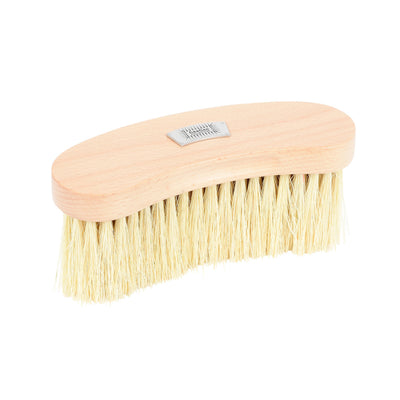
Regular grooming with the right brushes keeps the mane manageable between shows.
Why Mane and Tail Condition Matters in the Show Ring
The condition of your horse's mane and tail is one of the first things a judge clocks — consciously or not. A thick, glossy, neatly plaited mane signals a horse that's well-cared-for. A dry, frizzy, tangled one suggests the opposite. In a close class, turnout can be the thing that tips the scales.
But there's more to it than appearances. A mane that's full of tangles and grit is harder to braid, more painful to brush, and more prone to hair breakage every time you drag a comb through it. A tail that's matted at the base traps moisture and bacteria against the dock, which can lead to skin irritation and rubbing. Good mane and tail care is welfare, not vanity.
The Australian climate adds its own complications. Summer dust and sweat turn manes gritty within a day of washing. UV exposure bleaches dark hair, leaving it brittle and prone to snapping. And a horse turned out without a fly veil in January will rub its mane against the fence in frustration, undoing weeks of careful grooming. Consistent care — not just pre-show panic — is what keeps the hair in good condition. Investing in a proper set of grooming essentials and a reliable detangler is the starting point.
The Detangling Routine: Working Bottom-Up, Not Top-Down
The single biggest mistake I see riders make with manes and tails is starting at the top and dragging the brush down. All that does is push tangles tighter and snap hairs that are caught in the knot. You have to work from the bottom up — start at the ends of the hair, tease out the worst knots with your fingers, then bring in a brush once the worst snarls are loose.
Saturate the tangled section with detangler first and let it sit for a minute. Don't try to brush dry, tangled hair — it stretches and snaps. Work the product through with your fingers, gently separating strands as you go. Once the section feels looser, switch to a wide-tooth brush or comb and work upward in small increments.
Never brush a wet tail. Soaked hair is elastic and pulls out at the root far more easily than dry hair. If you've just washed the tail, let it dry completely — or at least mostly — before you start detangling. On a warm day in an Australian summer, a thick tail can take hours to dry fully. Plan for that.

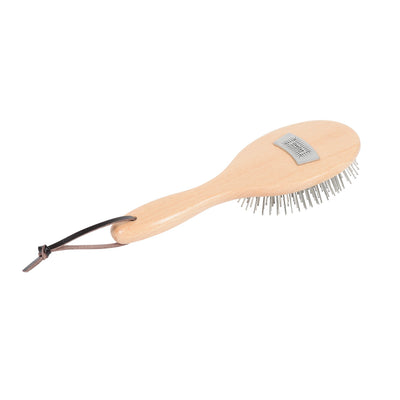
The GeeGee COLLECTIVE Mane and Tail Brush ($27.95) — wide-set bristles that detangle without pulling.
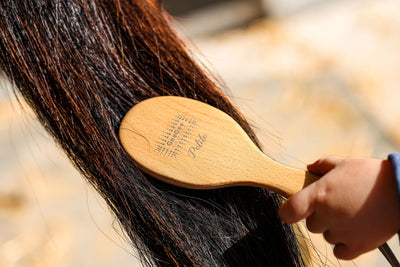
For the actual brushing, I recommend the GeeGee COLLECTIVE range, which is an Australian-owned artisan grooming brand distributed by Ippico Equestrian. Their Mane and Tail Brush has wide-set, natural bristles that work through tangles without the aggressive pulling you get from a synthetic brush. If you have a smaller horse or a finer mane, the Petite version at $23.95 is the same design in a more compact size.

The Petite Mane and Tail Brush ($23.95) — same natural bristles, smaller face for finer manes.
Choosing the Right Detangler
A good detangler does two things: it lubricates the hair so knots slide apart instead of breaking, and it leaves a slight coating that repels dust and stains between washes. The worst ones make the hair greasy, attract sand, and wash out in one rinse.
The Equidae / Sixteen Cypress range offers two 3-in-1 detanglers that I've been using for the past season. The SHINE & FOCUS Citrus 3-in-1 Detangler ($37.50) is a citrus-scented formula that conditions, shines, and detangles in one application. It leaves a clean, non-greasy finish and the citrus scent is pleasant without being overpowering. For horses with sensitive skin, or if you prefer a more subtle fragrance, the BALANCE & CLARITY Floral 3-in-1 Detangler ($37.50) does the same job with a floral base.

SHINE & FOCUS Citrus 3-in-1 Detangler ($37.50) — conditions, shines, and detangles in one spray.

BALANCE & CLARITY Floral 3-in-1 Detangler ($37.50) — a gentler option for sensitive horses.
Both formulas are designed for Australian conditions — they repel the fine dust that settles on horses turned out on dry summer paddocks, which means fewer washes between shows and less risk of the mane becoming gritty and abrasive to brush. A detangler that actively repels dirt reduces the frequency of full washes, which in turn reduces the stripping of natural oils from the mane and tail. That alone is worth the price if you're competing regularly through spring and summer.
One thing I always tell people: a detangler is a tool, not a shortcut. It won't fix a neglected mane overnight. Use it consistently after each grooming session, not just the morning of a show. The horses with the best manes at any competition are the ones whose owners have been applying detangler weekly, not the ones who emptied half a bottle in the wash bay at dawn.

Show day preparation starts with clean, detangled hair — not a last-minute rush with a comb.
Washing and Conditioning Before Plaiting
If you're going to braid the mane, it needs to be clean. Dirt, grease, and leftover product residue make hair slippery and hard to section evenly. Wash the mane the day before you plan to braid — not the morning of. Wet manes take hours to dry fully, and braiding damp hair gives you uneven plaits that don't hold their shape.
Use a gentle shampoo to clean the mane and tail, working it through to the roots. If you have a horse with a sensitive skin condition or a history of reactions to grooming products, choose your shampoo carefully — some of the stronger formulas can strip natural oils and leave the skin underneath dry and itchy. A conditioning shampoo or a separate horse health coat treatment can help maintain condition while cleaning.
After washing, apply a conditioner to the mane and tail. The SOOTHING & CALM Horse Conditioner ($45.50) from Equidae is the one I keep in my grooming kit. It's a natural formula that softens without weighing the hair down, and it rinses clean so there's no residual slickness that would make plaiting bands slip.

SOOTHING & CALM Horse Conditioner ($45.50) — softens mane and tail without leaving residue.
Rinse thoroughly. Any conditioner left in the hair will make it slippery, and your plaits won't hold. Squeeze excess water out of the mane with a towel — don't rub, just press — and then let it air dry. If you're in a hurry, a sweat scraper pressed gently along the mane can help remove excess moisture, but give it at least four hours before you start braiding. On a cool or humid day, plan for longer.
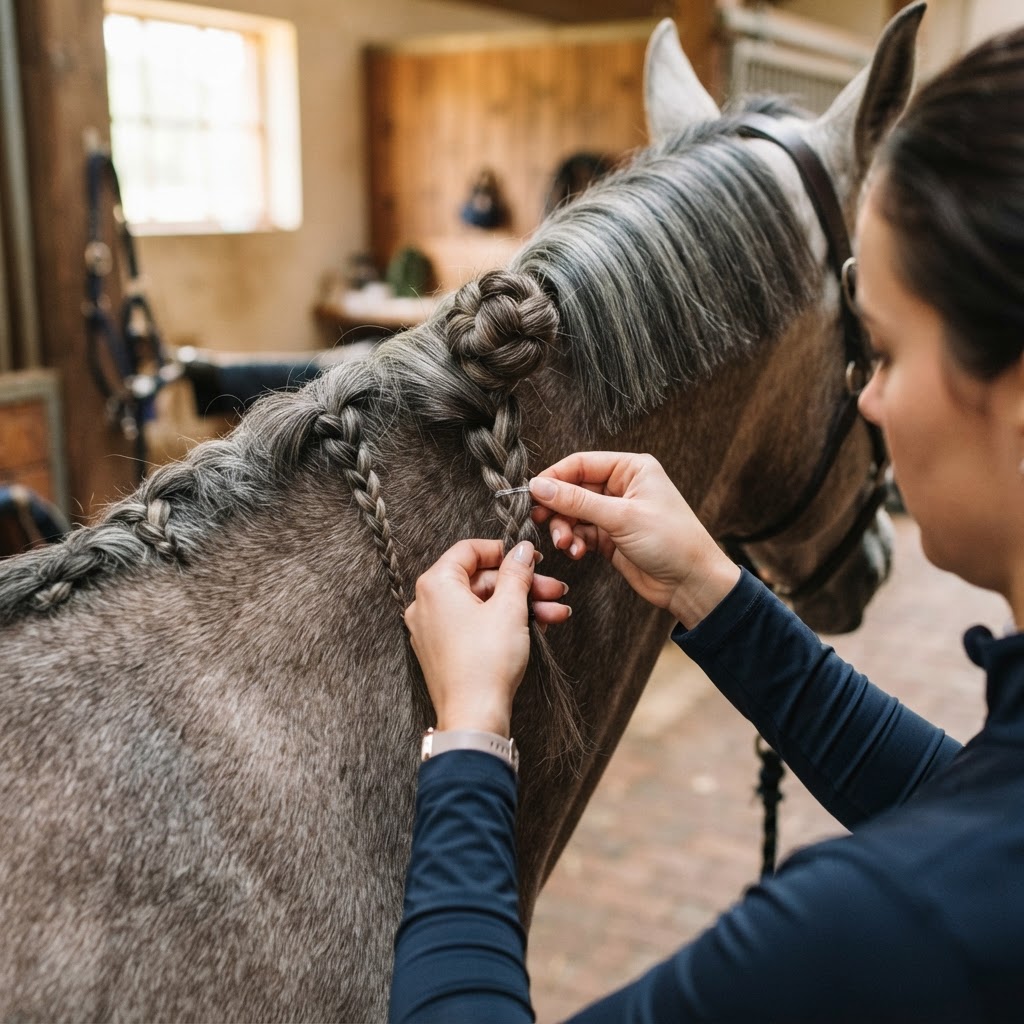
The Plaiting Toolkit: What You Actually Need
You don't need a massive kit to braid a mane well. But you do need the right tools, and cheap substitutes will frustrate you. Here's what I keep in my plaiting kit and why each item matters.
Plaiting needles. A plaiting needle helps you thread the band through the plait and roll it neatly. Two options from GeeGee COLLECTIVE cover most needs: the Aluminium Plaiting Needles 3-pack ($10.95) for durability, or the lighter Plastic Plaiting Needles 5-pack ($7.95) if you prefer a more flexible tool. I keep both in my kit because aluminium needles bend under pressure when you're threading thick manes, and plastic needles snap if you push too hard on a tight plait. Having spares of both on show morning is worth the $18 total.

Aluminium Plaiting Needles 3-pack ($10.95) — durable enough for thick manes.

Plastic Plaiting Needles 5-pack ($7.95) — lighter and more flexible.
Plaiting bands. The wrong bands will snap mid-plait or pull mane hair when you remove them. I use clear and black bands depending on mane colour — clear for lighter manes, black for dark. The Clear Plaiting Bands ($9.95) and Black Plaiting Bands ($9.95) from GeeGee are small enough for neat plaits and elastic enough to hold without cutting into the hair. Always remove bands carefully — cutting them hastily with scissors is how you lose chunks of mane hair. Unwind them instead.

Clear Plaiting Bands ($9.95) — virtually invisible on lighter manes.

Black Plaiting Bands ($9.95) — the match for darker manes.
Plaiting wax. This is the step a lot of riders skip, and it shows. A small dab of wax applied to the sectioned mane before braiding gives you grip — the hair doesn't slide through your fingers as you plait, and the finished plaits hold their shape tighter. The GeeGee Plaiting Wax ($24.95) is tacky without being sticky, and a single tub lasts an entire show season. Don't overapply — a thin layer on your fingertips is enough for a full mane.

Plaiting Wax ($24.95) — a thin layer on fingertips gives grip for neat, tight plaits.
Getting Competition-Ready: The Show Day Sequence
Here's the sequence that works for me: braid the mane the evening before the show, when the horse is calm, you're not rushed, and you can take the time to get the sections even. Leave the tail for the morning of — a plaited tail won't survive a night in the stable. Remove braids carefully in the morning if they've loosened, and redo only the ones that need it.
Under EA National Dressage Rules, plaiting of the mane and tail is permitted — but it's not mandatory. I see riders panicking about braiding for a local show where nobody else has plaited and it looks perfectly fine. Plaiting is traditional and customary, and it does present a polished picture, but EA rules don't require it. If your horse has a short, thin mane or you're at a lower-level event, a neatly pulled and trimmed mane is an acceptable alternative.
What does matter is that whatever you do looks deliberate. A half-plaited mane with three braids fallen out looks worse than an unplaited mane that's clean and tidy. Pick your approach and commit to it.
For a full show day preparation, a complete grooming kit in the stable saves time and keeps everything in one place. The GeeGee COLLECTIVE grooming kits come loaded with brushes, combs, and hoof picks in a carry bag:
- Luxury Equine Grooming Kit ($159.00) — premium tier, ideal as a dedicated show kit.
- Groom-Tastic Grooming Kit ($199.00) — the most comprehensive set with additional tools.
- Champion Grooming Kit ($199.00) — competition-grade kit with everything you need for show prep.

Luxury Equine Grooming Kit ($159.00) — a dedicated show kit that keeps brushes, combs, and plaiting tools together.
These kits are built for the Australian stable environment — the bags are durable, the tools are natural materials, and the brush set covers mane, tail, body, and hooves in one package. If you're spending $200 on a kit, the Groom-Tastic and Champion kits give you the most tools for the money.
Common Mistakes That Undo Your Hard Work
After years of watching riders prepare for shows, the same mistakes come up again and again. Here are the ones I'd fix first:
Braiding a dirty mane. Dirt and sweat make the hair slippery. Your bands won't hold, the plaits won't sit flat, and you'll be undoing them on show morning. Clean the mane first — every time.
Skipping conditioner. Shampoo alone strips oils and leaves the mane brittle. Without conditioner, braiding snaps individual hairs. You won't see it happen, but over a season, the mane thins. Condition every wash.
Using the wrong brush. A stiff body brush on a tangled tail will pull hair out at the root. Use a dedicated mane and tail brush with wide-set bristles, starting at the bottom and working up. The GeeGee brushes I mentioned earlier are designed exactly for this.
Rushing the braids. Neat plaits take 45 minutes to an hour on a full mane. If you're doing it in 20 minutes at 5am, the result shows. Plait the evening before, give yourself time, and use the wax.
Not checking tail rubbing. If your horse is rubbing its tail in the weeks before a show, investigate the cause — ticks, pinworms, or a dirty udder on mares are the usual suspects. No amount of detangler fixes hair that's been rubbed short against a fence.
Your competition wear might look immaculate, but if your horse's mane is a mess, the overall turnout falls flat. The mane and tail are the frame around the whole picture.
Keeping Condition Between Shows
Mane and tail care isn't a show-day-only job. The condition you see in the ring is built by what you do in the weeks between competitions. Regular brushing with the right tools, a detangler applied after each session, and washing when the hair is genuinely dirty — not every day, which strips natural oils — keeps the mane manageable and the tail flowing.
On hot Australian days, sweat and dust turn a clean mane gritty within hours. A light spray of detangler before turnout can help repel dust. And if you have a horse that's prone to UV bleaching, a UV-protective rug or neck cover protects the mane from sun damage. Once the hair is bleached and brittle, no amount of conditioner fully restores it — prevention is easier than a cure.
What I've found over the years is that the horses who consistently look the best at shows aren't the ones with the most expensive gear. They're the ones whose owners have a routine — the same brushes, the same detangler, the same sequence — applied every week, not just the day before a show. A solid set of grooming tools and a commitment to using them regularly will produce better results than any single product.
Frequently Asked Questions
How often should I detangle my horse's mane and tail?
Once or twice a week is enough for most horses. If your horse is turned out in a dusty paddock or has a particularly thick mane, you may need to detangle more frequently. Use a detangler spray and work from the bottom up to avoid breaking hair.
Should I brush a wet tail?
No. Wet hair stretches and breaks more easily than dry hair. Let the tail dry completely before brushing, or at least mostly dry on a warm day. If you must detangle a damp tail, use your fingers first and a wide-tooth comb rather than a brush.
Is plaiting mandatory at EA dressage competitions?
No, plaiting is not mandatory under EA National Dressage Rules. It is customary and traditional, and most competitors do plait for dressage, but the rules state that normal plaiting of the mane and tail is permitted — not required. A neatly pulled and trimmed mane is an acceptable alternative.
What's the best detangler for Australian conditions?
A detangler that repels dust and dirt is ideal for Australia's dusty climate. The Equidae / Sixteen Cypress 3-in-1 detanglers (Citrus and Floral variants) both condition and repel dust, reducing how often you need to fully wash the mane.
When should I braid my horse's mane for a show?
The evening before the competition is ideal. Braiding takes 45 minutes to an hour, and doing it while the horse is calm and you're not rushed gives better results. Leave the tail for the morning of the show, as a plaited tail won't survive overnight in the stable.
How do I remove plaits without breaking mane hair?
Unwind the plaiting bands carefully by hand rather than cutting them with scissors. Cutting hastily can nick mane hair. If a band is stuck, work a little detangler through the band to loosen it before removing.
Can I use human hair products on my horse's mane?
Human products aren't formulated for equine hair and skin, which have different pH levels and oil profiles. Some human detanglers contain silicones that build up on mane hair over time, leaving it dull and heavy. Stick to products designed specifically for horses.
Why does my horse keep rubbing its tail out?
Tail rubbing is usually caused by ticks, pinworms, or a dirty udder on mares. Check for these issues before focusing on grooming — no amount of detangler fixes hair that's been rubbed short. Treat the root cause with a wormer or vet advice, then focus on regrowth.
Build Your Show Grooming Kit
Every product in this guide is stocked at iRide EQ with fast Australian delivery. Browse our full range of grooming brushes, Equidae detanglers and conditioners, and the complete GeeGee COLLECTIVE grooming range — including plaiting needles, bands, and wax.
Shop Grooming Brushes