Shop horse health & first aid essentials at iRide EQ. From complete equine first aid kits and wound care dressings to cold therapy boots, worming pastes, and hoof care supplies, our range covers everyday horse health management and emergency preparedness — from trusted brands like Equifit, Value Plus, and Equidae/Sixteen Cypress.
Building Your Equine First Aid Kit
Every horse owner needs a first aid kit ready before they need it — not after. The essentials come down to wound management, temperature monitoring, bandaging, and something for hoof emergencies. A pre-assembled kit like the Value Plus First Aid Kit ($90.00) takes the guesswork out — it comes stocked with dressings, bandages, scissors, and the basics you'd reach for at 11pm when your horse comes in from the paddock with a cut you can't explain.
If you'd rather build your own, start with antiseptic spray, a roll of cohesive bandage, gauze, a digital thermometer, and a hoof poultice dressing. You'll also want a pair of proper bandage scissors — the Stainless Steel Bandage Scissors ($5.95) are blunt-tipped so you can cut close to skin without risk. For a deeper dive on what every Australian rider should keep on hand, read our horse first aid kit essentials guide.
Quick Facts
Best ForEveryday care, wound management, emergency preparedness, recovery
CategoriesFirst aid kits, wound care, cold therapy, worming, hoof care, skin care
Top BrandsEquifit, Value Plus, Equidae/Sixteen Cypress, Safehorse of Sweden
Ships FromAustralia — fast local delivery

The Value Plus First Aid Kit — a ready-to-go equine first aid solution stocked with dressings, bandages, and essential tools.
Wound Care & Infection Control
Cuts, abrasions, and hoof bruises are the most common things you'll treat at home. The key is having the right products on the shelf before the injury happens. Silver-infused products have become the go-to for a lot of Australian agistment properties — they combine antimicrobial action with wound coverage in a single step.
The Equifit AGSilver range is one of the most comprehensive wound care lines we carry. The AGSilver CleanSpray ($54.28) is a silver-ion antiseptic spray that handles everyday cuts and scrapes — 148 units in stock. For thicker coverage on larger wounds, the AGSilver CleanBalm ($39.47) creates a protective barrier that stays put in wet conditions. Both are safe for daily use and won't stain tack or rugs.
For traditional dressing needs, the Veterinary Curabine Dressing ($25.75) from Value Plus is a medicated poultice dressing that draws out infection from hoof abscesses and deep wounds. The W Plus+ Healing Ointment ($47.50) from Equidae/Sixteen Cypress is another solid option for promoting healing on stubborn wounds — it's a natural formulation that works well on sensitive skin.
Don't forget bandaging. ValuWRAP ($4.95) is a cohesive bandage that sticks to itself, not to skin or hair — essential for securing dressings without causing further irritation on removal.

Equifit AGSilver CleanSpray — silver-ion antimicrobial spray for everyday wound care.
Cold Therapy & Recovery Boots
Cold therapy is critical after intense work, for reducing swelling, and managing tendon injuries. The difference between a basic ice pack and a proper therapy boot comes down to coverage and fit — you want cold applied evenly around the tendon, not just resting on one side.
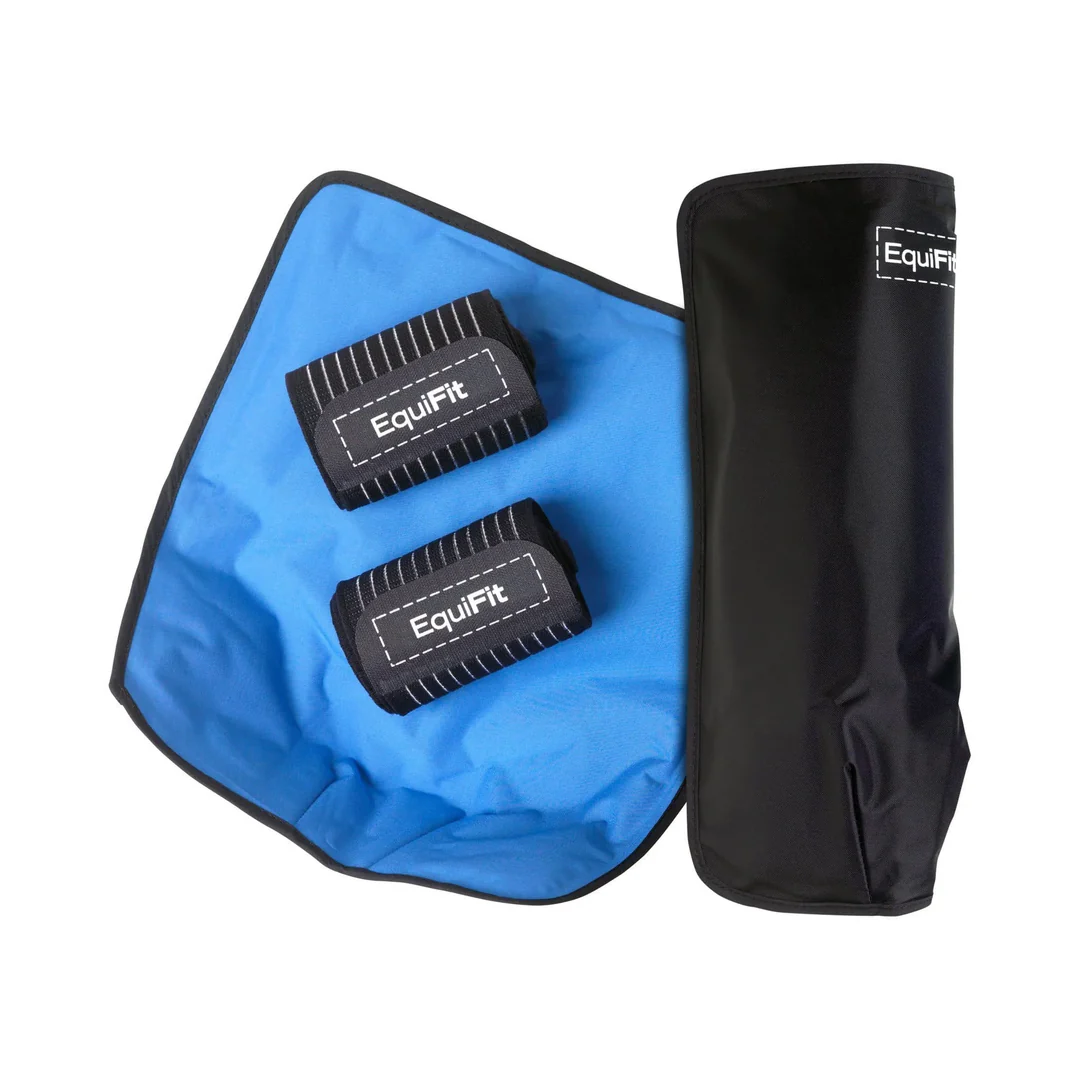
Equifit's therapy range leads this category. The EasyIce ($105.57) is an entry-level cold therapy wrap that's easy to apply and holds temperature well — 301 in stock. For serious tendon injuries, the Gel Compression Tendon Boot ($384.03) combines cold therapy with targeted compression — 87 units available. The IceAir Cold Therapy Boot ($299.00) uses circulating cold air rather than gel packs, which some vets prefer for post-workout recovery.
For a more budget-friendly option, the TopTac-distributed Majyk Equipe Cool Gel Ice Boots ($329.95) offer full-leg coverage with reusable gel packs. If you're dealing with hock rather than tendon issues, the Gel Compression Hock Boot ($384.03) targets that joint specifically.
Browse our wider equine therapy essentials for massage, magnetic, and recovery products beyond cold therapy.

Equifit EasyIce — cold therapy wrap for post-workout tendon care and injury recovery.
Hoof Care Essentials
Hoof abscesses, cracks, and bruises can sideline a horse for weeks. Having hoof care supplies ready means you can act quickly while you wait for the farrier or vet. The basics you need: a poultice dressing, hoof tape, and a hoof treatment product.
Equifit's HoofSavers ($52.02) is a daily hoof conditioner that helps maintain hoof wall integrity — particularly useful in the dry conditions many Australian properties face through summer. For protecting a poulticed hoof, Pack N Stick Hoof Tape ($73.44) is self-adherent and waterproof, keeping the poultice in place through wet paddock conditions. With 870 in stock, it's one of our best-stocked hoof care items.
The Equidae/Sixteen Cypress Hoof Care Bundle offers a complete hoof care package when it's available — check current stock. For hoof abscesses specifically, pair the Curabine dressing with hoof tape for a traditional poultice treatment that draws infection out over 24-48 hours.
Worming & Digestive Health
Regular worming is non-negotiable for horse health in Australia, where warm climates mean parasite pressure year-round. A rotational worming programme — switching between active ingredients — prevents resistance building up in your horse's parasite population.
The Equinox Horse Wormer Paste ($16.75) from Value Plus is one of our highest-stock items at nearly 4,000 units — it's an ivermectin-based paste suitable for routine worming rounds. The Expel Yellow Tube Wormer ($20.00) offers a different active ingredient for your rotation schedule, with 520 units in stock.
For digestive support between worming cycles, Fixine for Equine ($78.05) is a probiotic supplement that supports gut health — particularly useful after a worming treatment or during travel and competition stress. Browse our full horse supplements range for broader nutritional support.

Equinox Horse Wormer Paste — routine ivermectin-based parasite control for Australian horses.
Skin Care & Sun Protection
Australian sun is brutal on horses with pink skin, light coats, or bald patches from rubs and sweating. Sunburn on the nose and heels can lead to painful cracking and secondary infections. Fly irritation compounds the problem — horses stamp and rub, creating open sores that attract more flies.
The Equidae/Sixteen Cypress SOOTHING & CALM line addresses both issues. The Aloe Vera Spray ($26.50) soothes irritated skin and provides light moisture — 370 in stock. The Horse Sunscreen Powder ($37.50) is an innovative powder formulation that blocks UV without the greasy residue of traditional creams — 235 in stock. For pink nose protection, the Aussie Strength Pink Nose Protector kit offers targeted coverage.
For leg protection during recovery or transport, Equifit's Silver Sox ($65.79) combine antimicrobial silver fibre with compression — 479 in stock. The Horse Sox ($42.84) offer similar protection without the silver treatment, at a lower price point.
Monitoring & Diagnostics
A thermometer is the first thing you reach for when a horse is off their feed or listless. The Safehorse of Sweden Horse Thermometer ($54.95), distributed by TopTac, is designed specifically for equine use with a fast reading time — 214 in stock. Knowing your horse's normal resting temperature (typically 37.5-38.5°C) gives you a baseline to compare against when something seems wrong.
The AGSilver Starter Kit ($153.00) from Equifit bundles their core wound care products together — a good option if you're setting up a new feed room first aid station. Stock is limited at 4 units, so move quickly if you want one.

Safehorse of Sweden Horse Thermometer — fast-reading digital thermometer for equine health monitoring.
Brands We Stock
| Brand |
Origin |
Specialty |
Shop |
| Equifit |
USA |
Silver-infused wound care, cold therapy, compression boots |
Shop Equifit |
| Value Plus |
Australia |
First aid kits, worming paste, bandages, dressings |
Shop Value Plus |
| Equidae / Sixteen Cypress |
Australia |
Natural skin care, sun protection, hoof care, wound ointment |
Shop Equidae |
| Safehorse of Sweden |
Sweden |
Equine thermometers and monitoring tools |
Shop Safehorse |
| TopTac |
Australia |
Distributor for Majyk Equipe, Tubbease, Safehorse of Sweden |
Shop TopTac |
Why Shop Horse Health at iRide EQ?
-
Australian-based shipping — fast local delivery, no international wait times when you need supplies urgently
-
Real stock levels — what you see is what we have. No backorder surprises on critical first aid items
-
Brands trusted by professionals — Equifit silver-ion technology is used by equine vets and competitors worldwide
-
Complete first aid kits — pre-assembled kits take the guesswork out of preparedness, or build your own from individual supplies
-
AfterPay available — spread the cost of larger therapy boots and equipment purchases
Frequently Asked Questions
What should be in a basic horse first aid kit?
A basic equine first aid kit needs wound dressings (Curabine or gauze), antiseptic spray (AGSilver CleanSpray), cohesive bandages (ValuWRAP), blunt-tipped bandage scissors, a digital thermometer, and a hoof poultice dressing. The pre-assembled Value Plus First Aid Kit ($90) includes most of these essentials. Read our horse first aid kit essentials guide for the full checklist.
How often should I worm my horse in Australia?
Australian climate conditions mean parasite pressure is year-round. Most vets recommend worming every 6-8 weeks, rotating between active ingredients (ivermectin, moxidectin, praziquantel) to prevent resistance. Equinox (ivermectin) and Expel are good rotational partners — always consult your vet for a programme suited to your property.
What's the best cold therapy boot for tendon injuries?
For acute tendon injuries, the Equifit Gel Compression Tendon Boot ($384) combines cold therapy with targeted compression. For routine post-workout recovery, the EasyIce ($106) or Majyk Equipe Cool Gel Ice Boots ($330) are more affordable options. Always follow your vet's advice on duration and frequency of cold therapy.
How do I treat a hoof abscess at home?
Apply a medicated poultice dressing (Veterinary Curabine) to the affected hoof, secure it with Pack N Stick Hoof Tape, and keep the horse on clean, dry footing. Change the poultice every 24 hours. Most abscesses drain within 2-3 days. Call your vet if swelling spreads or the horse remains severely lame after 48 hours.
Do I need sunscreen for my horse?
Horses with pink skin, light coloured coats, or bald patches on the nose and heels absolutely need sun protection in Australia. The SOOTHING & CALM Horse Sunscreen Powder ($37.50) is a powder formulation that blocks UV without greasy residue. For pink noses specifically, the Aussie Strength Pink Nose Protector kit offers targeted coverage.
What temperature indicates a fever in horses?
A normal resting temperature for an adult horse is 37.5-38.5°C. Anything above 39°C indicates a fever and warrants a vet call. The Safehorse of Sweden Horse Thermometer ($54.95) is designed for equine use with fast, accurate readings. Take your horse's temperature when they're healthy to establish a personal baseline.
Are silver-infused wound care products safe for daily use?
Yes. Equifit's AGSilver range uses silver-ion technology that is safe for daily application on cuts, scrapes, and sensitive skin. The silver acts as a broad-spectrum antimicrobial without the harshness of traditional chemical antiseptics. CleanSpray ($54) and CleanBalm ($39) can both be used as part of a daily wound care routine.
Equip Your Stable Today
Don't wait for an emergency to stock your equine first aid kit. Browse our full range of horse health and first aid supplies, horse boots, and therapy essentials — all shipped from Australia with fast delivery.
Shop Horse Health & First Aid