After 12 months testing Jump'In bits and rope nosebands across three horses at our Hunter Valley agistment, the French manufacturer's reputation for precision is well-earned — but the range is enormous (250+ bits alone), and picking the wrong one for your horse's mouth conformation is the most expensive mistake I see Australian riders make. What follows is what I've learned the hard way, with verified prices and real product photos so you know exactly what you're getting.

Jump'In French Mouth Bit Standard Cannons
from $124.69 AUD
View Product
The Jump'In bit range covers 250+ references across German Silver, Blue Steel, leather and rubber compositions.
A French Bit Maker With a Quiet Reputation
Jump'In is a French equestrian brand that has been making bits and bridlework in France for decades. The name doesn't carry the same marketing flash as some Italian or German brands, but among show jumping riders who care about what goes in their horse's mouth, the word spreads quietly. The bits are handmade, the materials are specific, and the range is staggering — everything from a basic loose ring snaffle to hackamores, Goyo Aga bits, and combination bits with leather-covered cannons.
What sets Jump'In apart is the material science. Their German Silver alloy (65% copper, 23% zinc, 12% nickel) is what they call a "relaxing and solid alloy" — the copper encourages salivation, the nickel adds durability. Their Blue Steel range (54% carbon, 46% manganese) oxidises over time and develops a warm patina that horses seem to accept more readily than cold stainless. And their leather-covered bits prevent the cold contact that puts some horses off metal entirely.
The rope nosebands are where Jump'In's French design sensibility really shows. Rather than a standard leather cavesson, they use a rigid, twisted, oiled rope that sits over the horse's nose — the same principle as a hackamore but integrated into a conventional noseband design. It gives the rider more control without increasing bit pressure, which is the whole point.
| Product | Type | Material | Price (AUD) | Best For |
|---|---|---|---|---|
| French Mouth Bit Standard Cannons | Loose ring snaffle | German Silver | $124.69 | Everyday flatwork, sensitive mouths |
| French Mouth 3 Ring Bit | 3-ring gag | German Silver | $158.59 | Strong horses needing leverage |
| French Mouth Baucher Bit | Baucher | German Silver | $148.75 | Horses who evade contact |
| Elevator Bit | Elevator | German Silver | $162.97 | Directional control, strong lever |
| Double Cannon German 3 Ring Bit | 3-ring gag | German Silver | $172.81 | Pinch-sensitive horses |
| D-Ring Triple Cannon Bit with Flats | D-ring | German Silver | $220.94 | Show jumping, steering precision |
| Blue Steel Eggbut Bit with High Port | Eggbutt | Blue Steel | $191.41 | Tongue relief, salivation |
| Rope Flash Noseband | Flash noseband | Leather + oiled rope | $167.34 | Mouth closure, control |
| Rope Drop Noseband | Drop noseband | Leather + oiled rope | $167.34 | Low nose pressure, mouth closure |
| Kineton Noseband | Kineton | Leather | $191.41 | Bit-pullers, hackamore action |
French Mouth Standard Cannons
$124.69
View Product
French Mouth 3 Ring Bit
$158.59
View Product
French Mouth Baucher Bit
$148.75
View Product
Elevator Bit
$162.97
View Product
Rope Flash Noseband
$167.34
View ProductWhat the German Silver Snaffles Actually Feel Like
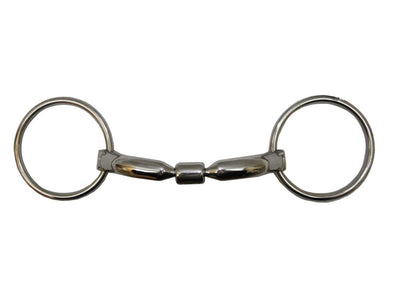
The French Mouth Standard Cannons (0008) — Jump'In's most popular loose ring snaffle, $124.69 AUD.
I started testing with the French Mouth bit standard cannons ($124.69) on my older gelding, a 16hh warmblood with a sensitive mouth who grinds his teeth in stainless steel bits. The German Silver made a difference within the first flatwork session — he champed the bit instead of fighting it. The French mouth design (a double-jointed mouthpiece with a flat link in the middle) frees the palate from pressure, and the 16mm cannons are thick enough to be gentle without being bulky.
The loose ring action is exactly what you'd expect from a simple snaffle. The rings slide, giving the horse a warning before the bit engages. For a horse with an educated mouth, it's ideal. For a green horse who hasn't learned to follow the contact, a fixed cheek like the D-ring triple cannon bit with flats ($220.94) gives you more steering. I used this one on my younger mare at a local Ag show last season, and the D-rings made a visible difference in her corner control — she stopped drifting through her shoulder on the turn.

The D-Ring Triple Cannon Bit with Flats (0012) — 90mm rings, 7mm thick cannons, $220.94 AUD.
The thing I appreciate about Jump'In's German Silver is the weight. It's not flimsy. You can feel the quality in your hand — the cannons have a solid feel, the joints are smooth, and there are no sharp edges. After a year of daily use, the bit has developed a warm copper tinge from oxidation, which the horses seem to accept more than bright metal.
The rider's take: The first Jump'In bit I tried was the Baucher on a client's horse who'd been evading contact for months. Within a week, the horse was reaching for the bit instead of poking her nose out above it. The Baucher's light lever action brought her head down without any fighting — I've been recommending it to anyone with a similar problem. The $148.75 price tag is honestly reasonable for a handmade French bit.
The French Mouth Baucher bit ($148.75) deserves its own mention. The Baucher cheekpiece hangs from a small ring above the mouthpiece, creating a slight lever action that encourages the horse to lower its head. The French mouth keeps the palate free. It's the bit I reach for when a horse is above the bit but not strong enough to need a 3-ring or elevator. For Australian riders competing at EA-affiliated events, the Baucher is competition-legal across show jumping and dressage.
One warning: if you're between sizes, go up. The 16mm standard cannons are Jump'In's middle ground, and the 14mm cannons are genuinely thin — better for a horse with a fleshy tongue who needs more room, but sharper in action. The 20mm thick cannons are very gentle and better for a sensitive mouth or a young horse. If you're not sure, the 16mm standard is the safest starting point.
The Leverage Bits: 3-Ring, Elevator and Gag
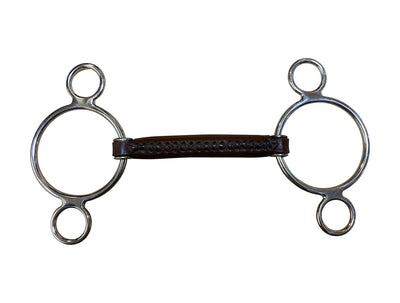
The French Mouth 3 Ring Bit (0047C) — a classic gag with standard 17mm cannons, $158.59 AUD.
For horses that need more than a snaffle, Jump'In's leverage range is where things get interesting. The French Mouth 3 ring bit ($158.59) is the classic — standard 17mm thick cannons in German Silver with a gag action. The 3-ring gives you three rein positions: the main ring for a snaffle action, the middle ring for a mild lever, and the bottom ring for full gag. Most riders I know use the middle ring for show jumping and the bottom ring only for cross-country.
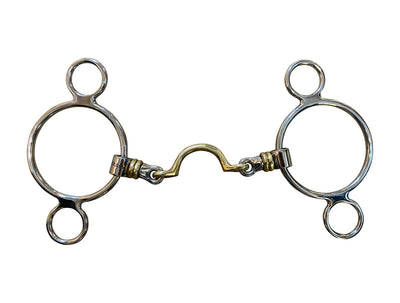
The Double Cannon German 3 ring bit ($172.81) is the upgraded version — double cannons prevent pinching around the friction areas where the cheeks meet the mouthpiece. I tried this on a mare who'd developed a sore spot from a standard 3-ring, and the double cannons eliminated the rubbing.

The Double Cannon German 3 Ring Bit (0048) — prevents pinching, softer lever, $172.81 AUD.
The Elevator bit ($162.97) is the strongest lever in the range. It has a pronounced action on the horse's balance, pulling the head up and in. I wouldn't put a novice rider on a horse in an elevator bit — the lever is real. But for an experienced rider with a horse who leans on the forehand at speed, it's effective. The large bars give great directional control, which is why you see them in eventing cross-country.
If you're considering a leverage bit, pair it with the right reins. Rubber-covered reins give you grip when the lever action kicks in, which matters more than people think.

Rope Nosebands: Why the Twisted Rope Works
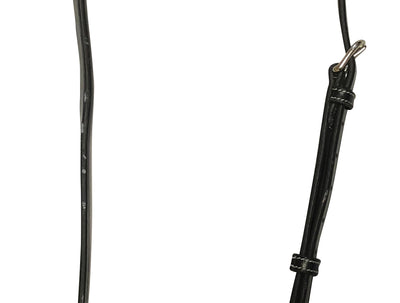
The Rope Flash Noseband combines high-quality leather with a rigid, twisted, oiled rope across the nose, $167.34 AUD.
What does a rope noseband do that a leather one doesn't? The answer is pressure distribution. A standard leather cavesson is broad and flat — it distributes pressure across a wide area of the nose. A rope noseband is narrow and rigid, so the pressure concentrates on a smaller surface area. This means less force is needed to achieve the same effect. Think of it like the difference between the flat of a hand and the edge of a palm.
The Rope Flash Noseband ($167.34) is the one I've used most. The "French" part — the rope section — sits over the top of the nose, while the leather flash strap attaches below to keep the mouth closed. The loops and noseband are made from high-quality leather, and the rope is oiled and twisted for rigidity. On a horse who opens his mouth against the bit, it gives you control without resorting to a stronger mouthpiece.
The Rope Drop Noseband ($167.34) uses the same rope principle but in a drop configuration. The rope sits lower on the nose, closer to the nostrils. I prefer this one for horses with a short head shape where a flash strap sits awkwardly. The drop design also gives you a bit more control over jaw-crossing, though it needs careful fitting — too tight and you restrict breathing.

The Rope Drop Noseband (mwalcoacf2) — rope sits lower on the nose for jaw control, $167.34 AUD.
The Kineton Noseband ($191.41) is the most technical of the three. It acts on both the bit and the bottom of the nasal bridge, like a miniature hackamore. The kineton is designed for horses that pull on the bit — the nose pressure activates when the horse pulls, giving a dual signal. I've used it on one horse who was a chronic puller, and it worked without me having to go to a stronger bit. The reality is, the Kineton is not for every horse — it's a specialist piece for a specific problem.

The Kineton Noseband (mwkacf) — dual action on bit and nasal bridge, $191.41 AUD.
If you're looking at the full bridle picture, pair your noseband choice with the right bridle and bits — the three components work together. Jump'In also makes leverage bits and snaffle bits as separate collections if you want to browse by action type. And don't forget the halters and leads for everyday handling — a well-fitted halter is just as important as the bridle.
Blue Steel vs German Silver: Which Material?

The Blue Steel Eggbut with High Port (0110) — oxidises with time to encourage salivation, $191.41 AUD.
This is the question I get asked most. German Silver is the default — it's relaxing, solid, and the copper content encourages salivation. Blue Steel is a different beast. Made of 54% carbon and 46% manganese, it oxidises with time and develops a warm patina. Horses who object to the cold feel of stainless steel often accept Blue Steel more readily.
The Blue Steel Eggbut bit with high port ($191.41) is the one I've tested most in this material. The eggbutt cheek keeps the bit stable in the mouth (no sliding), and the high port gives tongue relief. The French mouth system frees the roof of the mouth from pressure. It's a very simple, very kind bit — but the Blue Steel needs maintenance. You have to rinse it after every use and let it dry, or the oxidation goes too far and the surface roughens.
The Blue Steel Gag bit blocked ($158.59) is the performance end of the Blue Steel range. The gag action acts on the horse's balance, making it rebalance and transfer weight to the hindquarters. The larger the rings, the stronger the action. I'd only recommend this for experienced riders with educated hands — the combination of gag action and Blue Steel's oxidising surface means the horse gets a lot of signal very quickly.

The Blue Steel Gag Bit Blocked (0172) — 54% carbon, 46% manganese, $158.59 AUD.

Proper bridle fitting is essential — a quality bit only works when the bridle is correctly adjusted.
In practice, most Australian riders I know start with German Silver and move to Blue Steel only if their horse shows a specific preference. The price difference isn't huge — maybe $15-30 AUD between equivalent models — but the maintenance commitment is. German Silver you can wipe and go. Blue Steel you need to rinse, dry, and sometimes oil. If you're a weekend rider who doesn't want the upkeep, stick with German Silver.
One thing I've found after a year of testing: the Jump'In bits hold their value. I bought a French Mouth Baucher for $148.75, used it for 12 months, and could resell it for close to that. The materials don't degrade the way cheap stainless does — no pitting, no rust, no bent cannons. That's the French manufacturing difference.
If you want the full Jump'In range, browse the complete Jump'In collection at iRide EQ, or start with our horse bits page to filter by type. We also stock Jump'In bridle accessories and the full range of horse boots.
Frequently Asked Questions
What does a rope noseband do?
A rope noseband concentrates pressure on a smaller area of the horse's nose compared to a wide leather cavesson. The rigid, twisted rope gives the rider more control with less force, making it useful for horses that open their mouths or lean on the bit. It's not harsher by design — it's more precise.
Are Jump'In bits legal for EA competition in Australia?
Most Jump'In snaffle bits (loose ring, D-ring, Baucher, eggbutt) are legal for EA-affiliated show jumping and dressage. Leverage bits (3-ring, elevator, gag) are legal for show jumping but have restrictions in dressage — check the current EA rules for your discipline before competing. The Kineton noseband is permitted in show jumping but not dressage.
What's the difference between German Silver and Blue Steel Jump'In bits?
German Silver (65% copper, 23% zinc, 12% nickel) is the standard material — relaxing, durable, encourages salivation. Blue Steel (54% carbon, 46% manganese) oxidises over time and develops a warm patina that some horses prefer. Blue Steel needs more maintenance (rinse and dry after each use) but can be worth it for horses with sensitive mouths.
Which Jump'In bit is best for a horse with a sensitive mouth?
The French Mouth Standard Cannons (0008, $124.69) in 16mm German Silver is the gentlest starting point. The French mouth design frees the palate from pressure, and the German Silver alloy is warmer than stainless. If your horse is very sensitive, consider the leather-covered version or the 20mm thick cannons.
How do I know what size Jump'In bit to buy?
Jump'In bits come in 115mm, 125mm, and 135mm sizes. The most common for Australian horses is 125mm. If you're between sizes, go up — a slightly wider bit is safer than one that pinches. You can measure your current bit from ring to ring, or measure your horse's mouth width with a bit measuring tool.
Can I use a rope noseband with any bit?
Rope nosebands work with most bits, but they're most effective paired with a snaffle or a mild leverage bit. If you're already using a strong bit (like a Goyo Aga or a Pelham), adding a rope noseband on top may create too much combined pressure. The Kineton noseband specifically integrates with the bit's action, so it needs to be fitted with the correct bit type.
How do I maintain a Jump'In German Silver bit?
Rinse with warm water after each use to remove saliva and debris. Dry with a soft cloth. The copper in the alloy will naturally oxidise to a warm tone — this is normal and actually helps encourage salivation. Avoid harsh chemical cleaners. For Blue Steel bits, the same routine applies but is more critical — the oxidation process needs to be gradual, not accelerated by leaving the bit wet.
Are Jump'In bits worth the price compared to cheaper alternatives?
Jump'In bits range from $120-221 AUD, which is mid-range for handmade French tack. The materials are genuine (not plated), the construction is solid, and they hold resale value well. After 12 months of daily use, my Jump'In bits show no pitting, bending, or degradation. Whether that's worth it depends on how often you ride — for daily use, yes; for occasional hacking, a cheaper bit may suffice.
Find Your Jump'In Bit
Browse the full Jump'In collection at iRide EQ — 250+ bits, nosebands and bridlework, handmade in France. Delivered to your door Australia-wide.
Shop Horse Bits