Quick answer: A hoof abscess can cause sudden, severe lameness, so a veterinarian or qualified farrier should assess the horse before you start soaking. If soaking is advised, warm water or a poultice may support treatment, and a correctly fitted Tubbease hoof boot can help contain the solution while protecting the hoof. Follow the treating professional's plan rather than treating every abscess with the same soaking time or recipe.
The rider's take: I learned the hard way not to assume every three-legged horse has a simple abscess. One spring morning after a wet week in the Southern Highlands, a gelding in our yard was barely weight-bearing; the vet wanted the hoof checked before anyone reached for a bucket. That small pause mattered. The right hoof-care aid is useful, but it is not a diagnosis.
Hoof abscesses are one of those horse problems that can look dramatic very quickly. A horse may be comfortable at breakfast and desperately lame by afternoon. The pressure of infection trapped inside the hoof capsule is painful, but so are other conditions, including a fracture, joint infection or a serious soft-tissue injury. That is why the first step is a call to your vet or farrier, not an improvised treatment protocol.
This guide explains where a Tubbease boot can fit into a professional treatment plan, how Shoof says to size and fit it, and the mistakes that make hoof soaking less useful. It also links naturally with our horse health essentials, horse boots and grooming supplies so your wider stable-care kit is easy to review.

A sudden, severe lameness deserves professional assessment before home treatment begins.
What is a hoof abscess, and why does it hurt so much?
A hoof abscess is a pocket of infection and pus within the hoof. As pressure builds inside a hard hoof capsule, the horse can become acutely lame. Some horses refuse to put the foot down; others look as though they have a tendon or shoulder problem because the lameness is so pronounced.
The clues can include a strong digital pulse, warmth in the hoof, sensitivity to hoof testers, a bruised area or drainage at the sole or coronary band. None of those signs proves the diagnosis on its own. A horse that will not bear weight, has a fever, shows swelling above the hoof, or is getting worse needs prompt veterinary attention.
Do not mistake a treatment aid for a diagnosis
Warm soaking is often discussed because it may soften the hoof and support drainage in some cases. That does not mean it “draws out” every abscess, and it does not make an unexplained severe lameness safe to manage without advice. The University of Minnesota Extension and Western College of Veterinary Medicine both describe soaking or poulticing as case-dependent supportive care, not a universal cure.
The reality in an Australian stable is that wet yards, stones, dry cracked feet and long transport days can all be part of the story. Ask the professional examining your horse what they suspect, where they want the hoof protected, and whether soaking is appropriate. If the horse is non-weight-bearing or pain is severe, keep the horse quiet and seek help rather than repeatedly forcing the foot into a bucket.
When can soaking be part of an abscess treatment plan?
Once a vet or farrier has assessed the hoof, they may recommend warm water, an Epsom-salt solution, a poultice or another dressing. The choice depends on the stage of the abscess, the condition of the sole, whether it has already drained, and the horse's overall health. A professional may also recommend no soaking at all and instead use a dry dressing or protection.
That flexibility matters. Long periods of wet exposure can soften the hoof unnecessarily, and a horse with an open drainage tract may need a clean, protected environment rather than an endlessly repeated bucket routine. Use the exact frequency and duration provided for your horse. Do not turn an example found online into a fixed instruction.
Situations that need a vet promptly
- Severe or worsening lameness: especially if the horse will not bear weight.
- Systemic signs: fever, dullness, sweating or a horse that is off feed.
- Swelling: swelling tracking up the limb, or a hot painful joint.
- No improvement: the horse is not more comfortable within the timeframe your professional gave you.
- Unclear drainage: persistent pain or discharge without a confirmed diagnosis.
Never cut into the sole or try to open an abscess yourself. That job belongs to a qualified professional with the horse properly restrained and the diagnosis considered. The same goes for riding: a Tubbease boot is not designed to be walked in or used while riding, according to Shoof's instructions.

Clean, calm handling and a simple daily check help you notice changes early.
How does a Tubbease hoof boot work?
Tubbease is an equine hoof-treatment aid made in New Zealand by Shoof International. It consists of an EVA hoof sock and a Velcro strap. Shoof says it can hold a liquid solution, hoof dressing, medication or poultice as part of a treatment plan. The useful bit is containment: the treatment stays around the hoof rather than immediately disappearing into bedding.
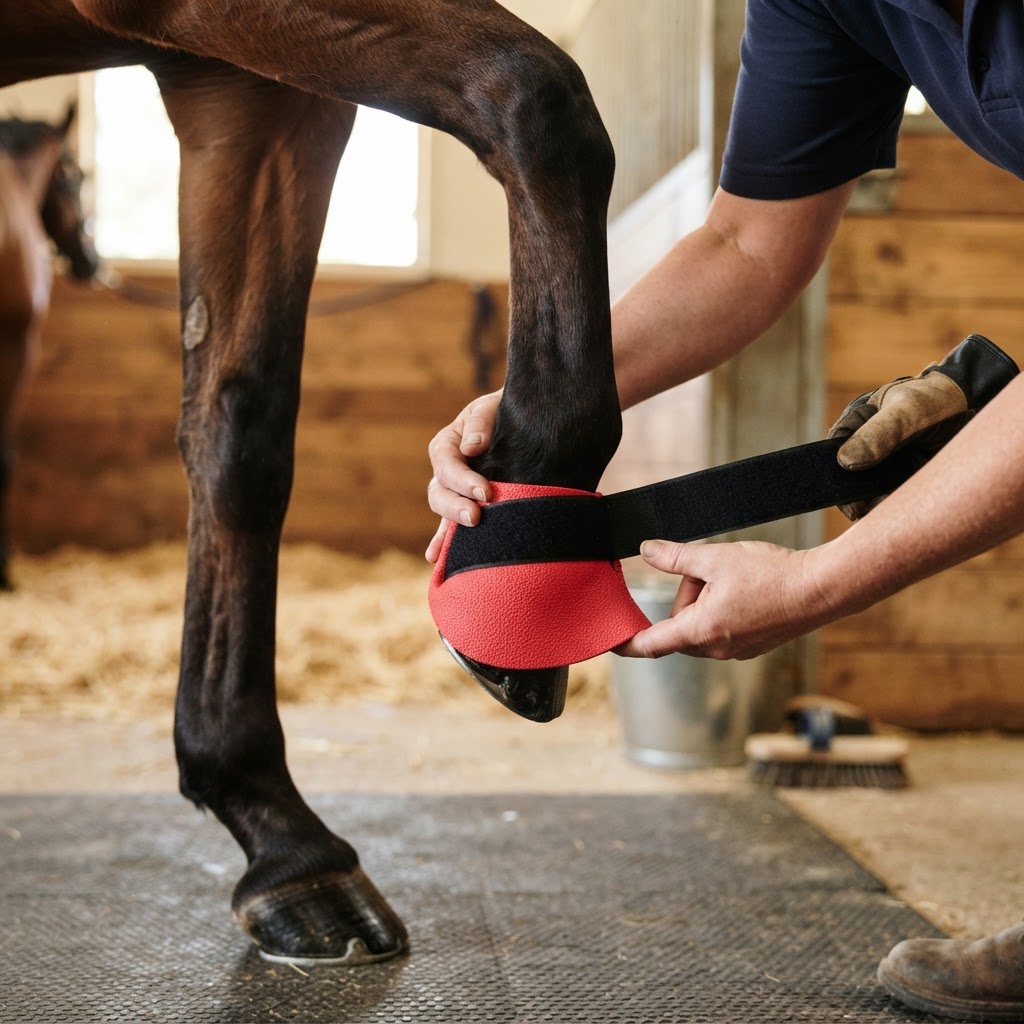
The instructions say to pour the solution into the fitted sock or dunk the fitted hoof into the solution. Do not leave the Tubbease in a bucket. Once fitted, the strap should be snug without restricting circulation; Shoof's guidance says you should be able to pass two fingers behind it.
It is not a turnout boot, travel boot or riding accessory. Shoof says it is not designed to be walked in or used while riding, is not intended for long-term use, and should be checked daily. Their guidance describes use for roughly five to seven days in conjunction with treatment, but your vet or farrier's plan takes priority over that general product guidance.
Choosing the size
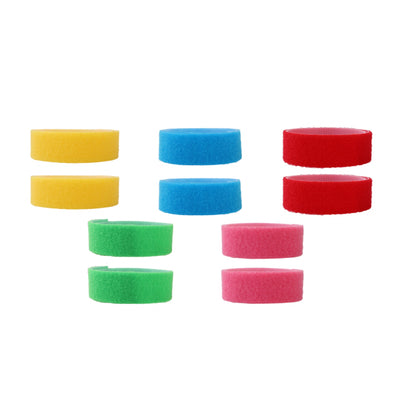
Measure the sole at its widest point and choose the closest matching size. Shoof lists these maximum internal diameters: yellow 175 mm, blue 160 mm, red 145 mm, green 130 mm and pink 110 mm. Measure carefully rather than guessing from the horse's breed or shoe size. A loose boot can move; a tight one can cause pressure.
The EVA can be softened in 50–60°C water for about 30 seconds to make fitting or heat moulding easier. That is hot water, not boiling water, and the horse's hoof should not be exposed to unsafe heat. Follow the manufacturer's instructions and let the material be workable rather than trying to reshape it aggressively.
How to fit and check the boot safely
Have the treatment, clean towels and a safe place ready before lifting the hoof. If the horse is very painful, get help with restraint and ask the vet or farrier to demonstrate the first application. A horse that snatches a sore foot away can injure the handler as well as itself.
- Clean and inspect: remove loose dirt and note any drainage, odour, cracks or new swelling. Do not dig into the sole.
- Prepare the solution or dressing: use only what the treating professional has advised. Do not mix products casually.
- Fit the sock: place the hoof into the EVA boot so the sole is supported and the boot is not folded under the heel.
- Secure the strap: fasten it snugly. Check that two fingers can pass behind it and that it is not rubbing the pastern.
- Recheck daily: remove it as directed, inspect the skin and hoof, and look for changes in comfort, drainage or swelling.
One common mistake is treating “more wet” as “more effective”. It is not. Another is leaving a wet boot on while the horse walks around a yard, which can make the material shift and the hoof soften. Keep the horse in the clean, quiet setup your professional recommends, and replace or clean the treatment aid as directed.
For the wider stable routine, our horse rugs collection can help with clean, dry management during seasonal weather changes, while horse boots and accessories cover everyday protection. Those products are separate from a Tubbease treatment aid; do not substitute a turnout or brushing boot for hoof soaking.
What should you buy, and what should you check first?
At the time of research, the iRide EQ catalogue exposed a Tubbease Replacement Velcro Strap rather than a confirmed hoof-sock listing. The strap was listed at AUD $12.95, with colour stock varying. That can change, so check the live product page before promising a size, price or delivery timeframe. A replacement strap listing does not prove that every boot size is currently available.
If you already have a Tubbease, check the EVA for splits, sharp edges, distortion and retained dirt. The strap should hold firmly without fraying or losing its grip. If the aid no longer fits the hoof correctly, stop and ask the professional treating the horse whether it should be replaced or whether another dressing method is better.
Keep a basic horse first-aid and health kit nearby, but do not let a well-stocked cupboard encourage home diagnosis. A thermometer, clean dressings, gloves and a way to contact your vet are more useful than a shelf full of products you have not been shown how to use. In a spring paddock after heavy rain, daily feet checks are still the cheapest early-warning system you have.
Frequently Asked Questions
Can I soak every lame horse's hoof for an abscess?
No. Sudden lameness has several possible causes. Contact a vet or qualified farrier first, especially if the horse is non-weight-bearing, feverish, swollen or deteriorating.
Does Epsom salt always cure a hoof abscess?
No. Epsom-salt soaking may be recommended as supportive care in some cases, but it is not a guaranteed cure and should not replace diagnosis or treatment advice.
Can I cut the hoof to release the abscess?
No. Do not pare, knife or open the hoof yourself. A qualified professional should decide whether drainage is appropriate and where it can be done safely.
How long should a horse wear a Tubbease boot?
Shoof describes the product as intended for roughly five to seven days in conjunction with treatment and says it should be checked daily. Follow your vet or farrier's instructions for your horse.
Can a horse walk or ride in a Tubbease?
Shoof says Tubbease is not designed to be walked in or used while riding. Keep the horse managed as your treating professional directs.
How do I choose a Tubbease size?
Measure the sole at its widest point and select the closest matching size. Shoof lists yellow 175 mm, blue 160 mm, red 145 mm, green 130 mm and pink 110 mm as maximum internal diameters.
How tight should the Tubbease strap be?
It should be secure but not restrict circulation. Shoof's guidance says two fingers should pass behind the strap. Check for rubbing or swelling during daily inspections.
Is the Tubbease hoof sock currently available at iRide EQ?
The catalogue snapshot used for this article showed a replacement Velcro strap, not a confirmed hoof-sock listing. Check the live collection and product page before buying or quoting availability.
Prepare your horse-care cupboard thoughtfully
Browse iRide EQ's horse health, grooming and horse-care accessories collections, then speak with your vet or farrier about what belongs in your individual treatment plan.
Shop horse health essentials