Quick answer: Dressage is the foundation of all good riding — it's about training your horse to be balanced, supple and responsive to subtle aids. As a beginner in Australia, start with Preliminary level under Equestrian Australia's test system, find a qualified EA coach, and focus on establishing a consistent contact and rhythm before worrying about collection. Any breed can do dressage.
If you've ever watched a dressage test and thought it looked like horse ballet, you're not far off. But dressage isn't just for Olympians in tailcoats — it's the foundational training system behind virtually every riding discipline. Whether you dream of competing at the Sydney International Equestrian Centre or simply want a safer, more responsive hack on the trail, dressage gives you the tools to communicate clearly with your horse. The right gear matters too: a well-fitted dressage bridle and a quality dressage saddle pad are your starting point for correct contact and comfort.
The word "dressage" comes from the French verb dresser, meaning to train. It's a progressive training scale that develops a horse's strength, balance, and willingness — one building block at a time. Australian riders have a structured pathway through Equestrian Australia (EA), with competitions from Preliminary up to Grand Prix. In this guide, we'll cover the levels, the gear, the first lesson, common pitfalls, and preparing for your first test.

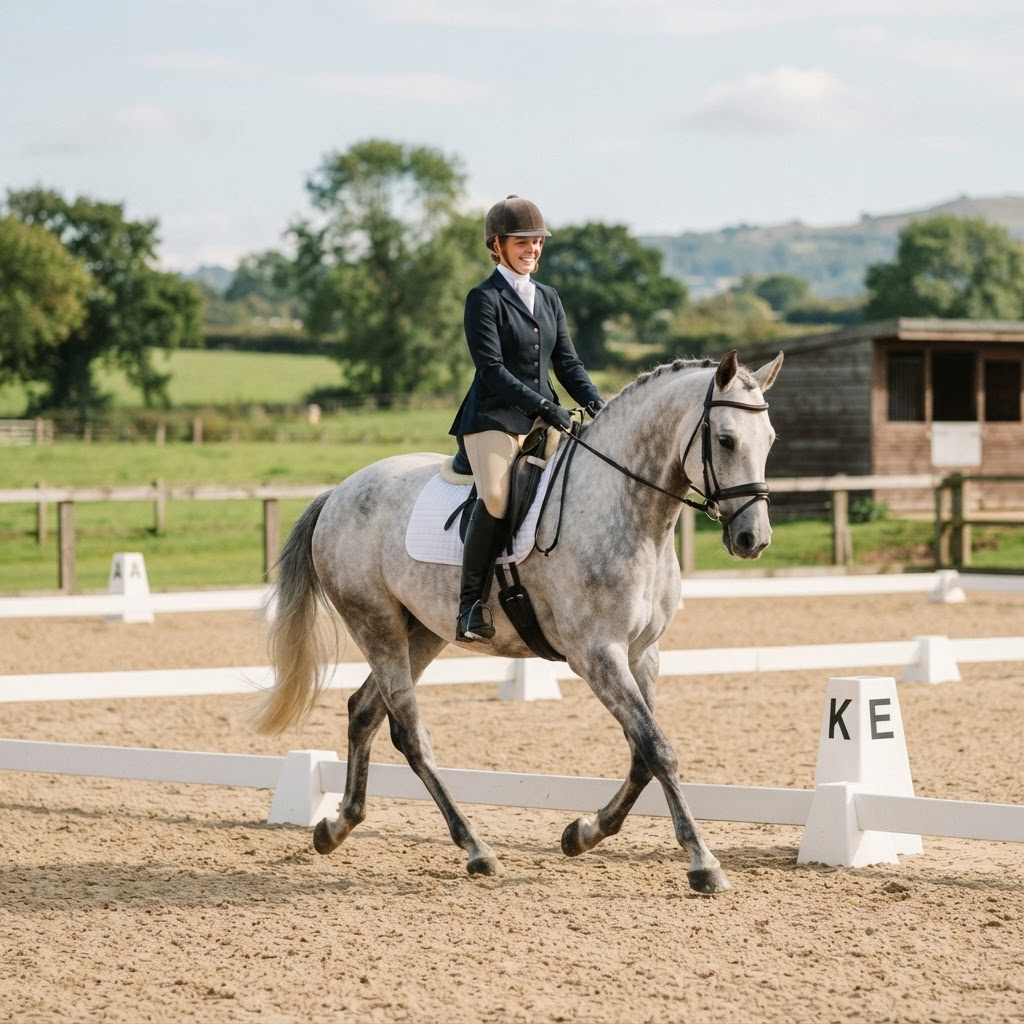
Dressage is a discipline built on patience and precision — even at Preliminary level, the basics must be rock solid.
What Is Dressage — A Simple Explanation
Dressage is the art of training a horse through standardised movements to move in a balanced, rhythmic, and obedient way under the rider's subtle cues (aids). Every discipline — show jumping, eventing, polo, even trail riding — benefits from dressage fundamentals because a well-schooled horse is safer, more athletic, and more enjoyable to ride.
The Training Scale: The Six Pillars
The German Training Scale underpins all dressage work. The six pillars, in order, are:
- Rhythm: A regular, consistent beat in each gait — the foundation of everything else.
- Suppleness: The horse is relaxed and loose, swinging freely over the back.
- Contact: The horse accepts the bit with a soft, elastic connection to the rider's hand.
- Impulsion: Controlled, forward energy — power with balance.
- Straightness: The horse tracks evenly, developing equal strength on both sides.
- Collection: The horse carries more weight on its hindquarters, producing elevated movement.
Beginners spend most of their time on the first three — rhythm, suppleness, and contact. That's not a limitation; it's the smartest investment you can make. Without these foundations, everything above them collapses.
Why Any Horse Can Do Dressage
The most common question beginners ask is "Is my horse suitable?" The answer is yes. While Warmbloods dominate the upper levels, Preliminary and Novice tests are routinely won by Thoroughbreds, Stock Horses, Arabians, and ponies. Dressage rewards harmony and correctness, not breed. If your horse is sound, willing, and can walk, trot, and canter, you can start dressage today.
Australia's EA Dressage Levels Explained (Preliminary through to Grand Prix)
Equestrian Australia administers the official dressage competition pathway. Each level introduces new movements and expects greater precision, balance, and collection. Here's a breakdown from the ground up.
Preliminary
The entry point for most riders. Tests are in a 20m x 40m arena requiring walk, trot (rising and sitting), and canter on both reins. Movements include 20-metre circles, basic changes of rein, and diagonals. Judges want a steady, willing horse that maintains rhythm and accepts the contact. No collection or lateral work needed — just correctness and calm.
Novice
Expectations step up at Novice. You'll see 15-metre circles, lengthened strides in trot and canter, and the introduction of leg-yield — your first lateral movement. The horse should show a clearer outline and more consistent contact. Transitions are scored more critically.
Elementary, Medium, and Advanced
These introduce shoulder-in, travers, half-pass, and simple changes (canter-walk-canter). Medium adds medium and extended paces, while Advanced asks for collected work, flying changes, and smaller circles. The horse is visibly more engaged behind, carrying more weight on its hindquarters.
Prix St Georges to Grand Prix
The FEI levels are where dressage becomes spectacular. Flying changes become tempi changes (every four strides down to one), half-passes are performed at all three gaits, and Grand Prix includes piaffe (trot on the spot) and passage (an elevated, suspended trot). These represent years of systematic training — wonderful to aspire to and even more wonderful to watch.
| EA Level | Movements Required | Typical Horse / Rider Combination |
|---|---|---|
| Preliminary | Walk, trot, canter, 20m circles, basic transitions | Any sound horse; beginner rider; first season |
| Novice | 15m circles, lengthened strides, leg-yield | Any breed; rider with 1-2 years consistent training |
| Elementary | Shoulder-in, travers, simple changes, 10m circles | Warmblood or athletic breed; confident amateur |
| Medium | Half-pass, medium & extended paces, walk pirouettes | Schoolmaster; experienced amateur or pro |
| Advanced | Collected paces, single flying changes, canter half-pass | Trained dressage horse; professional rider |
| Prix St Georges & above | Tempi changes, pirouettes, piaffe, passage | Elite Warmblood; professional rider |
Essential Equipment for Beginner Dressage Riders
You don't need an enormous wardrobe of gear to start dressage. A few well-chosen items will set you up correctly from day one.

The right equipment supports your training — a correctly fitted dressage bridle helps establish soft, consistent contact.
The Gear Checklist
- Dressage bridle: A snaffle bridle with a plain cavesson noseband is standard for Preliminary and Novice. Look for quality leather with soft, padded contact points for clear communication.
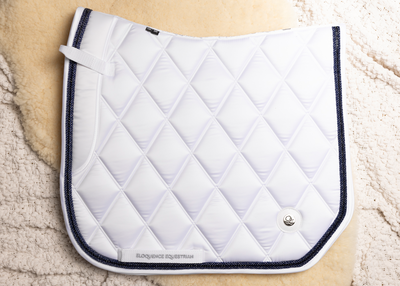
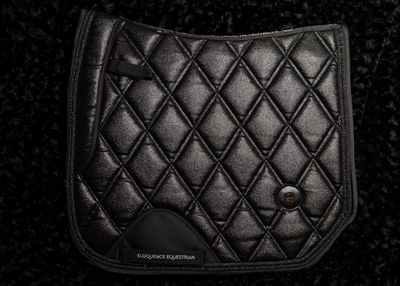
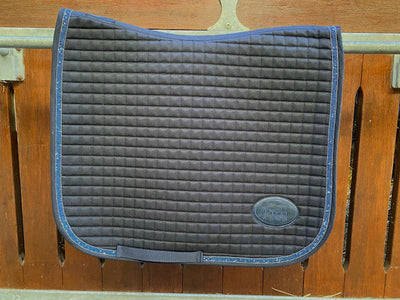
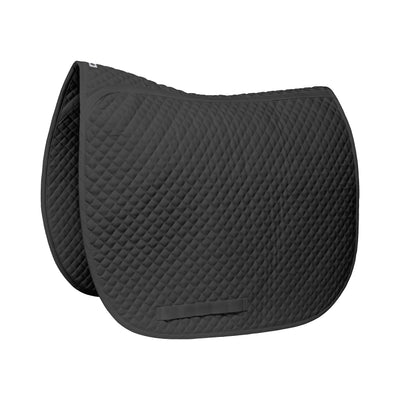
- Dressage saddle pad: White is traditional for competition, but any colour works for training. The pad should be moisture-wicking and contoured to fit under your saddle.
- Snaffle bit: A simple jointed or double-jointed (French link) snaffle is permitted at lower levels. Have your coach check the fit.
- Well-fitted saddle: A dressage saddle with a straighter cut flap encourages a longer leg position, but any well-fitting saddle is fine for starting out. Fit is non-negotiable.
- Breeches: Grip or full-seat breeches give stability. White is required for competition; dark colours are practical for training.
- Gloves and helmet: Thin gloves improve feel on the reins. An ASA/NZS 3838 certified helmet is mandatory at all EA events.
- Boots or bandages: Brushing boots protect your horse's legs during arena work.
Your First Dressage Lesson — What to Expect
Walking into your first dressage lesson can feel intimidating, but a good EA-qualified coach will put you at ease quickly. Here's what a typical first session looks like.
Before You Mount
Your coach will spend 10-15 minutes assessing tack fit and discussing your riding history. Correct saddle and bridle fit directly affect how your horse goes. Expect questions about your goals and any issues. Be honest — your coach can only help if they know where you're starting from.
In the Saddle
Most first lessons begin at walk on a large circle. Your coach will check your position — ear-shoulder-hip-heel alignment, pelvis angle, and evenness of reins. You'll then move into rising trot, focusing on steady rhythm and straightness. Expect lots of transitions: walk-trot-walk and changes of rein. Transitions are the most powerful tool for improving your horse's balance.
Don't be surprised if you spend most of the lesson at walk and trot. Cantering comes once your position and contact are secure. Dressage is about quality, not speed — 20 minutes of focused work three times a week beats an hour of aimless schooling.
Common Beginner Mistakes and How to Fix Them
Every dressage rider, from Preliminary to Grand Prix, has made these mistakes. Recognising them early saves months of frustration.
1. Riding With Too Much Hand, Not Enough Leg
The single most common beginner error. Riders try to control speed through the reins, creating a horse that leans on the bit, drops its back, and goes above the bit. The fix: think of your legs as the engine and your hands as the steering wheel. Ride your horse forward from your leg into a soft, receiving hand. If your horse gets quick, use half-halts — not pulling — to rebalance.
2. Inconsistent Contact
Dropping the contact, sawing on the reins, or holding too tightly all disrupt the horse's confidence. Aim for an elastic, following contact — soft elbows, steady hands that move with the horse's natural head nod. A correctly fitted bridle and quality reins help enormously.
3. Chasing Fancy Movements Too Early
It's tempting to try leg-yield in your first month. Resist. If your horse doesn't maintain rhythm, suppleness, and contact in basic walk-trot-canter work, lateral movements will only highlight the gaps. Spend your first six months nailing transitions, circles, and straightness.
4. Tension in the Rider's Body
Gripping with the knees, bracing in the lower back, and holding your breath transmit directly to your horse. A tense rider creates a tense horse. Focus on breathing deeply, letting your legs hang long, and keeping your seat soft. Yoga off the horse can improve your in-saddle suppleness.
Reading Your First EA Dressage Test
When you're ready to compete — most EA coaches recommend entering your first Preliminary test after 3-6 months of consistent lessons — you'll need to know how to read and memorise a dressage test.
Understanding the Test Sheet
An EA dressage test is a sequence of movements in a standardised arena (20m x 40m for Preliminary and Novice). Each movement is scored 0-10, with collective marks for paces, impulsion, submission, and rider's position. The total is a percentage — high 60s to low 70s are competitive at grassroots level.
Memorising the Test
- Break it into sections: Group movements into "left rein" and "right rein" blocks.
- Walk it on foot: Walking the test in the arena builds spatial memory faster than anything.
- Use a caller if allowed: Many grassroots events permit a reader — this takes enormous pressure off your first competition.
- Practice transitions: Know exactly where each transition happens relative to the arena letters.
The Arena Letters
The arena is marked with letters: A (entry), K, F, E, H, M, B, and P along the sides, with D, X, G on the centre line. Movements are described in relation to these letters. Learning the sequence is your first homework assignment.
Pro tip: Before entering your first EA-affiliated competition, make sure both you and your horse are registered with Equestrian Australia and your coach is EA-accredited. Many state branches offer a "Come and Try" or grassroots day that doesn't require full membership — a brilliant low-pressure way to experience your first test without the commitment of a full competition entry.
Frequently Asked Questions
Do I need a Warmblood to start dressage in Australia?
No. Any sound, trainable horse can compete at Preliminary and Novice. Thoroughbreds, Stock Horses, Arabians, and ponies all compete successfully at grassroots level. Breed matters more at Medium and above, but any well-schooled horse can be competitive up to Elementary.
How long does it take to be ready for my first dressage test?
Most riders with one lesson per week plus 2-3 practice rides are ready for a Preliminary test within 3-6 months. Your coach will tell you when you're prepared — don't rush it, as entering too early can create competition anxiety.
What should I wear to my first dressage competition?
At EA-affiliated events, you need a certified helmet, collared shirt (white or light), breeches, boots, and gloves. A hacking jacket is optional at Preliminary. Check the current EA dress rules as requirements can vary by state.
Can I do dressage if I don't want to compete?
certainly. Dressage training improves your horse's balance, responsiveness, and soundness whether or not you ever compete. Working through the EA levels with a coach is a structured way to progress, but there's no obligation to enter competitions.
How often should I train dressage with my horse?
Three to four focused sessions of 30-45 minutes per week is ideal. Shorter, frequent sessions beat one long weekly ride. Always include a warm-up and cool-down, and vary the work between arena schooling, trail rides, and ground work.
What's the difference between a snaffle and a double bridle?
A snaffle bridle has a single bit (no leverage) and is used up to Medium. A double bridle has two bits — a bridoon and a curb (Weymouth) — introducing leverage for finer communication. Double bridles are only permitted from Advanced upward and require an educated hand; beginners should never use one.
Shop Dressage Gear at iRide EQ
Browse our full range of dressage bridles, saddle pads and competition breeches — everything a beginner dressage rider needs. Fast Australia-wide delivery on all orders.