Every Australian summer I watch the same scene play out at the float. A horse comes off after a 38 degree day, legs filled and hot, and the rider starts hunting for ice. Someone has a hose that reaches. Someone else has a bag of frozen peas. It sort of works, but it is slow and it is messy, and by the time you have organised it the legs have been hot for half an hour.
Cold therapy is the most useful recovery tool we have for legs and feet, and it is the one most riders improvise. So this is the list I would actually buy, roughly in the order I would buy it. Ten products, all stocked in our equine therapy essentials range, all priced live in AUD, and all of them things I have used or watched used on real horses rather than in a catalogue photo.
One distinction worth getting straight before you spend a cent. Ice boots cool. Compression boots cool and support. Standing wraps do neither, they manage swelling overnight. If you are buying one thing for a horse in full work, buy the boot that will get used every week, not the one that looks best on the shelf. I have made that mistake in both directions and the expensive one sat in the tack bag for a season.
1. EASYICE Ice Therapy Bag
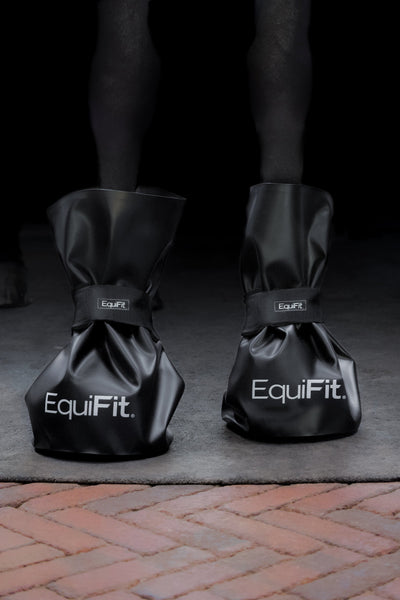
If your problem is feet rather than tendons, this is the cheapest useful thing on the list and the one I reach for most. EASYICE is a pair of urethane-coated bags with reinforced flat-welded seams and a long non-slip strap, designed to keep a hoof submerged in ice and water while the horse stands. That sounds trivial until you have tried to do the same job with a bucket. A bucket gets knocked, the horse stands in it, the water ends up on the concrete and you end up holding it like a fool at 10pm.
I use it for a hot foot after a hard day on baked ground, for a laminitis watch, and for a hoof that is brewing an abscess and wants cold. The bag sits over the hoof and up the pastern, so you get cold water around the sole and the coronet where it matters. Sold in pairs, one size, and it folds flat in the float.
The gotcha: ice and water need topping up, and the horse needs to be tied or held. Do not fill it and walk away from a horse that paws.
 Equifit
EASYICE
$105.57 AUD
View product
2. Majyk Equipe Cool Gel Ice Boots, Gold
This is the boot I would hand a rider who wants one pair of Majyk Equipe ice boots that cover the whole lower leg and gets used after every jump school. The gel pack is extra long at 21 inches, with an 11 inch open width, so it runs from below the knee down over the fetlock instead of stopping halfway. The outer layer is a reflective material the maker says deflects the sun, which matters when you are icing on the float ramp at 4pm in January rather than in an air-conditioned wash bay.
It is neoprene free, which I care about more than I used to. Neoprene holds water, water holds heat, and a boot that stays damp in a float in February grows things. The easy-wipe outer stops the gel soaking through, and the pair comes in a compact travel bag so it lives in the truck without turning the tack room floor into a puddle.
The gotcha: the sizing is genuinely big. Majyk lists it for 15.3 to 18 hands. On a compact 15hh mare it will wrap past the fetlock and bunch, so measure before you buy. This is a warmblood and thoroughbred boot.
 Toptac International Ltd
Majyk Equipe Cool Gel Ice Boots Gold
$329.95 AUD
View product
3. Majyk Equipe Cool Compression Gel Ice Boots, Silver
The Silver version adds the one thing the Gold boot cannot do, which is compression. There is a hand pump with a release valve tucked into a mesh pocket, and the maker's instruction is to pump 18 to 20 times, then check the pressure by sliding a finger between the gel liner and the leg before you release any excess. Cold plus even pressure is the combination that actually shifts heat out of a tendon, and it is what the professional recovery setups do with machines and hoses.
The liner freezes in three to four hours, either the whole boot in a freezer or just the liners in an esky with ice bricks, which is how I would run it at a show. It extends above the knee and below the fetlock. Non-neoprene, same as the Gold.
The gotcha: read the pressure instruction. A boot pumped up hard because it feels "secure" is a boot pressing on a tendon, and that is the opposite of what you want. Also release the air before freezing, as the maker instructs, or the shell takes a set.
 Toptac International Ltd
Majyk Equipe Cool Compression Gel Ice Boots Silver
$399.95 AUD
View product
The rider's take: I learned this lesson on a 36 degree day at a local show, with a mare who had just jumped a 1.10m track and came back with tendons that felt like they were full of hot water. All I had in the float was a hose that did not reach the wash bay and a hand I kept putting on her legs on the drive home. She was fine, but I have not travelled without ice boots since. The first thing I do when I park now is find the tap and work out whether there is a freezer within walking distance. If there is not, the gel liners go in the esky with the drinks, not in the tack bag.
4. Equifit ICEAIR Cold Therapy Boot
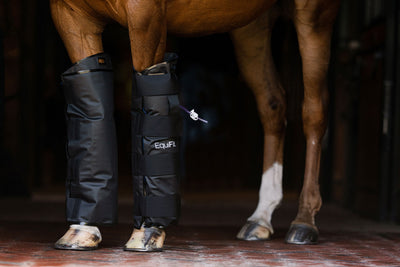
Equifit built this one differently from every other boot here: it does not use gel at all. You fill it with crushed ice and water, then use the hand pump to add air compression, with hook and loop closures holding it from knee to ankle. Equifit describes it as the only ice boot on the market that also offers air compression, and on a hot day crushed ice is a colder medium than a gel pack that has been sitting in an esky since 6am.
It suits a yard with an ice machine or a servo bag of crushed ice in the esky. The coverage is knee to ankle, which is the zone that matters after jumping, and the compression is adjustable rather than fixed.
The gotcha: it needs actual crushed ice. Cubes do not conform and they leave cold spots. If you are the sort of person who turns up with a bag of party ice, buy a gel boot instead.
 Equifit
ICEAIR COLD THERAPY BOOT
$299.00 AUD
View product
5. Equifit GelCompression Tendon Boot
If you want one boot that does cold and compression without ice, this is the pick. The GelPaks adhere to an outer shell that provides air compression through a hand pump, and the gel holds intense cold while staying pliable straight out of the freezer. That pliability is the whole point. A rock hard ice pack on a tendon is a pressure sore waiting to happen, and it also does not conform, so half the leg gets cold and half gets nothing.
Equifit built this line for the rider who wants machine-level therapy without the machine, the cables and the bucket. The Tendon Boot covers the back of the cannon and the fetlock, which is where a jumper's heat sits.
The gotcha: gel packs need freezer time between uses, so two sets of packs turn one boot into a usable rotation. Buy the spare packs when you buy the boot, not after the first show where you are waiting two hours for a refreeze.
 Equifit
GEL COMPRESSION TENDON BOOT
$384.03 AUD
View product
6. Equifit GelCompression Hock Boot
Hocks are the joint everyone forgets until the horse is stiff behind and the vet is talking about injections. This is the same GelCompression construction as the tendon boot, shaped for the hock, with the same GelPak and hand pump system. If you event or jump on hard ground, the hocks are taking the landing load every single time.
In practice I would not buy this before the tendon boot. I would buy it as the second piece once the horse is in serious work, or when a vet has flagged a hock that runs hot after work. It also earns its keep on a horse that has had a joint medicated, during the quiet weeks afterwards.
The gotcha: hock boots are fiddly to fit on a horse that fidgets. Put it on with the horse tied and standing square, not while it is picking up a hind leg to object.
 Equifit
GEL COMPRESSION HOCK BOOT
$384.03 AUD
View product
7. Equifit Hot/Cold Therapy TendonPak with Elastic Wrap
This is the piece that travels best. It is a pack, not a boot, held on with elastic bandages, and it works hot or cold. Equifit lists it for reducing inflammation, controlling swelling and lowering injury risk, and the reason I rate it is that it packs flat into a corner of the float and weighs nothing. When you are away for three days and the legs fill on day two, this is the thing that does not need a freezer the size of a bar fridge.
Hot therapy has a place too. A cold morning before a dressage test, a horse with a tight back, an old horse that needs the stiffness worked out before you get on. Same pack, different water temperature.
The gotcha: an elastic bandage over a pack is exactly where uneven tension creeps in. Two or three wraps of even pressure, then check you can slide a finger under the bandage. If you cannot, it is too tight.
 Equifit
Hot/Cold Therapy TendonPak with Elastic Wrap
$405.64 AUD
View product
8. Equifit Hot/Cold Therapy BackPack
Backs are the other area that gets ignored in a recovery conversation, and a sore back is far more common in a jumper than most riders admit. The BackPack is a set of four GelPaks, two small at 6 by 5 inches, one medium at 10 by 6.5 inches and one large at 16.5 by 11 inches, held on by an elasticised surcingle. It works hot or cold, holds temperature out of the freezer, and needs no cables or machine.
I have used this after a long trailer trip, which is when I see the most back soreness in horses that travel badly, and before work on a cold morning when the horse is hollow and tight through the loin. It fits from pony to horse on the surcingle, which makes it the one piece here you could genuinely share between two horses of different sizes.
The gotcha: cold on a back for too long makes a horse brace, and a braced back is a sore back. Short sessions, and never on a wet back.
 Equifit
Hot/Cold Therapy BackPack
$344.00 AUD
View product
9. Equifit AgSilver Standing Wraps
Not cold therapy, and that is why it belongs here. Filled legs overnight are a management problem, not an icing problem, and this is the wrap that handles it. Three layers do the work: a breathable T-Foam layer that moulds to the leg, a silver layer that Equifit describes as antibacterial and thermally conductive, and a lining that moves moisture away from the skin. Equifit lists them for sensitive horses prone to swelling, edema and wind puffs, and notes that no liniments or poultice are necessary.
That last point is the one I would underline. Most of the poultice and liniment routines riders build around filled legs are doing the job the wrap should be doing, and some of them are actively irritating the skin under a bandage. The wraps machine wash and dry, which matters because a standing wrap that cannot be washed is a standing wrap that will scald a leg by February.
The gotcha: they come in 12, 14, 16 and 18 inch lengths. A 12 inch wrap on a big warmblood will not cover knee to fetlock properly, so measure the leg rather than guessing.
 Equifit
AGSILVER STANDING WRAPS
$264.69 AUD
View product
10. Equifit HoofSavers
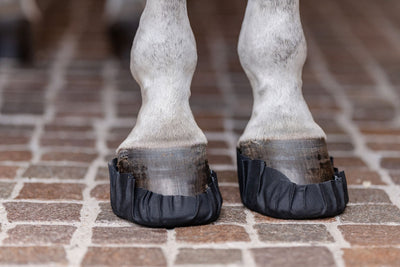
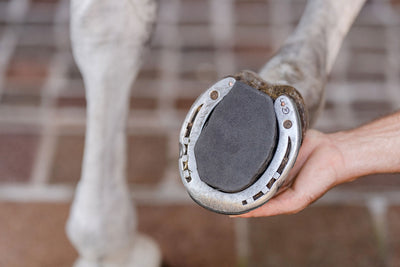
The cheapest thing on the list and the one I would buy before half the boots, because it solves a problem that comes up constantly in an Australian summer: a horse sore on its feet. HoofSavers are custom fit EVA pads that give full sole support and cushioning, and Equifit lists them for sore footed, stone bruised and laminitic horses as an alternative to hoof packing. They can be used daily for relief, or as a preventive measure, and they are safe to use with medication.
If you have ever had a horse come in pottery on hard ground in February, or a pony that has been on rich spring grass and is standing on its toes, this is the practical first step while you wait for the farrier or the vet. It is not a treatment for laminitis. It is what you put under a sore foot while you organise one.
The gotcha: they are a support pad, not a shoe. They work best with a clean, dry hoof and a farrier who knows you are using them.
 Equifit
HOOFSAVERS
$52.02 AUD
View product
Ice, Heat and Recovery Essentials at a Glance
| Product | Best for | Cold source | Price AUD |
|---|---|---|---|
| EASYICE Ice Therapy Bag | Hooves, abscess, laminitis watch | Ice and water | $105.57 per pair |
| Majyk Equipe Cool Gel Ice Boots, Gold | Full lower leg, big horses 15.3 to 18hh | Freezer gel | $329.95 per pair |
| Majyk Equipe Cool Compression, Silver | Cold plus compression after hard work | Freezer or esky gel | $399.95 per pair |
| Equifit ICEAIR Cold Therapy Boot | Knee to ankle, crushed ice available | Crushed ice and water | $299.00 each |
| Equifit GelCompression Tendon Boot | Tendons and fetlock, no ice needed | Freezer GelPaks | $384.03 each |
| Equifit GelCompression Hock Boot | Hocks in hard work | Freezer GelPaks | $384.03 each |
| Equifit Hot/Cold TendonPak | Travel kit, hot or cold | Freezer or hot water | $405.64 |
| Equifit Hot/Cold BackPack | Back soreness, travel stiffness | Freezer or hot water | $344.00 |
| Equifit AgSilver Standing Wraps | Filled legs, wind puffs, overnight | None | $264.69 per pair |
| Equifit HoofSavers | Sore soles, stone bruise, laminitis support | None | $52.02 per pair |
How to Use Horse Ice Boots Without Doing Damage
The most common mistake I see is duration. A boot left on for an hour is not better than a boot left on for twenty minutes. The standard advice from equine vets is 15 to 20 minutes per session, then a break of at least an hour before repeating, because the aim is to pull heat out of the tissue, not to freeze it. If you are icing a horse that has just worked hard on a hot day, one session immediately after work and a second later in the evening is a sensible pattern.
Three more things that matter. Check the skin under the boot each time, because a cold pack held against a thin-skinned horse with no barrier can cause a cold burn. Never leave a frozen boot on an unattended horse, particularly one that is tied or in a stable it can lean on. And dry the leg afterwards, since a leg left damp under a wrap is how you get scald.
Cold hosing versus boots is worth understanding. Hosing is continuous cold water, it is free, and it is the best option for a hoof, a wound or a leg that needs long, gentle cooling. Boots are colder, hands-free and portable, which is why they win at shows and after jump schools. Most serious yards end up with both, plus a hose that actually reaches the wash bay.
Horse Ice Boots for Laminitis: What Actually Helps
Laminitis is a veterinary emergency and no boot fixes it. What cold therapy does is slow the inflammatory process in the foot while you get help, which is why vets use ice water immersion for the hoof in the acute stage. The practical version at home is the EASYICE bag with ice and water, or a deep bucket if the horse will stand in it, with the horse on soft footing and the vet on the phone. HoofSavers under the sole give support and cushioning while you wait.
Do not let a laminitis search end at a boot purchase. The questions that matter are the ones your vet asks: is there a digital pulse, is the horse rocking back, has it been on rich grass, has it had a recent illness or a steroid injection. Cold therapy is a holding pattern, not a plan, and the horses that do best are the ones where the owner called early.
 Equifit
EQUIFIT PROPILLOW WRAP
$114.75 AUD
View Product Equifit
EQUIFIT STANDING BANDAGE
$120.87 AUD
View Product Equifit
T-FOAM BANDAGE LINERS, FRONT
$151.47 AUD
View Product Equifit
ESSENTIAL POLO WRAPS
from $70.38 AUD
View ProductThe Wrap and Bandage Layer
The boots do the cold. The wraps do the hours afterwards, and this is where most recovery setups fall down. A gel boot comes off after twenty minutes and then the leg either swells or it does not, and what you put on it for the next twelve hours decides which. My order is a ProPillow or a T-Foam liner against the leg, then a minimal stretch standing bandage over the top, which is the combination that keeps pressure even from knee to fetlock without creeping tighter as the horse shifts weight.
The ProPillow Wrap uses 280 grams of densified polyfill, which is the detail that matters, because cheap no-bow wraps flatten into a hard fold within a month and quietly wreck the pressure distribution you were relying on. The Standing Bandage is deliberately minimal stretch, 4.75 inches wide and 157 inches long, in black, navy, green or grey. The T-Foam Bandage Liners go underneath for front leg support. If you want a lighter everyday wrap for the paddock or the float, the Essential Polo Wraps are the value option at 5 inches by 108 inches.
All of it sits in our polo wraps and bandages range. If you are bandaging for the first time, read our field guide to horse bandages before you put one on a leg overnight, because tension is the whole skill and it is not intuitive.
Frequently Asked Questions
Are ice boots good for horses?
For a horse in regular work, yes. Cold therapy after jumping, fast work or a long float trip helps pull heat out of the tendons and reduce the swelling that follows hard exercise. They are less useful for a paddock horse in light work, where a cold hose and a bag of ice for a hoof will cover most situations.
What are horse ice boots for?
Cooling the lower leg after work, managing heat and swelling in the tendons and fetlock, and holding cold water around the hoof in cases like laminitis or a brewing abscess. They are a recovery tool, not a treatment for an injury, and any horse with heat, swelling or lameness that does not settle needs a vet rather than a boot.
How long should you leave ice boots on a horse?
Around 15 to 20 minutes per session, then at least an hour off before repeating. Longer is not better. Check the skin underneath each time and never leave a frozen boot on an unattended horse, because a cold pack held against thin skin can burn.
Do I need a set of 4 horse ice boots?
Two is enough for most riders, and most boots here are sold in pairs. A set of four makes sense if you jump or event seriously, since the hinds take the landing load and are often the legs that fill. If you only have one pair, use them on the legs that are hottest after work.
How do horse ice boots work?
Gel boots hold a frozen gel pack against the leg, which pulls heat out of the tissue while the shell holds it in place. Compression versions add air pressure from a hand pump, which helps the cooling reach deeper and supports the tendon. Ice and water versions, like the EASYICE bag or the ICEAIR boot, use crushed ice and water instead of gel.
Can you use horse ice boots for laminitis?
Cold therapy is part of the first response, because vets use ice water immersion to slow inflammation in the foot in the acute stage. A hoof bag with ice and water, soft footing and a call to the vet is the right sequence. Laminitis is an emergency and a boot is not a substitute for treatment.
Is cold hosing or an ice boot better?
Hosing is better for a hoof, a wound or a leg that needs long gentle cooling, and it costs nothing but time. Boots are colder, hands free and portable, which is why they suit shows, jump schools and float trips. Most serious yards use both.
Can you ice a horse's legs too much?
Yes. Prolonged or repeated cold without a break can damage skin and is uncomfortable, and icing a leg that is already cold does nothing useful. Stick to 15 to 20 minutes, leave a gap, and if the leg stays hot or filled after a couple of sessions, get it looked at.
Get the ice on before the legs fill
Everything here ships from Australia in AUD, with local delivery. Start with the equine therapy essentials range for boots, packs and hoof bags, add wraps and bandages for the hours afterwards, and keep horse health and first aid stocked for the days when something actually goes wrong.
Shop Therapy Essentials