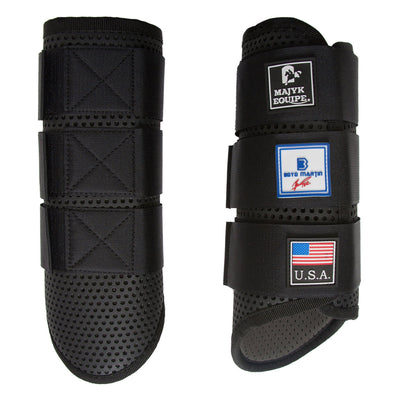
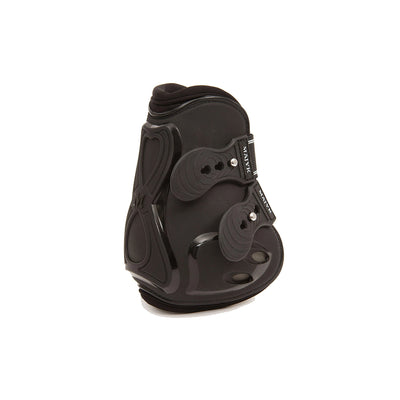
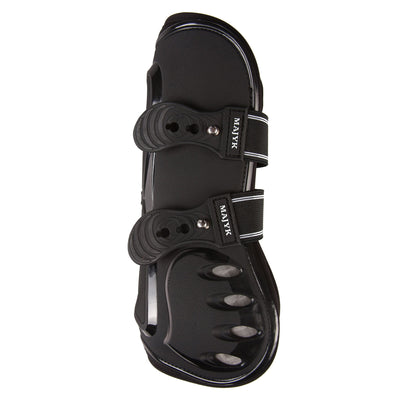
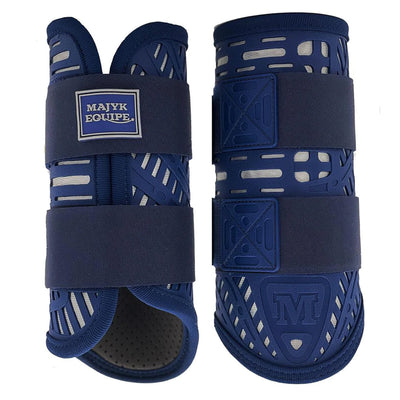
Quick answer: Horse jumping boots protect your horse's legs during landing and prevent tendon injuries. Tendon boots guard the superficial flexor tendon (most common choice), while open front boots protect the cannon bone. Bell boots prevent overreaching injuries on the hind legs. Many jumping riders use a combination: front tendon boots + hind bell boots for complete protection.
The rider's take: I learned the hard way that skipping boots on a young horse was a false economy. Lost count of how many times I've seen horses come out of a jumping session with a bell boot-sized mark on the inner hind leg—they'd have overstretched that tendon if the boot hadn't been there. Now I won't jump anything over a small cross without front tendon boots and hind bells. The vet bills you avoid pay for themselves.
Why Jumping Boots Matter: The Science of Impact Protection
When a horse lands over a jump, enormous forces run through the legs. The front legs absorb most of the impact—up to 2.5 times the horse's body weight on landing. The hind legs work to push forward and complete the arc. Both are vulnerable to injury, especially the superficial flexor tendon (the main target of tendon boots) and the inner hind leg (where overreach injuries happen).
Tendon boots work by spreading impact over a larger area of the leg, reducing stress on that critical tendon running down the back of the cannon bone. Quality boots also have a consistent thickness so you're not dealing with pressure points that can cause bruising underneath.

The Five Boot Types: What Each One Does
1. Tendon Boots (Front Legs)
The most common choice for jumping. They protect the superficial flexor tendon and run from just below the knee down to the fetlock. Equifit's D-TEQ PRO2 Boots are a benchmark—they've been refined over years to provide both support and breathability without restricting movement.
2. Open Front Boots
These protect the cannon bone and sides of the leg but leave the back (where the tendon is) exposed. They're less restrictive than full tendon boots, which some riders prefer for schooling. However, they don't protect the tendon itself—the trade-off is less impact protection.
3. Brushing Boots (Hind Legs)
Prevent the hind leg from brushing against the front leg during movement—a common issue at faster gaits or when a horse isn't properly warmed up. Useful for jumping schooling and hacking, especially on younger horses that haven't yet learned to pick their legs up.
4. Bell Boots (Hind Legs)
Protect the heel and coronet band from overreach injuries (when the hind foot strikes the front heel during landing). Essential if your horse overreaches, and a smart precaution for jumping any height over 60cm. The bell shape cups the heel and extends down to cover the vulnerable area.
5. Combination Boots (Front + Back Protection)
Some boots combine tendon protection with brushing coverage, useful for horses that need extra security. However, most serious jumping riders prefer to use separate boots for each leg—a tendon boot up front and a bell boot behind.
Fitting and Sizing: The Non-Negotiables
A poorly fitted boot creates more problems than it solves. Pressure points cause swelling and bruising; loose boots slip down and lose effectiveness.
- Measure twice: Most brands have a sizing guide. Take a soft tape measure around the widest part of your horse's cannon bone (about midway between knee and fetlock). Don't guess—a size up is better than a size down.
- Check the heel clearance: You should be able to slide one finger under the boot at the heel. Any tighter and you're creating a pressure point; any looser and the boot will slip.
- Front-to-back fit: The boot should sit snugly against the leg without wrinkles or gaps. If it's bunching, the size is wrong or the leg shape is incompatible with that boot's cut.

Material Matters: Neoprene vs. Leather vs. Hybrid
Modern jumping boots come in three main materials, each with trade-offs:
- Neoprene
- Flexible, breathable, and easier to clean. Neoprene conforms to the leg shape after a few uses, which many riders love. Downside: it can be slippery in wet conditions, and cheaper neoprene boots don't hold their shape as well over time.
- Leather
- Durable, classic look, and leather molds to the horse's leg over time. Requires regular conditioning to prevent cracking. Leather boots tend to be more expensive upfront but last longer with proper care.
- Hybrid (neoprene + leather)
- The sweet spot for most riders. You get the flexibility and easy care of neoprene with the durability and finish of leather. Brands like Equifit combine premium materials strategically to maximize protection without adding unnecessary weight.
Boot Care: Keeping Them Clean and Functional
Jumping boots take a beating. Sand, sweat, and mud break down materials fast if you don't maintain them.
- Rinse after every jump session with cool water. Don't leave mud to dry on the material.
- Dry flat, away from direct heat. Never throw them on a radiator or in the sun—this warps neoprene and cracks leather.
- For neoprene, a quick wipe-down with a damp cloth is usually enough. For leather, condition monthly with a quality leather balm.
- Check fastenings regularly. Velcro and straps wear out and need replacing.
- Inspect the interior padding. If it's compressed or worn flat, the boot isn't providing support anymore—time to replace.
Australian Boot Brands and Where to Find Them
iRide EQ stocks a full range of jumping boots including established brands trusted by Australian riders. Equifit dominates the performance market—their D-TEQ line is genuinely the most popular choice at EA-affiliated competitions across the country. Belle Equestrian offers great value without sacrificing protection, while Majyk Equipe brings Canadian engineered protection at a mid-range price.
Locally, you can order from iRide EQ and have boots delivered to your door within 3-5 days. This beats the shipping times from overseas retailers and means you're supporting Australian equestrian retail.
The most refined tendon boot on the market. Two StretchTeq straps provide targeted support without restricting movement. Used at international competitions.
Solid protection at an approachable price point. Good for riders building up a boot collection or introducing young horses to jumping protection.
Swedish engineering with a focus on tendon support. The adjustable fastenings work well for horses with irregular leg shapes.
Canadian-made with Canadian attention to detail. Great build quality and responsive customer service if you need sizing advice.
Common Mistakes Jumping Boot Buyers Make
- Buying the wrong size to save money: A cheap boot that doesn't fit is worthless. Spend the extra for proper sizing, then shop the price within that size range.
- Using hind bell boots on front legs: Different boots are designed for different purposes. Don't cross them over—a bell boot won't protect a tendon, and a tendon boot won't prevent overreaching.
- Skipping boots in schooling: This is where 90% of injuries happen. Save the no-boots approach for walking or controlled hacking on flat ground.
- Ignoring fit because "the size worked last time": Horses grow, swell seasonally, and change shape. Refit every year. What fit perfectly last winter might be loose in summer after the horse builds muscle.
Frequently Asked Questions
Do I need boots for schooling over small jumps?
Yes. Small jumps still generate impact, and young horses are more prone to injuries at smaller heights because they're less coordinated. The saying "boots where you school" exists for a reason—vet bills for tendon injuries are in the thousands.
Can I use the same boots on both front legs, or do I need a pair for each side?
Boots are usually sold as a pair (left and right). Some older designs were one-size-fits-both, but modern boots are shaped to fit the left or right leg specifically. Check the packaging—most say "pair" and include left and right boots.
My horse's legs are a weird shape—what boots will fit?
Thick legs, thin legs, and knobby knees are all common. Brands like Majyk Equipe and Safehorse tend to fit a wider range of leg shapes because of their adjustable fastenings. Measure accurately and don't be afraid to contact the seller for sizing advice—most equestrian retailers are happy to help troubleshoot fit issues.
How often do I need to replace jumping boots?
With regular care, a quality pair lasts 2-3 seasons of moderate use. Hard-ridden competition boots might need replacing annually. Watch for compressed padding, cracked neoprene, and worn velcro—these are signs the boot is losing its protective properties.
Do I need different boots for different heights of jumps?
No. A good tendon boot provides protection across all heights. The main difference might be using hind bell boots if you jump higher (1m+)—the increased speed and energy make overreach injuries more likely. But the front-leg boot doesn't need to change.
Are there rules about boots in EA competitions?
Boots are permitted at all EA-affiliated jumping competitions. There's no rule against them, and honestly, if your horse is jumping for sport, boots are expected rather than optional. No judge will penalize you for protecting your horse.
Ready to protect your jumping horse? Browse the complete jumping boots collection at iRide EQ. We stock Equifit, Majyk Equipe, Belle Equestrian, Safehorse, and more—all with fast Australia-wide delivery. Free shipping on orders over $249.