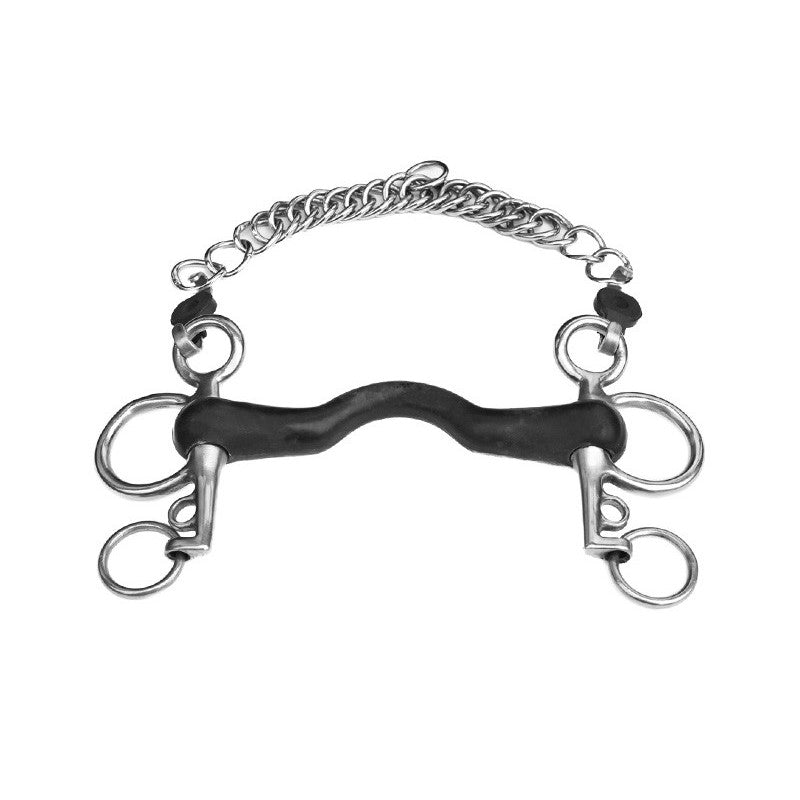
Explore 50+ leverage bits in Australia at iRide EQ. Browse high-performance Pelham, Beval, 3-ring gag, and curb bits designed by Jump'In for refined control, poll pressure, and balance over fences.
Quick Answer: Leverage bits multiply rein force using shanks or ring attachments, distributing pressure across the poll, chin groove, and mouth. Ideal for strong horses in show jumping, cross-country, and hunting, Jump'In leverage bits deliver refined control and head elevation when fitted correctly with curb chains or leather curb straps. Order leverage bits online with fast Australian delivery and Afterpay options.
Understanding Leverage Bits for Refined Control and Poll Pressure
Leverage bits are engineered for riders requiring refined control, stopping power, or elevation over fences when a standard snaffle proves insufficient. By incorporating shanks, upper purchase arms, or lower ring attachments, leverage bits convert direct rein pressure into a mechanical advantage. This mechanism spreads force simultaneously across the poll, the chin groove via a curb chain or strap, and the tongue and bars of the mouth, giving skilled riders subtle communication tools for strong or eager horses.
In Australian show jumping and eventing arenas, navigating fast approach lines and technical combinations requires absolute responsiveness. Premium leverage bits crafted by Jump'In utilize blue steel and anatomical French links to ensure mouth comfort remains paramount. When paired with high-quality jumping bridles, breastplates, and durable leather reins, leverage bits provide balanced control while preventing jaw locking over large obstacles.
Quick Facts
Best ForStrong horses, show jumping, cross-country, hunting, and head elevation
Comparing Leverage Bit Designs: Pelhams, 3-Ring Gags, Bevals, and Curbs
Selecting the correct leverage bit depends on the degree of poll pressure and chin engagement required. While competitor brands like PS of Sweden and Kentaur manufacture standard leverage options, Jump'In bit designs offer superior cheek balance, blue steel mouthpieces, and versatile rein attachment points.
Leverage Bit Style
Cheek & Shank Configuration
Mechanical Action & Pressure Points
Optimal Riding Scenario
Pelham (French Mouth)
Upper purchase, lower shank, curb chain hooks
Poll downward pressure, chin curb squeeze, bar contact
Jumping horses needing stopping power and head flexion
3-Ring Dutch Gag
Top ring, main bit ring, two lower leverage rings
Poll pressure with upward bit lifting action on lips
Horses that lower their head and lean heavy in turns
Beval / Wilkie Bit
Internal loops inside main snaffle ring
Mild leverage poll pressure without heavy shank leverage
Intermediate horses transitioning from snaffle to leverage
Kimblewick / Kimberley
D-ring cheek with slots for rein positioning
Direct steering with mild curb chain leverage
Pony club jumpers and riders wanting firm single-rein control
Tandem / Combo Bit
Hackamore noseband combined with bit shank
Noseband pressure combined with mouth and poll leverage
Hot, sensitive jumpers that resent strong mouth pressure
Jump'In Hackamore
Leather noseband with metal shanks (bitless)
Pure nose, poll, and chin groove leverage without mouth contact
Horses with mouth injuries or extreme bit resistance
Pair your leverage setup with our horse bits or explore snaffle bits for flatwork training sessions.
Leverage Mechanics, Rein Configurations, and Curb Adjustments
Pelham Bits and Dual Rein Setup vs Roundings
A Pelham bit combines the actions of a curb bit and a snaffle bit in one mouthpiece. Using two pairs of reins provides maximum versatility: the top rein operates as a direct snaffle, while the lower shank rein engages the leverage and curb chain when needed. For riders who prefer single-rein simplicity, leather Pelham roundings bridge the top and bottom rings, though this provides a fixed average leverage feel rather than selective aid independence.
3-Ring Dutch Gags and Elevation Dynamics
The 3-ring gag (or Continental bit) is widely favored in show jumping and cross-country. Attaching the rein to the middle ring provides moderate leverage, whereas attaching to the lowest ring maximizes poll leverage and mouth lifting action. This combination lifts the horse's forehand out of the turf before fences while providing necessary brakes on approach lines.
Fitting Curb Chains and Leather Curb Straps
The curb chain plays a vital role in regulating maximum shank rotation. When fitted correctly, the curb chain should lay flat against the chin groove, allowing the shanks to rotate approximately 45 degrees before engaging. Substituting a soft leather curb strap in place of a metal chain creates a milder, more forgiving leverage feel suitable for sensitive horses.
Sizing, Fitting, and Mouthpiece Selection for Leverage Bits
Leverage bits must fit flush against the horse's cheeks without squeezing or hanging loose. Ensure the purchase arm (the upper ring attaching to the bridle cheekpiece) does not press into the jawbone when reins are engaged. Check that the mouthpiece width accommodates the cheeks cleanly, preventing the curb hooks from chafing the outer lips.
Choose an anatomical double-jointed lozenge or French link mouthpiece in blue steel to ensure tongue comfort when leverage is applied. Avoid rigid single-jointed leverage bits, as shank rotation forces the central joint upward into the roof of the mouth, causing unnecessary pain.
Care and Maintenance for Leverage Hardware and Curb Chains
Clean leverage bits thoroughly after each ride, paying close attention to shank joints, ring loops, and curb hooks where dirt and saliva accumulate. Rinse stainless steel and blue steel mouthpieces, then dry complete hardware with a towel to maintain smooth mechanical movement across all moving parts.
For leather Pelham roundings, leather curb straps, or combination nosebands, apply a quality leather conditioner regularly. Read our comprehensive leather tack care guide for expert recommendations on leather maintenance.
Brands We Stock
We stock high-performance leverage bits from top global creators:
Jump'In — Elite French leverage bits, Pelhams, 3-ring gags, and precision blue steel hardware
Why Shop Leverage Bits at iRide EQ?
Elite French Engineering
Jump'In leverage designs offer refined shank balance, anatomical mouthpieces, and blue steel comfort.
Jumper & Eventer Trusted
Curated specifically for Australian show jumping and cross-country riders seeking refined control.
Fast Dispatch Local Stock
Dispatched rapidly from our Australian warehouse for prompt arrival before your next event.
Buy Now Pay Later
Equip your jumping kit effortlessly using Afterpay and ZipPay at online checkout.
Frequently Asked Questions
How does a leverage bit differ from a standard snaffle bit?
A leverage bit uses shanks or lower ring attachments to multiply rein force, applying mechanical pressure to the poll, mouth, and chin groove simultaneously rather than direct 1:1 mouth contact.
Should I use two reins or roundings on a Pelham bit?
Using two reins is preferred because it allows you to ride on the direct snaffle rein and engage the lower leverage rein only when needed. Roundings blend both actions into one fixed average response.
How tight should a curb chain be fitted on a leverage bit?
A curb chain should lay uncurled in the chin groove, allowing two fingers to slip beneath it when reins are slack. The shanks should rotate roughly 45 degrees before the curb chain engages.
Are 3-ring gag bits legal for EA Dressage competition?
No, 3-ring gags and leverage bits are not legal for EA Dressage competition, but they are widely permitted in EA Show Jumping and Eventing cross-country phases.
What is the benefit of a leather curb strap over a metal curb chain?
A leather curb strap provides a softer, broader contact surface against the chin groove, offering a more forgiving response for sensitive horses that react defensively to metal chains.
Why is a double-jointed lozenge better on a leverage bit?
A double-jointed lozenge mouthpiece stays flat across the tongue when leverage rotates the cheeks, preventing the central joint from poking into the roof of the mouth.